The Paris issue
A Local's Paris: Iconic Monuments Without the Queues
A calm, walkable route through Paris's greatest monuments — timed to the side doors, the lift capacities and the small-group climbs the crowds never think to check.

By Sasha LindholmThe unhurried side of Paris
The queue outside a Paris monument is almost never a queue for the monument. It is a queue for a ticket desk, a security tent, or a lift with a fixed number of seats — and each of those has a quieter way in if you know where to look. What follows is a walking-paced circuit of the city's great sights, arranged the way a resident actually moves through them: climb, look, and step away before the crowd has finished shuffling toward the wrong entrance.
Start where the city started: the Île de la Cité
Everything in Paris radiates from a boat-shaped island in the Seine, and it is the right place to begin because three of the city's most rewarding interiors sit within a two-minute walk of one another.
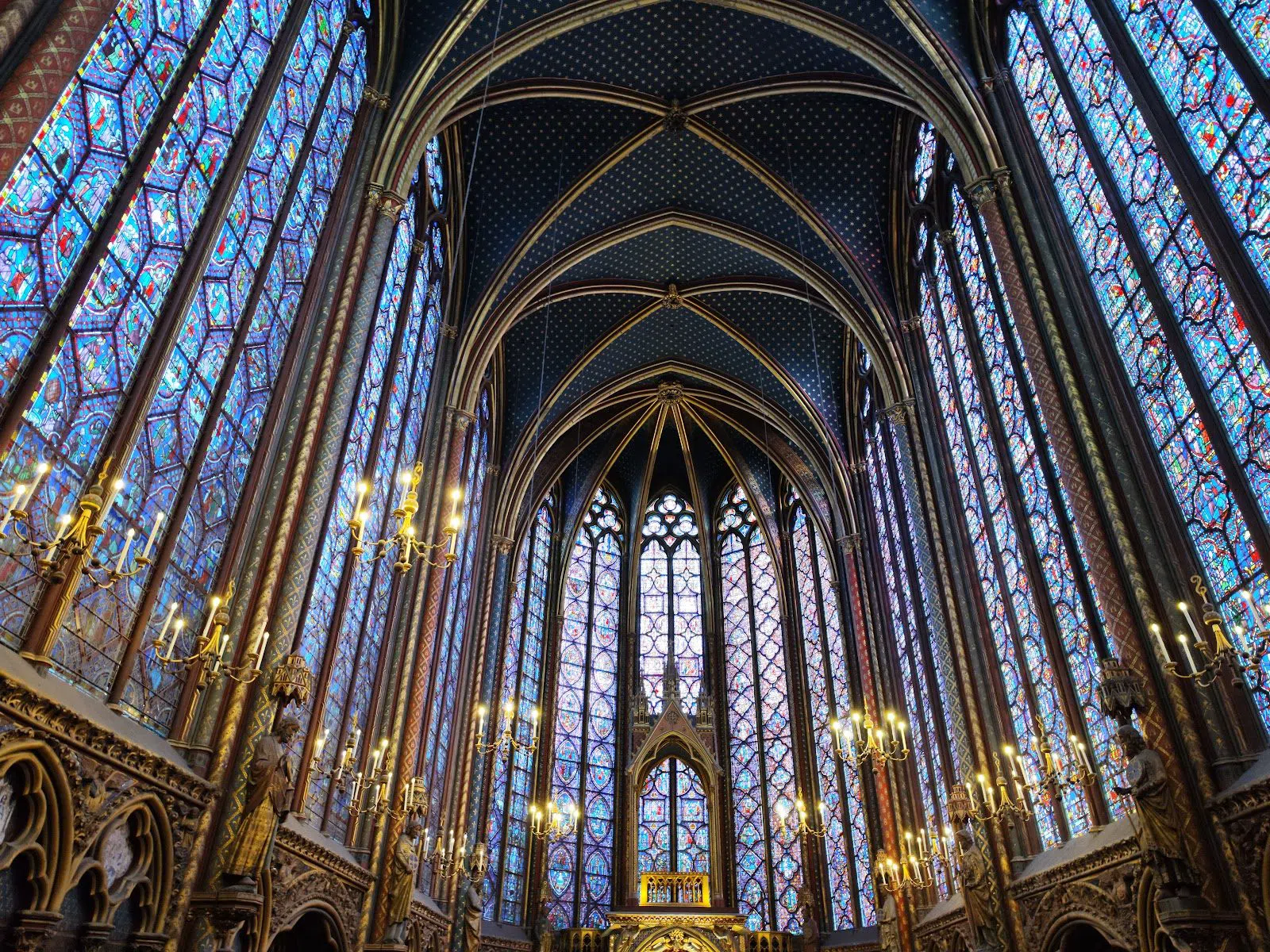
Book the first slot of the day at Sainte-Chapelle (Île de la Cité), the royal chapel tucked inside the old law-courts complex. The lower chapel is a warm-up; the stairs deliver you into an upper room that is essentially a cage of stained glass, fifteen windows telling the Bible from floor to vaulted ceiling. On a bright morning the light does the whole job. Entry is timed and costs €13 online (~£11), or €20 combined with the Conciergerie next door — and the combined ticket is the obvious move, because the two share a courtyard. Be honest with yourself about numbers, though: the upper chapel is small, and a party of twelve turns a sublime room shoulder-to-shoulder. This is a place for couples and small groups, ideally through the door before the walk-up line past the courthouse security has built.
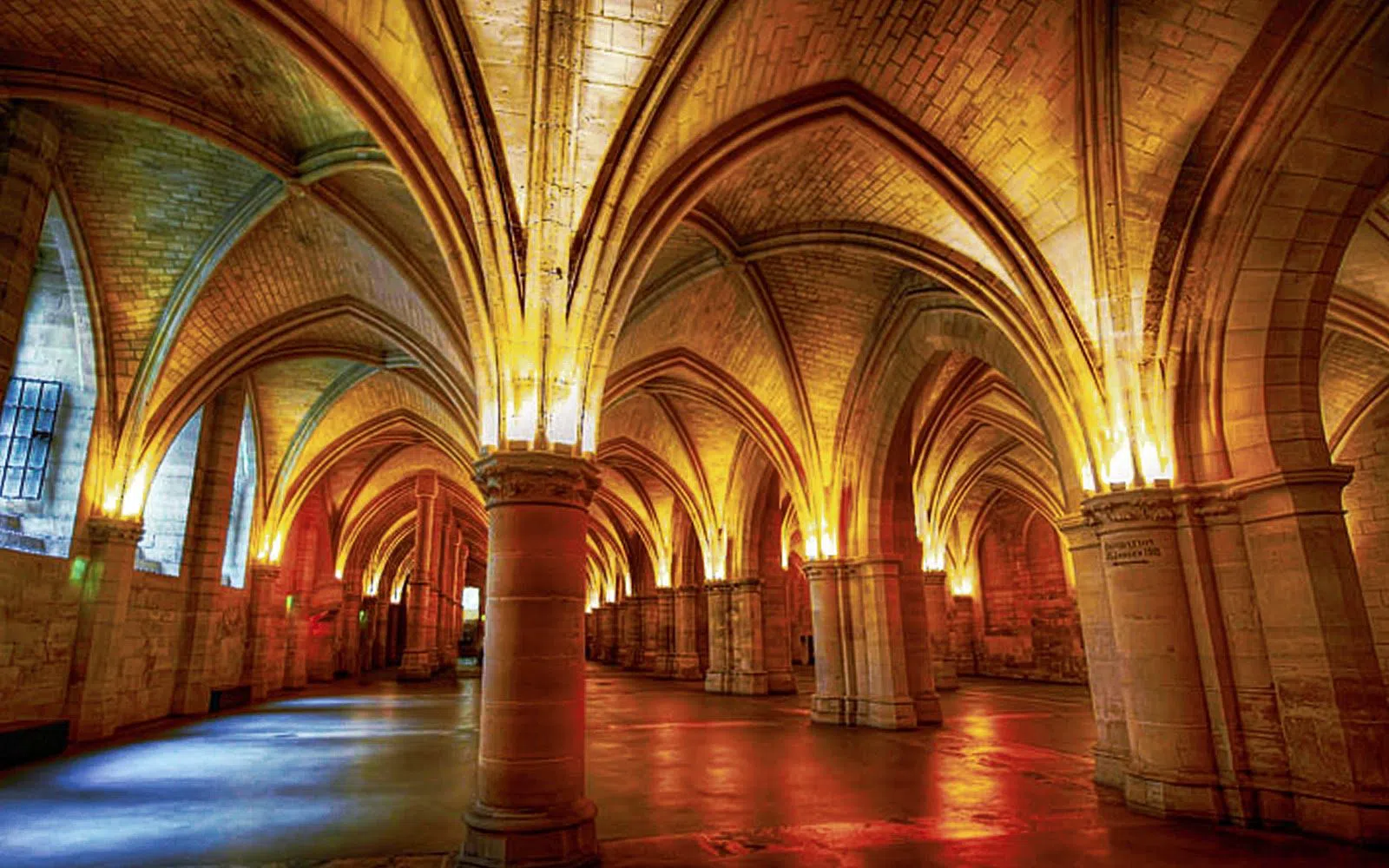
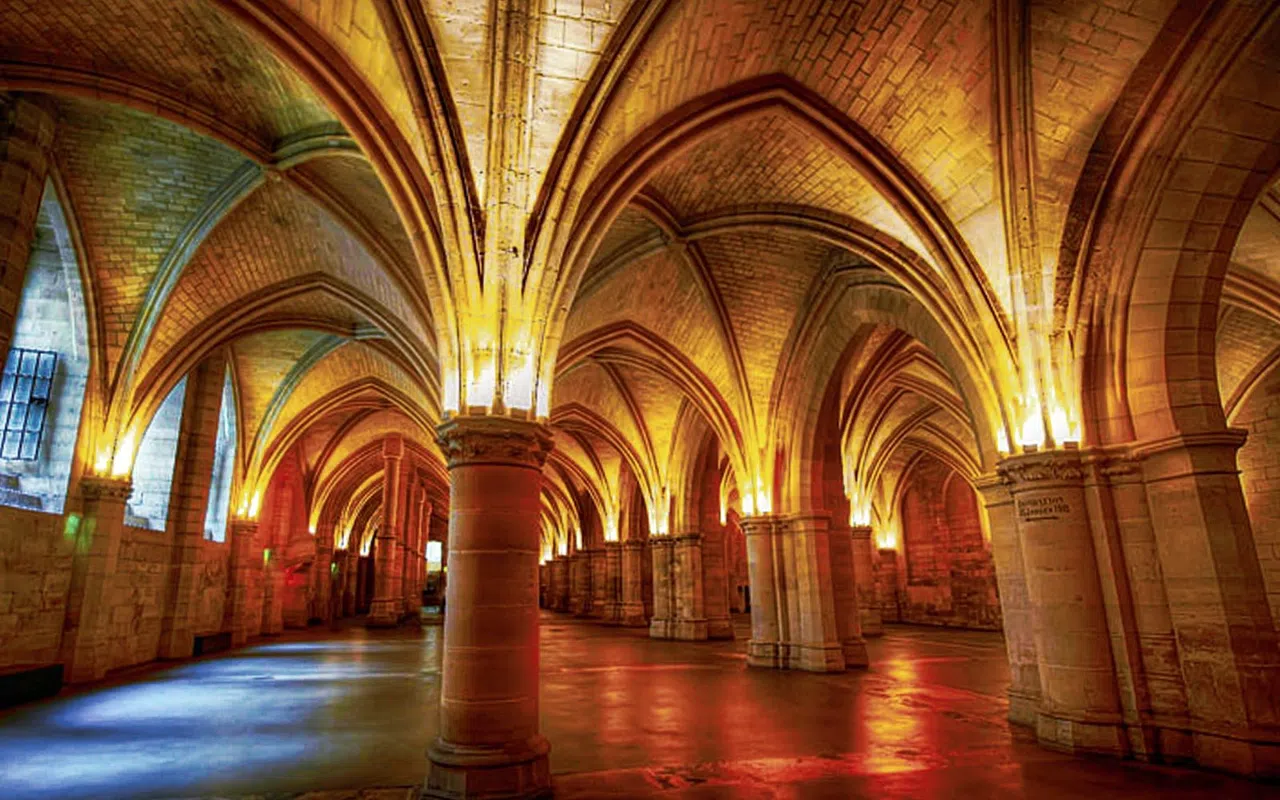
A few steps along the quay, the Conciergerie (Île de la Cité) is the opposite proposition — cavernous, cool, and genuinely easy for a larger party. It was a royal palace before it became the Revolution's antechamber to the guillotine, and Marie-Antoinette's cell is reconstructed within. Entry is €13 online (~£11) and, usefully, isn't stamped to a rigid time slot, so a group can drift in across a couple of hours without the pressure of a countdown. Pick up the HistoPad tablet at the desk; it overlays the medieval and revolutionary rooms onto what is now largely bare stone, and it lands especially well with anyone who half-remembers the history from school.
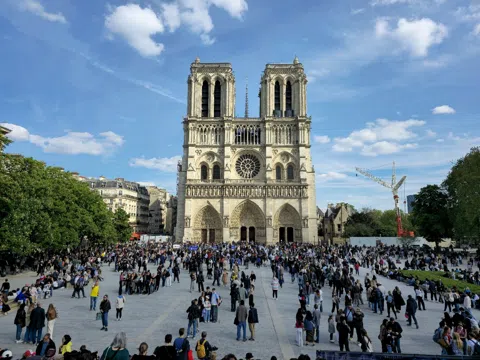
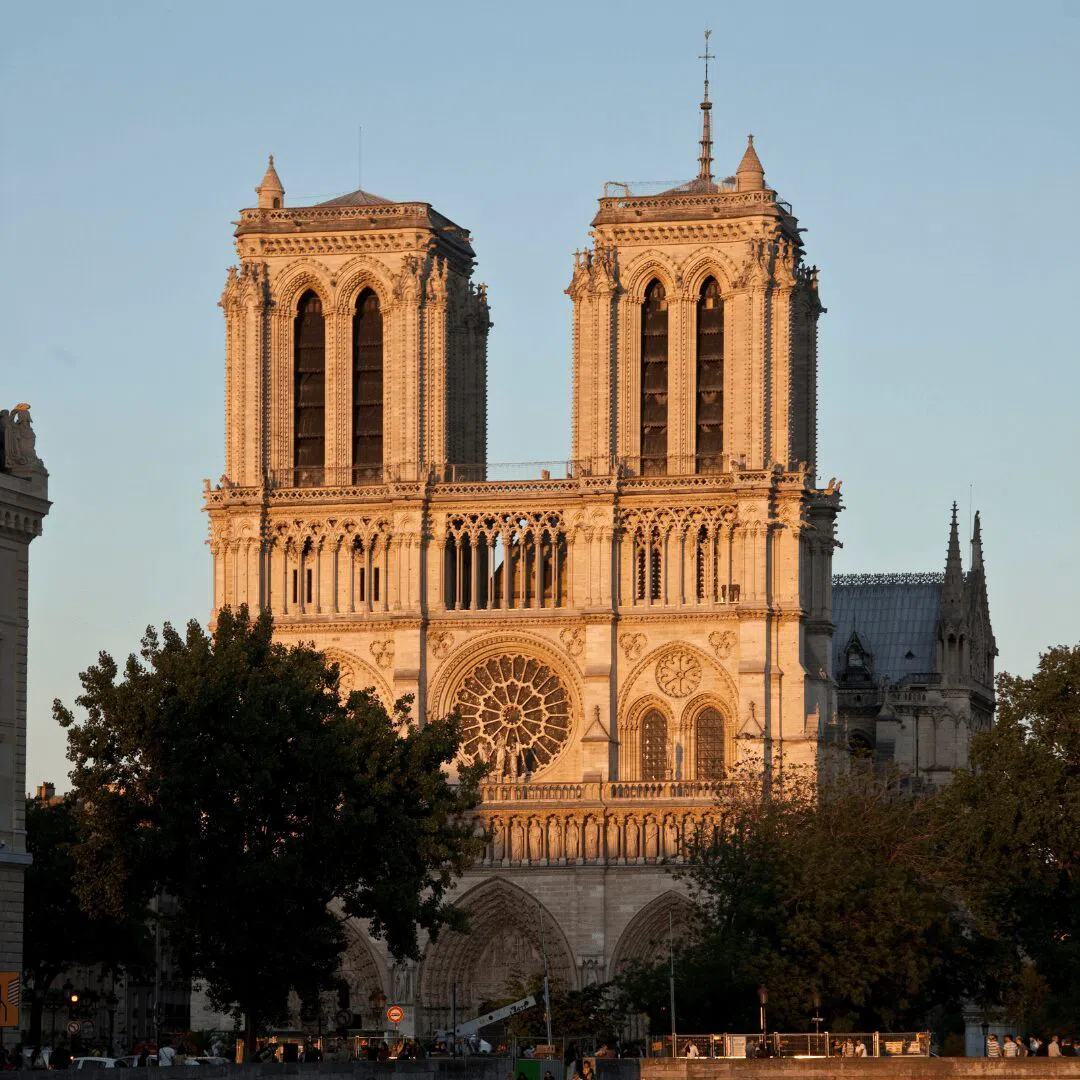
Cross to the eastern tip of the island for Notre-Dame de Paris — Bell Towers (Île de la Cité). The cathedral has come back in stages since the 2019 fire — the nave reopened in December 2024, the towers in September 2025 — and stepping into the nave is free, though you'll want the reserved time slot to skip the security wait. The tower climb is a separate thing entirely: 422 narrow stone steps, taken in small timed groups, for €16 (~£14). It is magnificent and it is not for everyone; a coach party will not fit the rhythm of it, and there is no lift. One firm rule, because the touts are back in force: book the tower slot only on the official cathedral site, and ignore anyone selling 'skip-the-line' cathedral entry. There is no such thing — the nave is free, and nobody can sell you a shortcut past a queue that moves on a timer.
Plan your Paris trip
Live prices from our booking partners.
Free cancellation on many rooms. We may earn a commission when you book.
The river's museums, west along the Right Bank
From the island, the Seine's Right Bank strings together four of the great art houses, and the honest truth about all of them is the same: the queue you dread is a ticketing queue, and a booked time slot dissolves it.
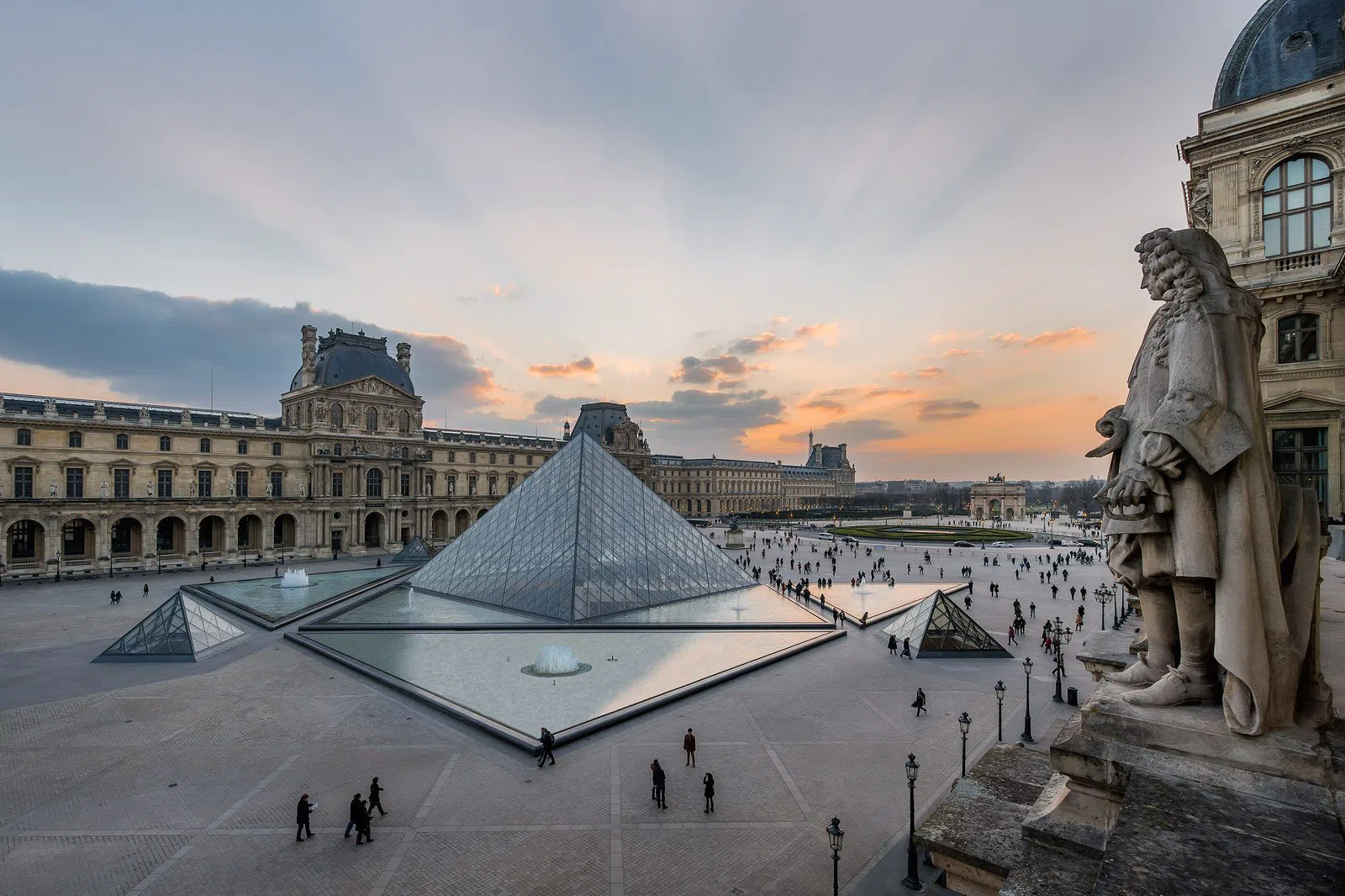
The Musée du Louvre (1st, by the Tuileries) is the world's most-visited museum, and the glass pyramid's serpentine line is legendary — an hour of your day, gone, if you arrive on spec. An advance timed ticket at €22 online (~£19) is not a fast-track gimmick; it is simply the difference between walking in and standing still. The Louvre is also one of the most group-friendly of the big sights, with proper official group tickets, but even then the slot is what saves you. Go in with a plan — a wing, not the whole thing — because nobody sees the Louvre in an afternoon, and the people trying to are the ones who leave exhausted.
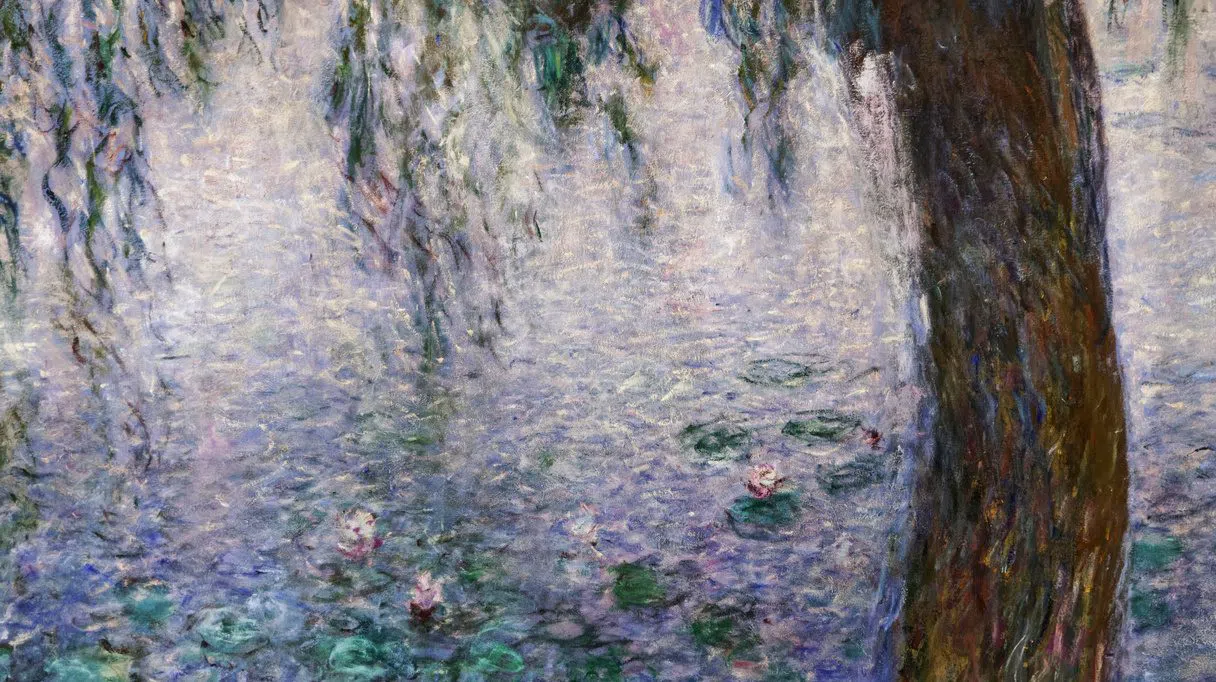
Walk the length of the Tuileries and you reach the Musée de l'Orangerie (1st, Tuileries) at the garden's far end, a small museum with an outsized payoff: Monet's Water Lilies wrapping two oval rooms designed for exactly this, plus a jewel-box collection of Impressionists below. Timed reservation is mandatory for everyone, and at €12.50 (~£11) it is one of the best-value hours in the city. Keep the party modest — the oval rooms crowd quickly, and their whole point is the quiet.
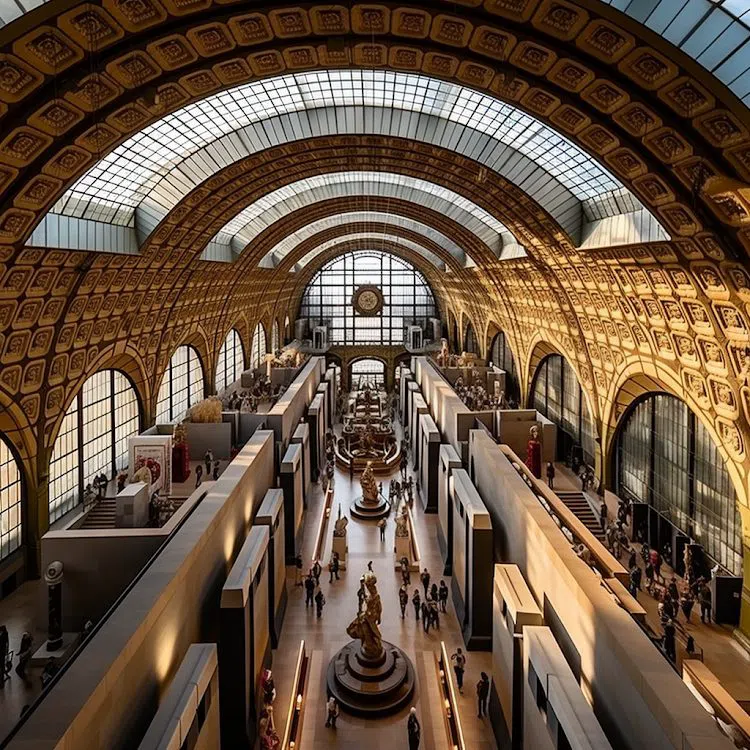
Cross the river by the footbridge and the Musée d'Orsay (7th, Left Bank quay) faces you from a converted railway station, its great clock still reading over the Seine. This is where the Impressionist heavy-hitters live — Monet, Renoir, Van Gogh — and it stays fully open through a long refurbishment running to 2028. One change to note and plan around: from 10 March 2026, timed entry becomes mandatory for absolutely everyone during the reception-area works, with no walk-ups at all. Hold a booked slot; €16 online (~£14) covers it. The Louvre, the Orangerie and the Orsay are all covered by the Paris Museum Pass, which is worth doing the sums on if you are hitting several in a few days.
Further west, the Grand Palais (8th, off the Champs-Élysées) reopened in June 2025 after a €466m restoration and is back on the list — a vast, glass-roofed hall that is a pleasure to stand inside even before you reach the art. Its catch is that there is no permanent collection: what's on, and what it costs (roughly €15–€24 / ~£13–£21), depends on the exhibition. Check the programme before you build it into a day, and note it opens Tuesday to Sunday with late hours on Fridays. The soaring spaces suit a group better than almost anywhere else here.
The great axis and the rooftops
The monuments most people picture when they picture Paris line up along the city's grand western axis, and the ticketing quirks here are worth reading closely — because the bottleneck is rarely the door.
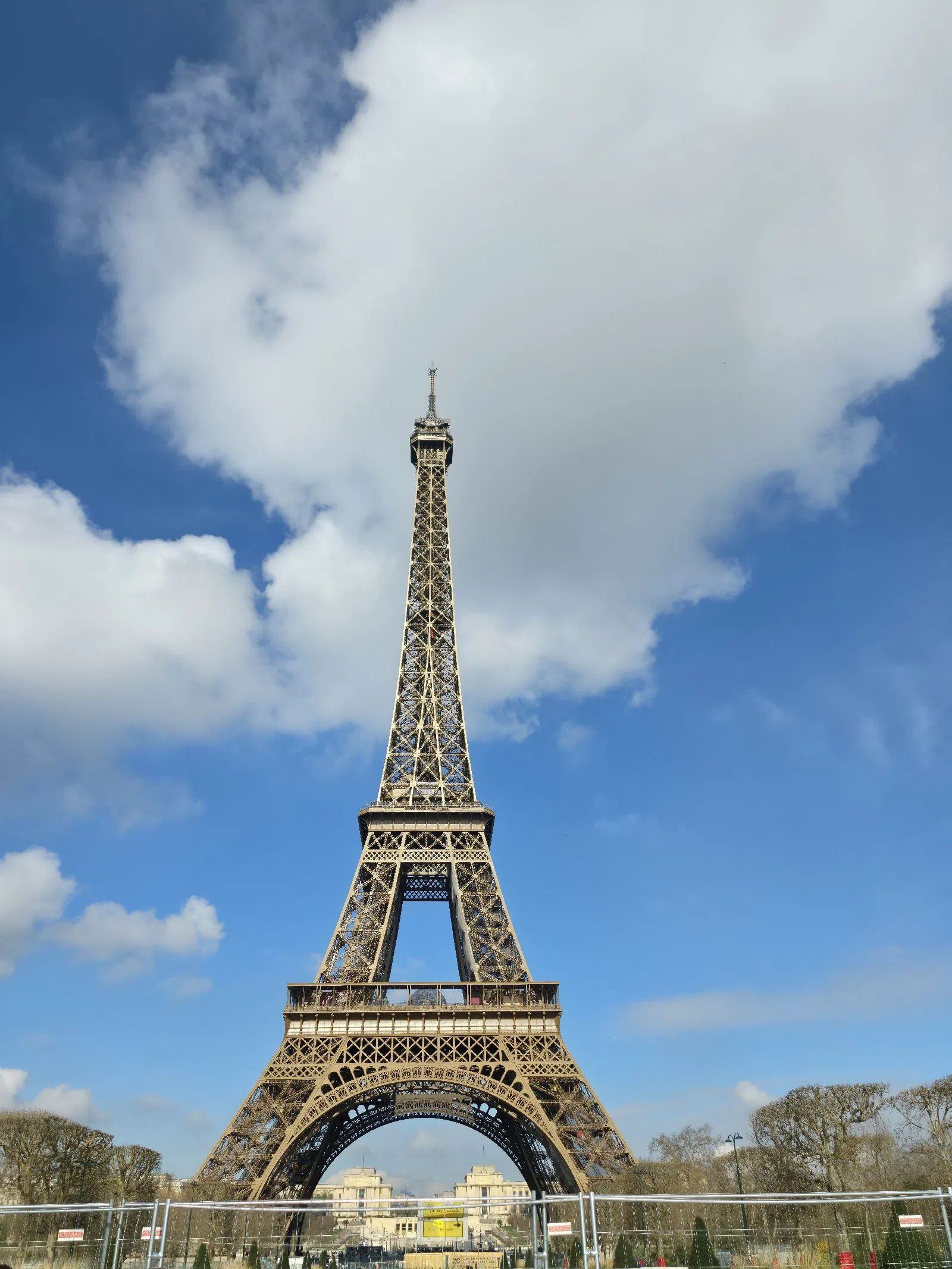
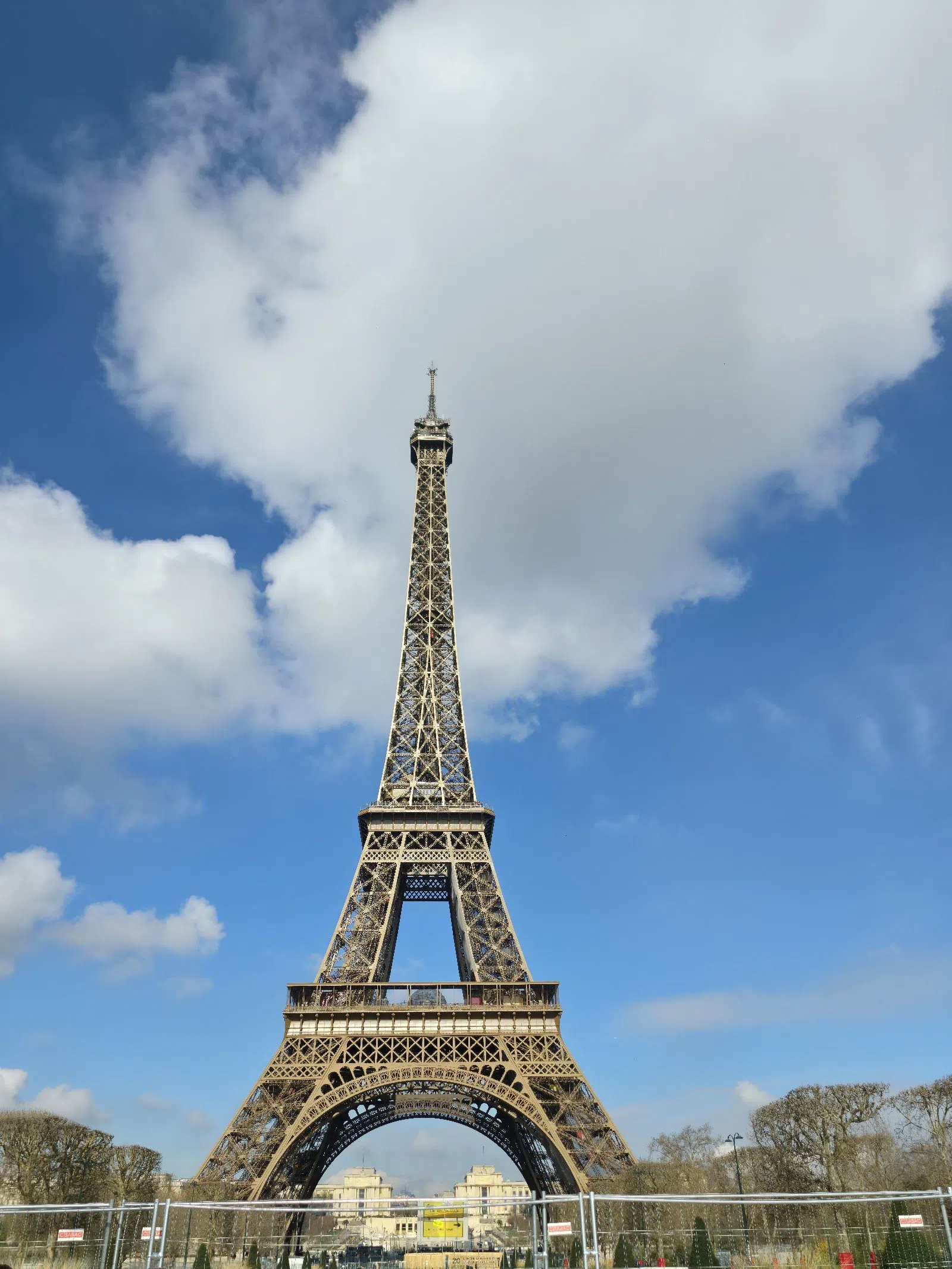
The Eiffel Tower (7th, Champ de Mars) is the one everyone books, and the constraint is physical: the lift has a fixed capacity, so the summit slots simply sell out. Reserve a timed slot weeks ahead, especially if the summit matters to you — the top floor was closed for maintenance from 5 January to 6 February 2026 and has since reopened, but demand snaps back. Prices run from €14.80 to climb the stairs to the second floor up to €36.70 for the summit by lift (~£13–£32). If your legs are willing, the staircase ticket is both cheaper and, oddly, the shorter wait. One firm date for organisers: from 29 September 2026, any party over nine people — a guide counts — must pre-book through ticketpro.toureiffel.paris. It is the lift, not the door, that sets the limit.
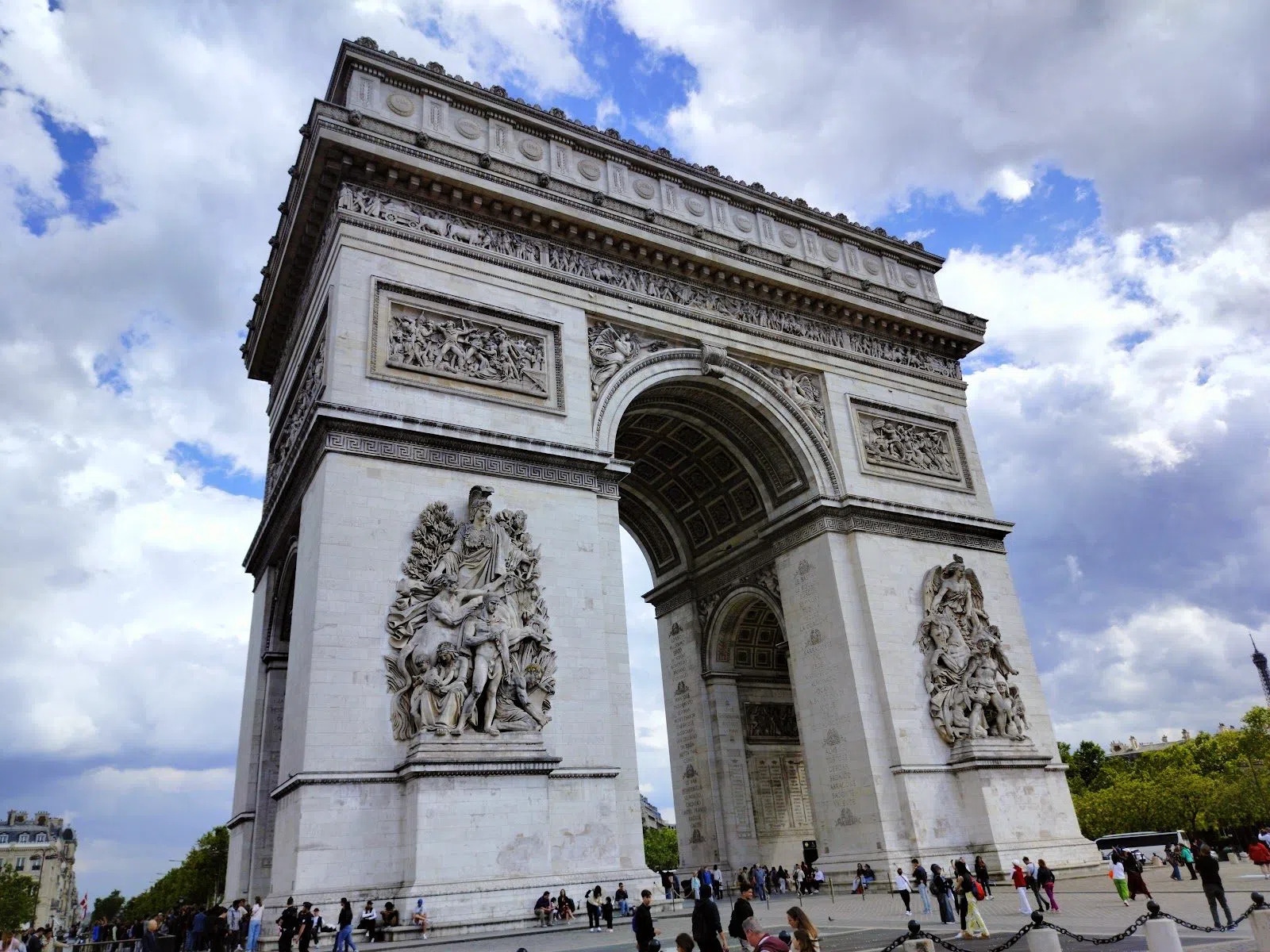
A straight walk up the Champs-Élysées brings you to the Arc de Triomphe (8th, Place de l'Étoile), which quietly offers the best view-for-effort ratio in the city. From the rooftop the twelve avenues fan out beneath you like spokes, and the online ticket from €16 (~£14) skips the ticket-office queue — though not, and this catches people out, the mandatory security screening, which everyone joins regardless. It's about 280 steps with no lift for most visitors, so mobility-limited members of a group will struggle; know that before you commit. Don't cross the roundabout on foot — the pedestrian underpass is the only sane way over.
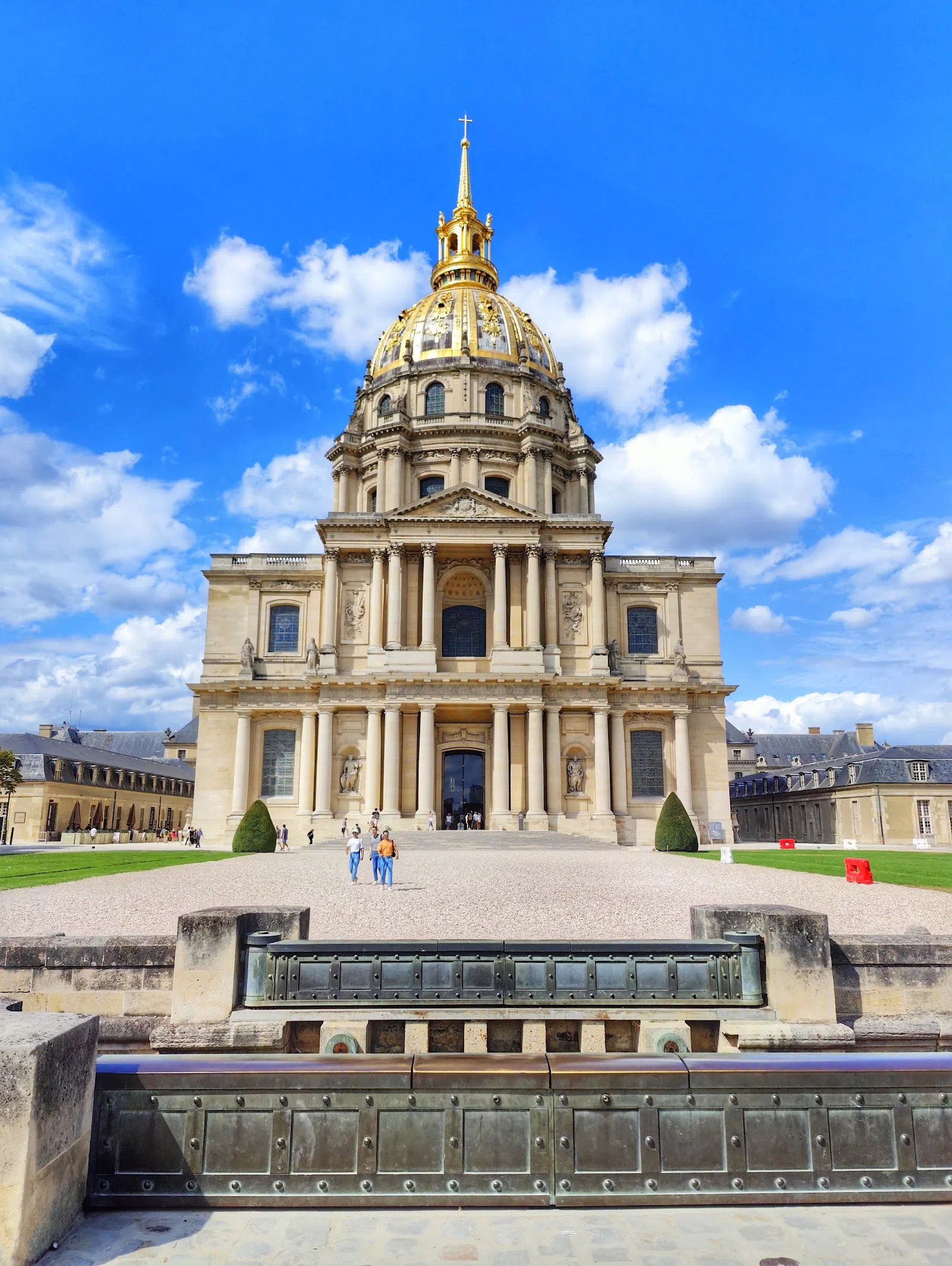
South across the river, Les Invalides — Army Museum & Napoleon's Tomb (7th, Left Bank) is the axis's most underrated stop and one of its most group-friendly. A single €17 ticket (~£15) covers the whole complex, so a party moves freely between the great military museum and the gilded dome under which Napoleon lies in his oversized porphyry tomb. It rarely feels as mobbed as the Louvre, and it plays especially well with history-minded visitors. The Paris Museum Pass covers it too.
Quiet ground in the Latin Quarter
Climb the hill behind the Sorbonne for two monuments that trade spectacle for atmosphere.
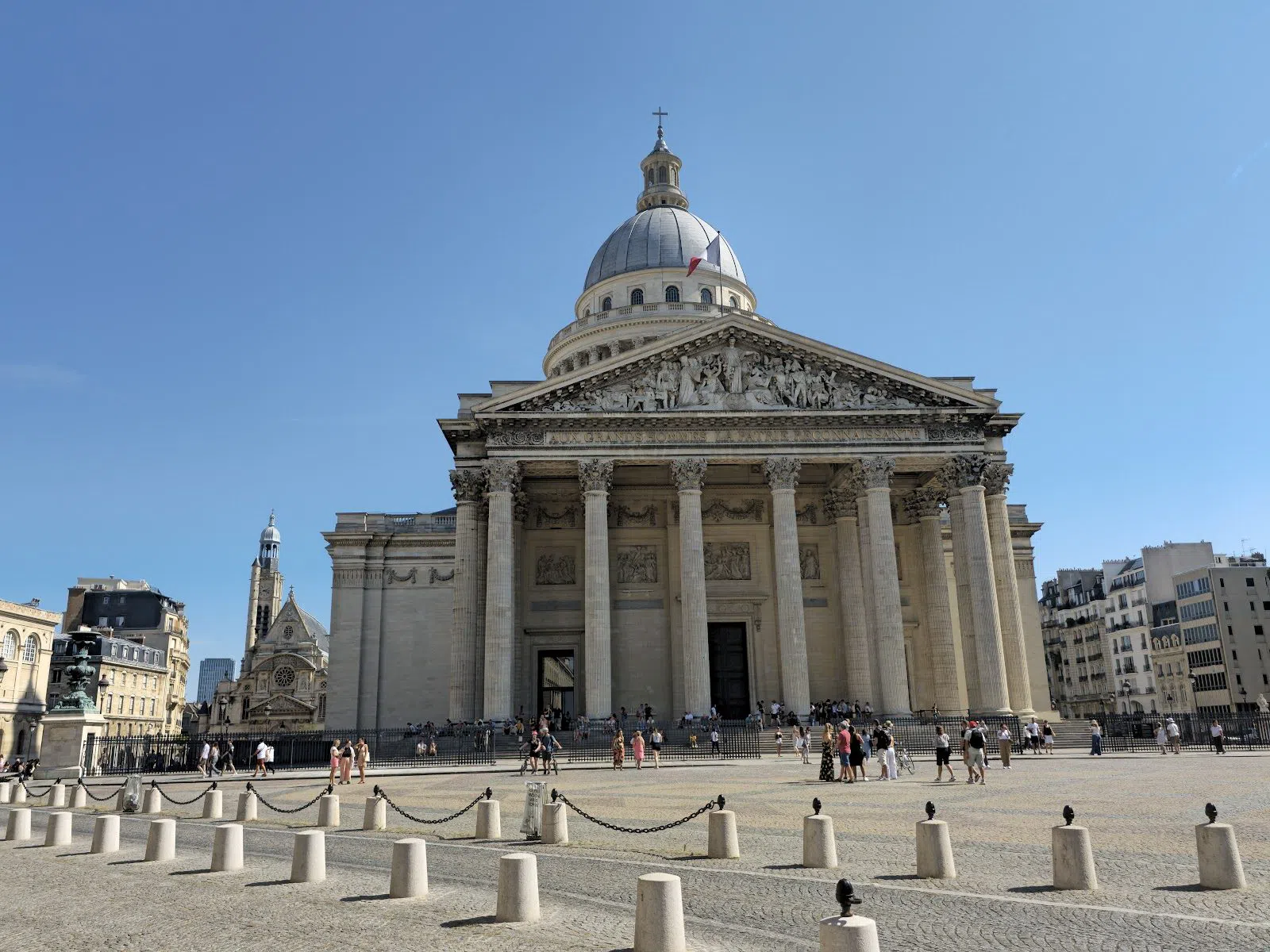
The Panthéon (5th, Latin Quarter) is a spacious, easy building for any size of group, and the fast-track ticket from around €13 (~£11) skips the office queue. Inside, Foucault's Pendulum still swings to prove the earth turns, and the crypt holds Voltaire, Victor Hugo and Marie Curie. One thing not to sell your companions on, though: the panoramic dome climb is closed for renovation through 2026, so come for the pendulum and the tombs, not the rooftop. The Museum Pass covers entry.
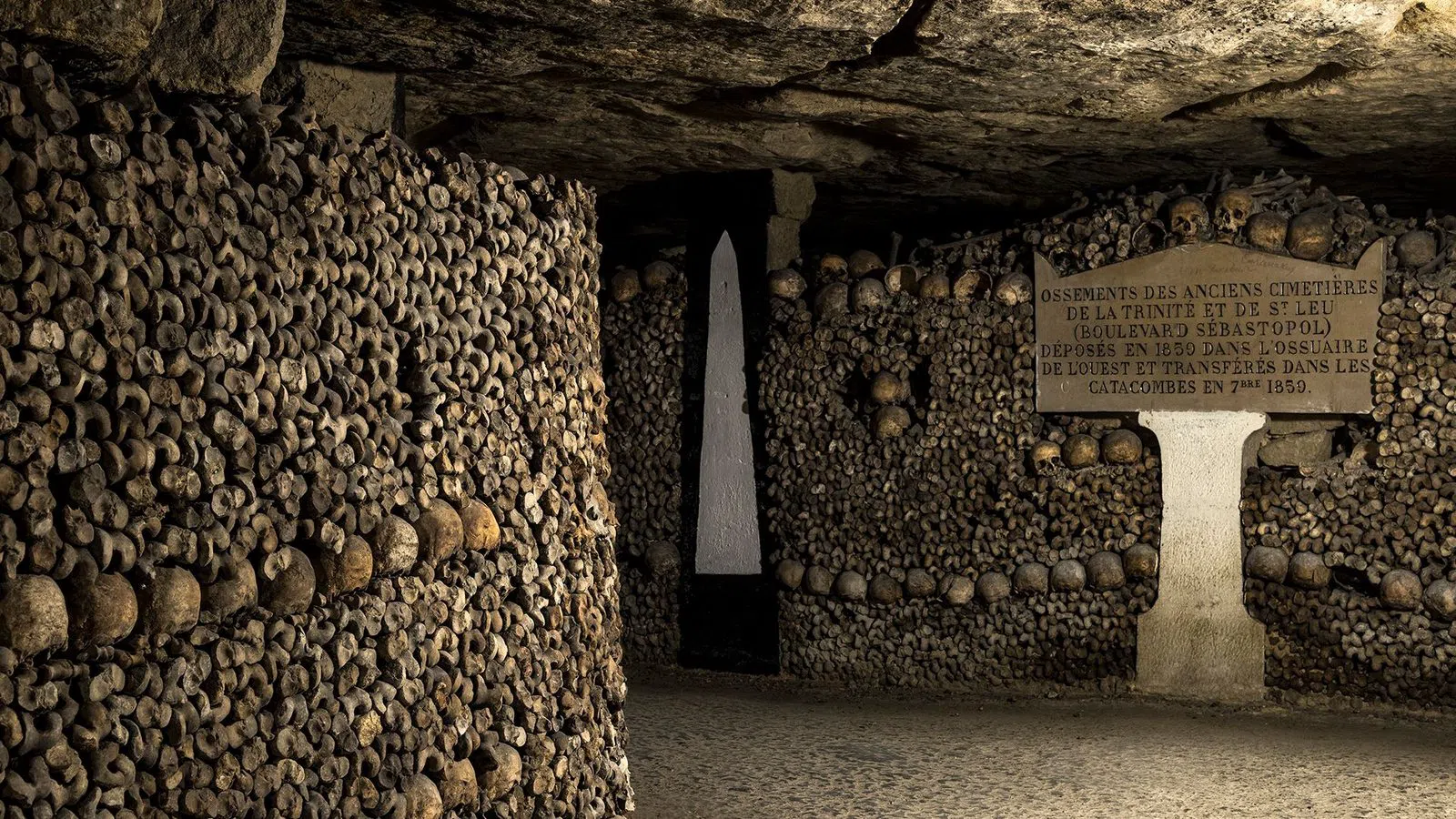
A short walk south, the Catacombs of Paris (14th, Denfert-Rochereau) is the city's strangest hour — kilometres of tunnels lined with the bones of six million Parisians, moved here when the old cemeteries overflowed. It is also the tightest ticket in Paris, and the reasons are structural: only about 200 people are allowed below at once, in guided groups of up to roughly fourteen. That makes it flatly unsuitable for a large coach party and impossible to do on a whim — same-day entry is essentially never available. Book weeks ahead; standard entry with audio guide is €31 (~£27), with special-access guided tours around €139 for those who want the closed galleries.
Montmartre's high ground
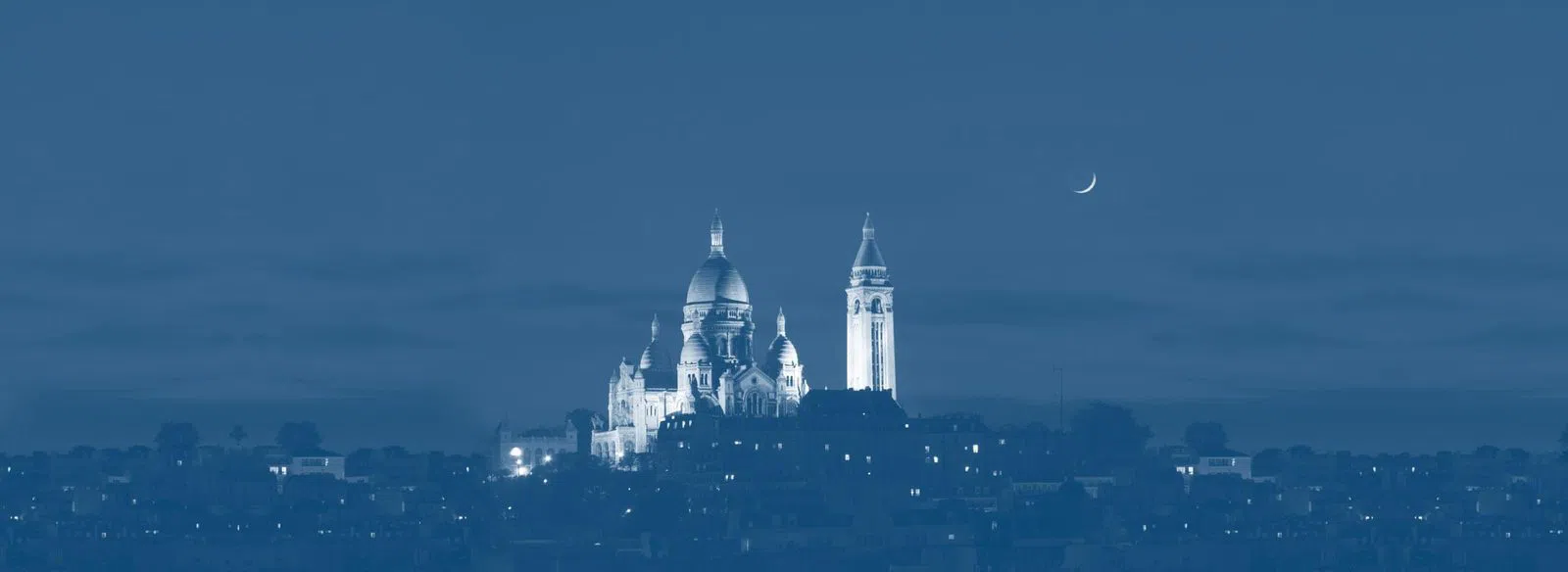
Ride the funicular or climb the stepped streets to Basilica of Sacré-Cœur — Dome (18th, Montmartre), the white basilica crowning the city's northern hill. Stepping inside is free — there's only a security queue — and for €8 (~£7) the dome climb delivers arguably the best cheap panorama in Paris, right across the rooftops to the horizon. It's a tight 300-step spiral, so it suits a couple or a small group far better than a crowd, and it can close in bad weather, so keep it flexible. Pair it with the artists' square just behind and an early morning before the tour groups arrive.
A gilded interlude
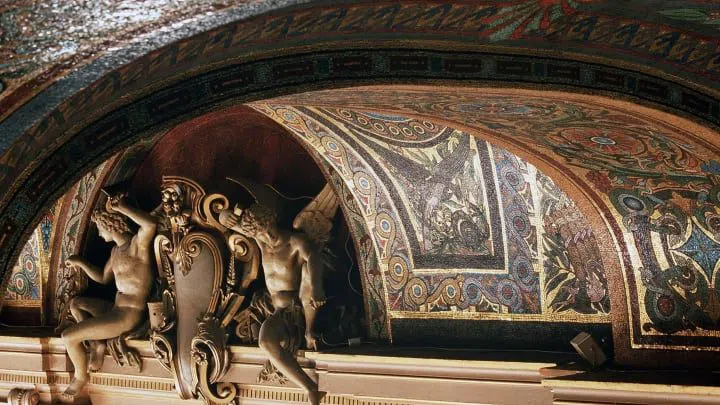
When the churches and museums start to blur, the Palais Garnier (9th, Opéra) is the antidote — the real 'Phantom of the Opera' house, all marble staircase, mirrored foyers and a Chagall ceiling floating over the auditorium. Self-guided priority entry from €15 (~£13) handles groups fine; a small oddity is that you collect the ticket at 11 avenue de l'Opéra before entering. Guided tours run around €75. Check the site before you go, because visits are blocked on matinée and rehearsal days when the house is working.
The day out: Versailles
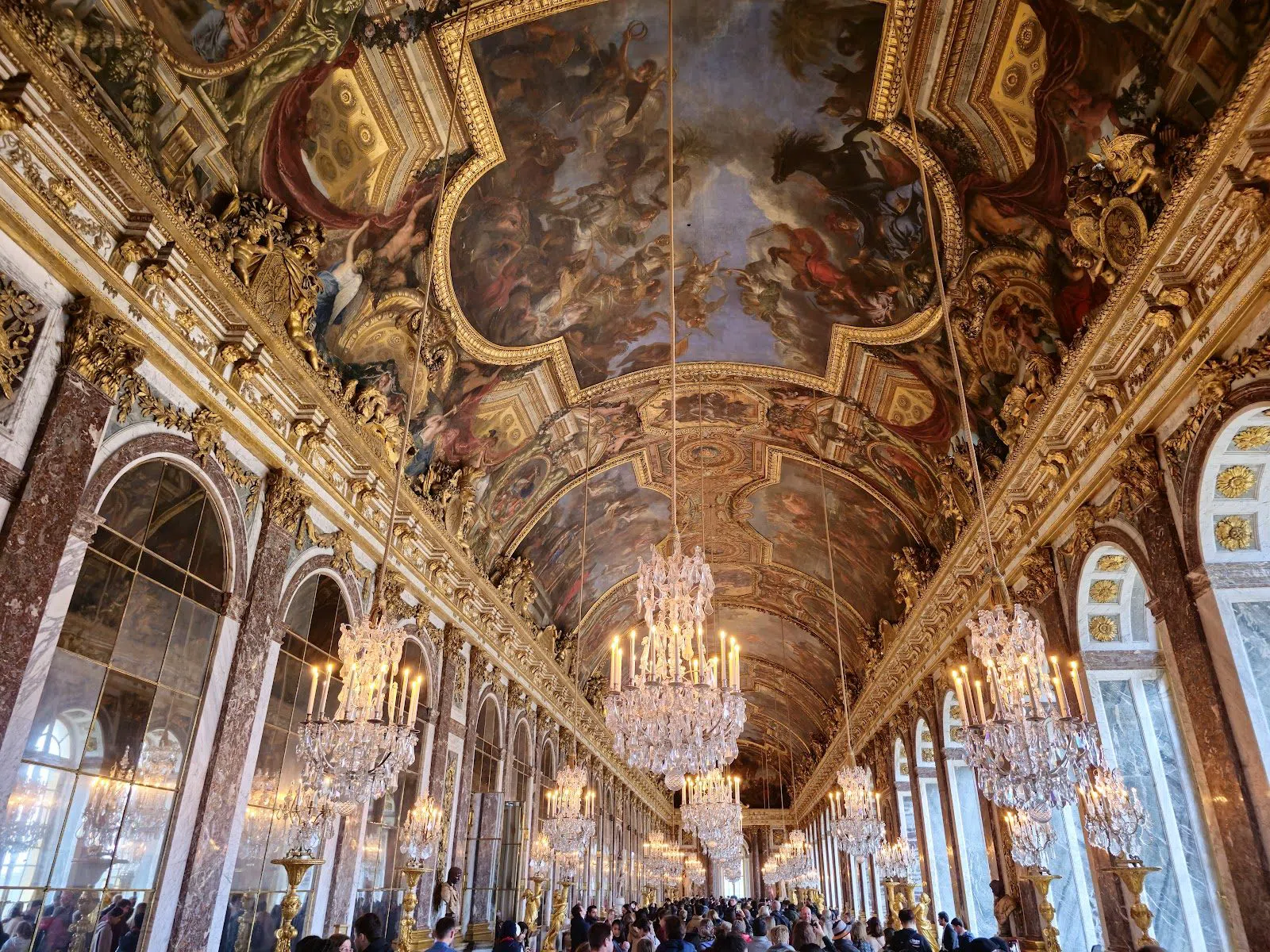
Give it a full day and take the RER out to the Palace of Versailles (Versailles, west of the city) — the Sun King's statement in stone, gilt and clipped hedge. This is the one place where a guided tour earns its price purely as a queue strategy: guided groups use a private entrance that bypasses almost all of the public security line, which in the courtyard can be brutal. Independent tickets run as a Palace Passport at €24–€32 (~£21–£28); guided and small-group tours cost more but buy you that side door. Aim for a weekend between April and November if you want the fountains running in the gardens — the musical fountain shows are the estate at its theatrical best.
Practical notes
Getting around. The Métro will carry you between every monument in this guide bar one; buy a carnet of tickets or load a Navigo Easy card and stop counting. Versailles is the exception — take RER Line C to Versailles Château–Rive Gauche, about 40 minutes from the centre.
Timing. Mornings are the whole game. Book the earliest slot at Sainte-Chapelle, the Louvre and the Catacombs, and you'll be through the marquee sights before the midday crush. Save the free-entry stops — Notre-Dame's nave, Sacré-Cœur's basilica — for late afternoon, when the ticketed crowds have thinned.
Cash and cards. Cards work almost everywhere, including every ticket desk here; keep a little cash for the Montmartre funicular, a café counter or the bouquinistes along the Seine.
Budget. If you're stacking several museums, price up the Paris Museum Pass against individual tickets — it covers the Louvre, Orsay, Orangerie, Panthéon and Les Invalides among the sights above. And book the capacity-capped climbs (Eiffel summit, Catacombs, Notre-Dame towers) as far ahead as you can; those are the tickets that vanish. For where to base yourself, start with a Paris hotel search, and see the wider Paris guide for neighbourhoods, food and getting your bearings before you arrive.
Before you go
Which Paris monuments genuinely let you skip the queue?
A booked timed slot is the real queue-saver at the Louvre, Musée d'Orsay, Sainte-Chapelle and the Eiffel Tower — the wait is at the ticket desk or lift, not the door. At Versailles, a guided tour uses a private entrance that bypasses almost all of the public security line. Note that at the Arc de Triomphe the online ticket skips the ticket queue but not the mandatory security screening.
Do I need to book the Catacombs of Paris in advance?
Yes — it's the tightest ticket in the city. Only about 200 people are allowed below at once, in small guided groups of up to roughly 14, so same-day entry is almost never possible. Book weeks ahead at €31 with audio guide (~£27); special-access guided tours run around €139.
Can I still climb the Panthéon dome in 2026?
No. The panoramic dome climb is closed for renovation as of mid-2026. The rest of the Panthéon is open and spacious — come for Foucault's Pendulum and the tombs of Voltaire, Hugo and Marie Curie from around €13 (~£11), just not the rooftop.
Is the Eiffel Tower open again after the 2026 maintenance?
Yes. The summit floor was closed for maintenance from 5 January to 6 February 2026 and has since reopened. Book a timed slot weeks ahead as summit tickets sell out, and note that from 29 September 2026 any group over nine people (a guide counts) must pre-book via the official ticketpro.toureiffel.paris site.
Which Paris monuments work best for a large group versus a couple?
Roomy, group-friendly sights include the Conciergerie, Les Invalides, the Grand Palais and Versailles (via a guided tour). Tighter spaces suit couples or small parties: Sainte-Chapelle's upper chapel, the Notre-Dame bell towers (422 steps), the Sacré-Cœur dome (300 steps) and the Catacombs all cap or crowd quickly.