The Paris issue
Paris in October Without the Guesswork
On 1 October the hours, the light and the timed-entry rules all change in Paris, and this is how to build a week around them without wasting a day.

By Sasha LindholmThe unhurried side of Paris

The plane trees along the quais turn late, so the first week of October can still pass for September, right up until about four in the afternoon, when the light drops low and grey-gold and every limestone façade warms at once. What changes on 1 October is less the weather than the timetable. Hours contract, evening openings stop being a bonus and become the plan, and the difference between a full day and a wasted one is usually which door you were standing outside at half past nine.
What the first of October does to the clock
Reckon on highs in the mid-teens Celsius, nights around nine or ten, and rain often enough that an itinerary built entirely outdoors will fail at least once in a week. That is an argument for holding two plans a day, one dry and one not, and choosing between them over breakfast rather than in a doorway on the rue de Rivoli with wet shoes.
Light is the harder constraint. Sunset slides from around 19:30 at the start of the month to roughly 18:30 by the 24th, then the clocks go back overnight from 24 to 25 October 2026 and it is properly dark before six. A trip in the last week gets perhaps four usable daylight hours after a slow morning, so put anything you want to see lit from the outside early in the day and let the evenings belong to interiors, glass and food.
The third change is administrative and it catches people out. Timed entry is now the norm at the major sites rather than the exception, and several of the best rooms in the city have stopped taking walk-ups altogether.
Plan your Paris trip
Live prices from our booking partners.
Free cancellation on many rooms. We may earn a commission when you book.
Four bookings to make before you land
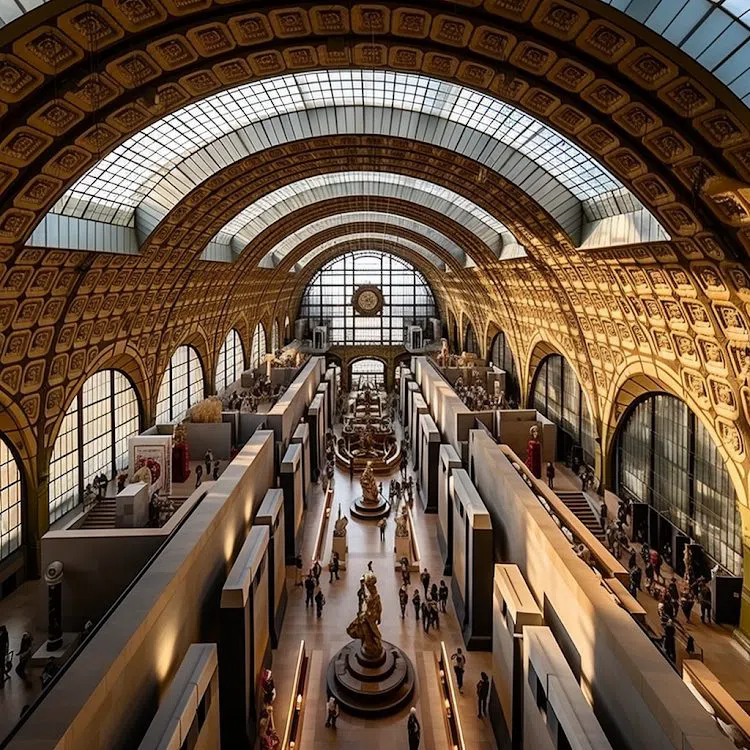
Musée d'Orsay (7th, on the Left Bank quai facing the Tuileries) is the single best wet-October afternoon in Paris, a 1900 railway station with the daylight running the length of the old train shed and the Impressionist floor stacked at the top. Timed entry has been mandatory since March 2026, with the renovation running to summer 2028, so there is no walk-up queue left to join. Entry is €16 adult, €12 on Thursday evening, free for under-18s and EU under-26s, and it closes Mondays. Groups are welcome again from 6 October 2026, after an official notice suspended group admission from 10 June while the reception hall was rebuilt. Book a slot and reconfirm before you travel, because arrangements like that move.
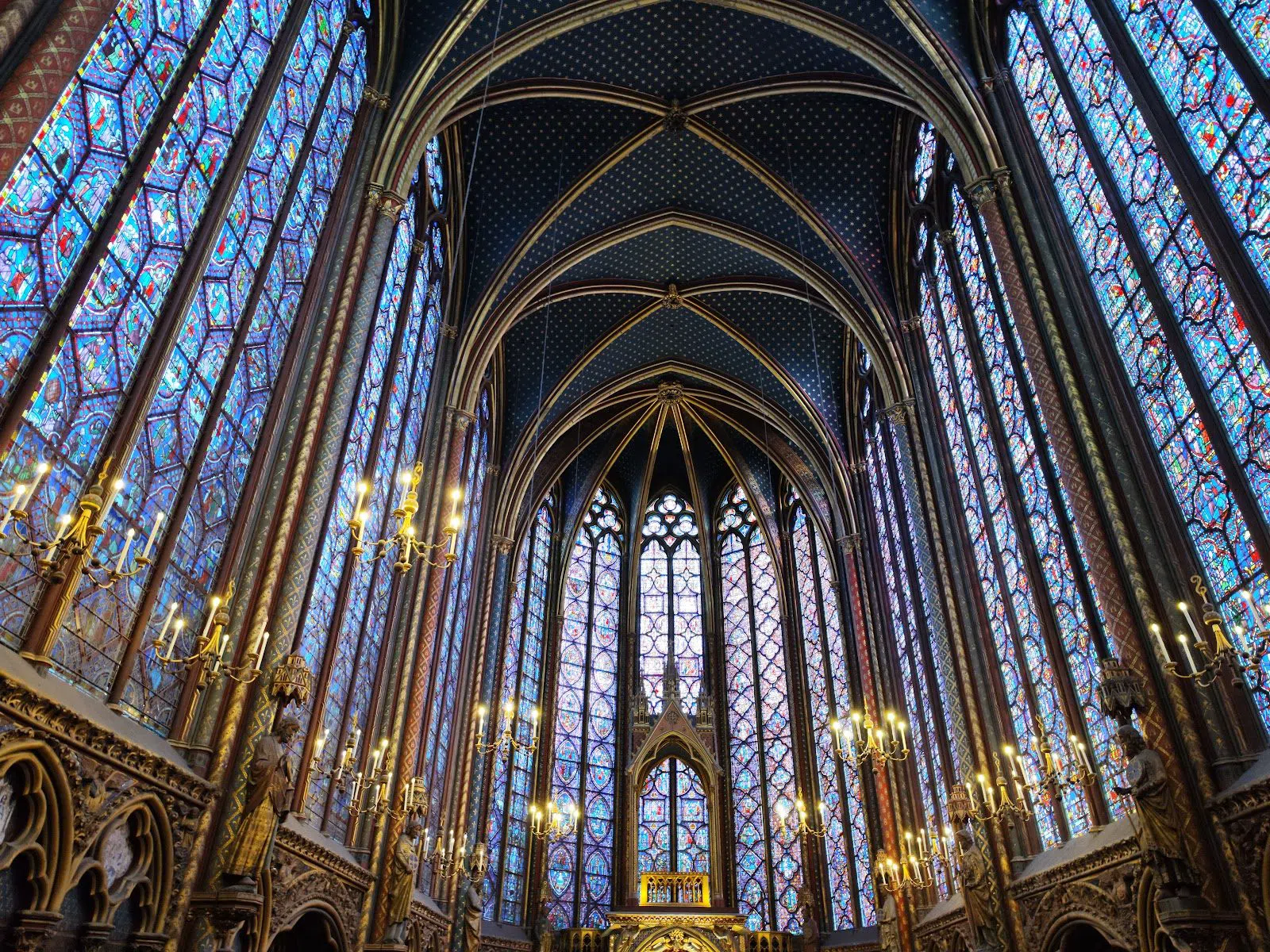
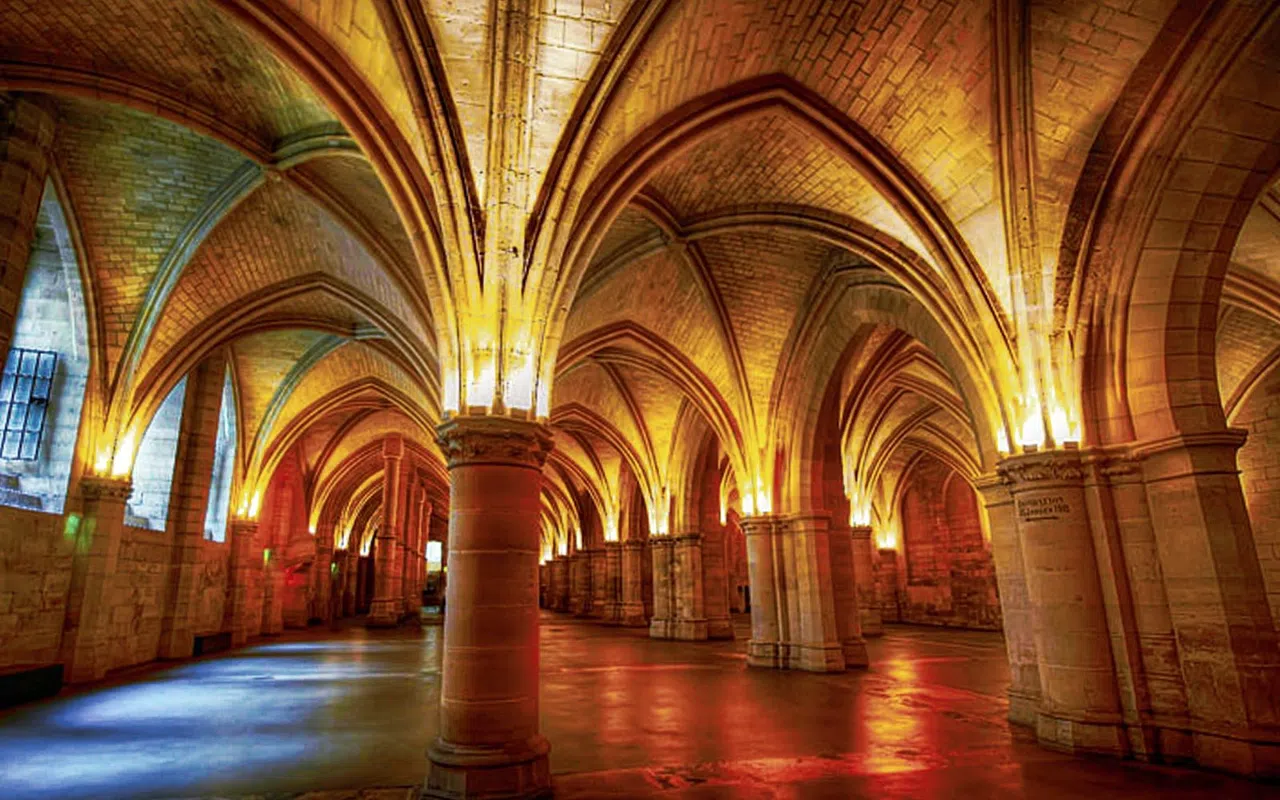
Sainte-Chapelle (Île de la Cité, inside the Palais de Justice complex) is the one place where a flat grey morning beats a bright one. Louis IX built it in the 1240s as a reliquary you walk into, and the upper chapel's glass reads better in even light than in hard sun. From 1 October the hours drop to 9:00 to 17:00 and the chapel shuts between 13:00 and 14:15, so the morning slot is the right play. Tickets are timed and sold on the official site only: €16 for EU residents, €22 non-EU, or €23 and €30 combined with the Conciergerie next door. There is a dedicated trade and group channel, but security screening at the gate is slow, so a group should arrive together and build in twenty minutes it may not need.

Musée de l'Orangerie (Tuileries, at the Seine end of the garden) is an hour rather than a day, which is its value on a trip that has been over-packed. The building went up to overwinter the garden's orange trees and now holds Monet's water lilies in two oval rooms. Adult entry is €12.50, free on the first Sunday of the month with a reservation, closed Tuesdays. During exhibitions the Friday late opening runs to 21:00, reduced from 18:00, which makes it one of the better dark-evening stops in the centre. The oval rooms are small, so booked groups are staggered through them. Reserve a slot rather than arriving as a block of fifteen and expecting to be let in together.
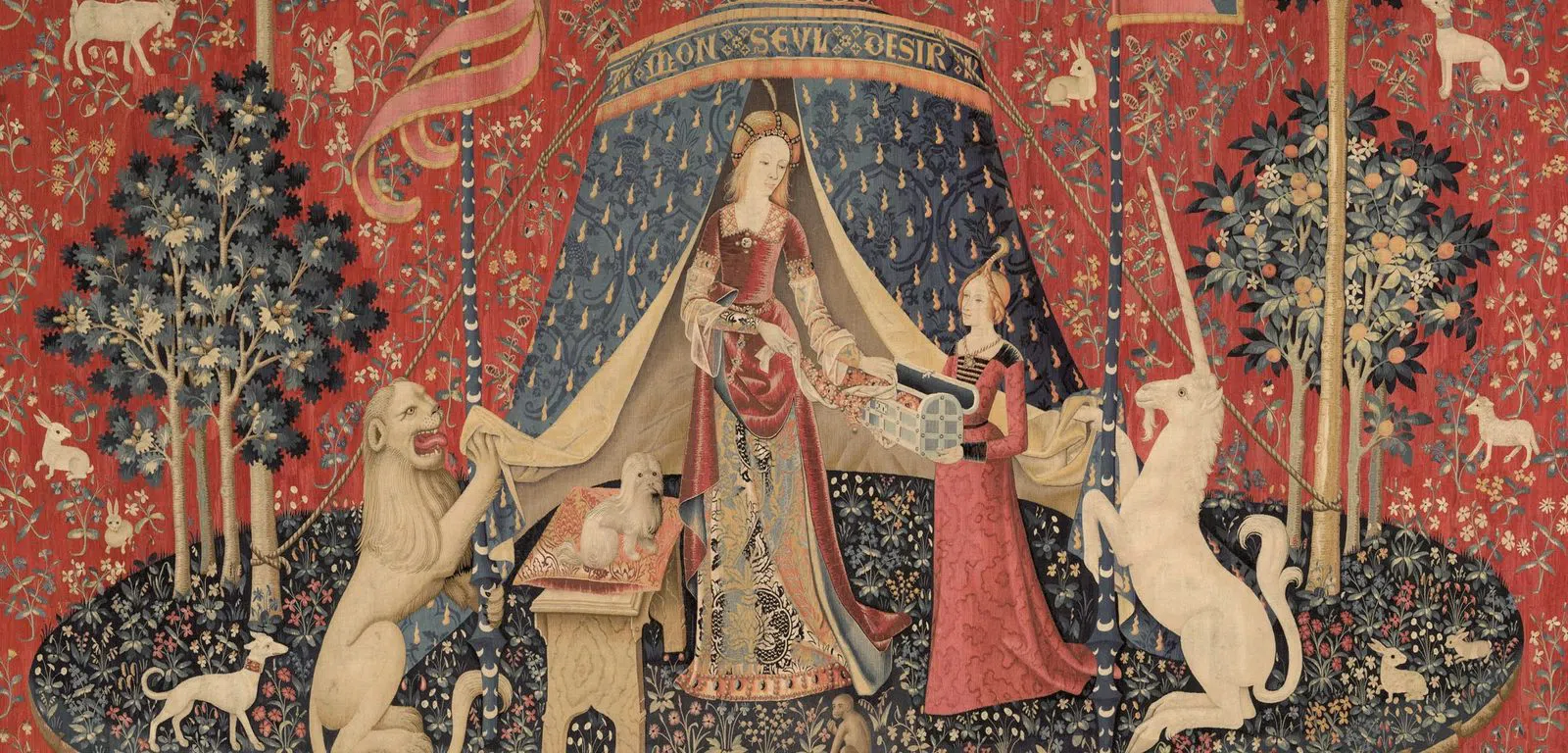
Musée de Cluny (Latin Quarter, built over the Roman baths at the Saint-Michel end of the boulevard) is warm, compact and rarely crowded, which in October counts for a lot. The Lady and the Unicorn tapestries hang in one small rotunda, so large groups are split at the door. Entry is €12, free for EU residents under 26, open Tuesday to Sunday 9:30 to 18:15 with late nights to 21:00 on the first and third Thursday of the month, which in 2026 falls on 1 and 15 October. The Nicolas Flamel exhibition opens on 13 October, reason enough to weight a trip towards the middle or end of the month.
Two openings worth building a day around
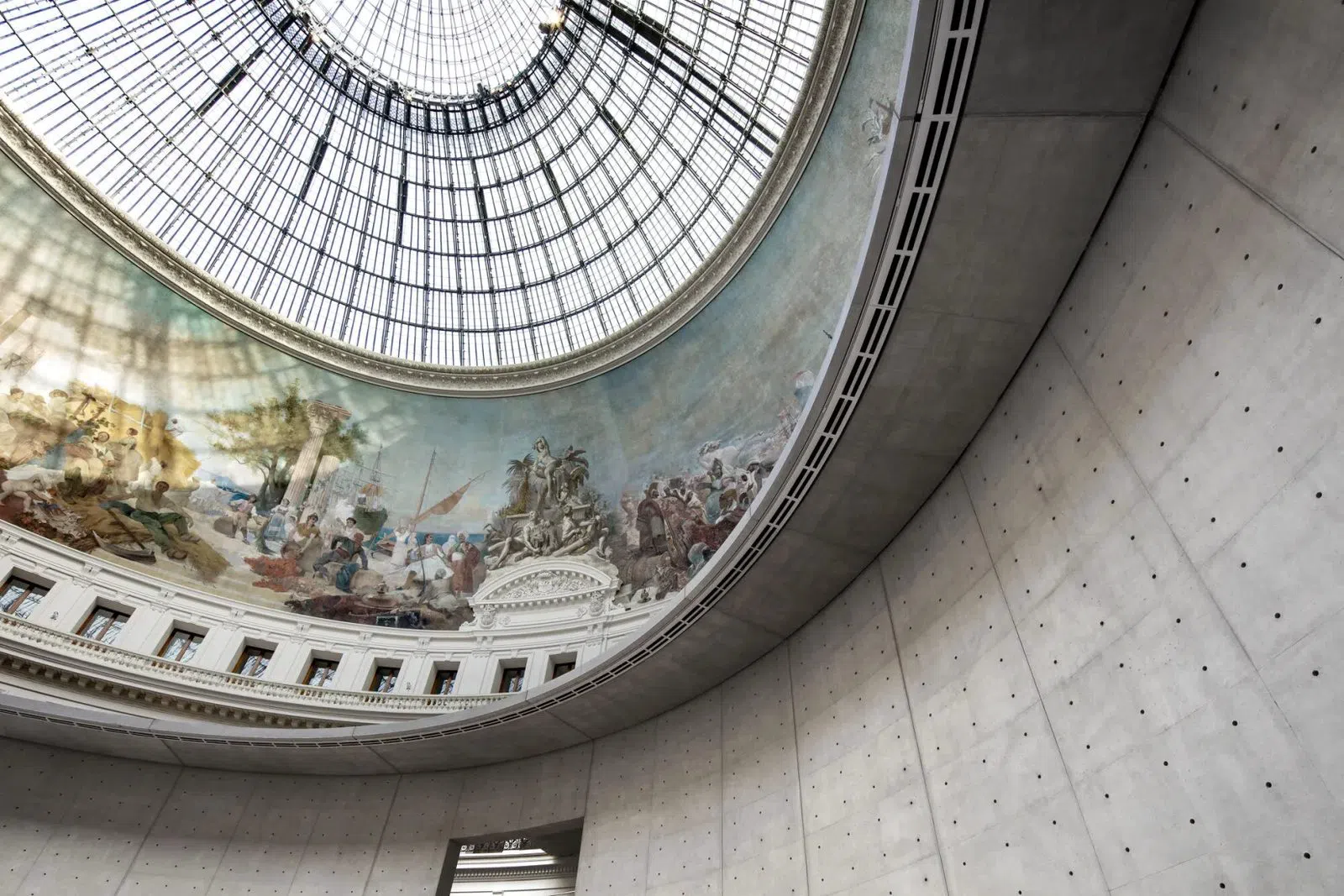
Bourse de Commerce — Pinault Collection (Les Halles, 1st) is the old circular grain hall under its 19th-century dome, with a concrete cylinder dropped inside it. A large group show lands on 7 October 2026, roughly 700 works by more than 70 artists, which makes it the timeliest major opening of the month. Entry is €15, €10 reduced, and late-afternoon free entry has been running, though confirm on the day rather than banking on it. Open 11:00 to 19:00, to 21:00 on Friday, closed Tuesdays. The spiral ramp and rotunda swallow a crowd better than almost any museum in the city, so this is one of the few that works for a party of ten; the top-floor restaurant privatises if you need it to.
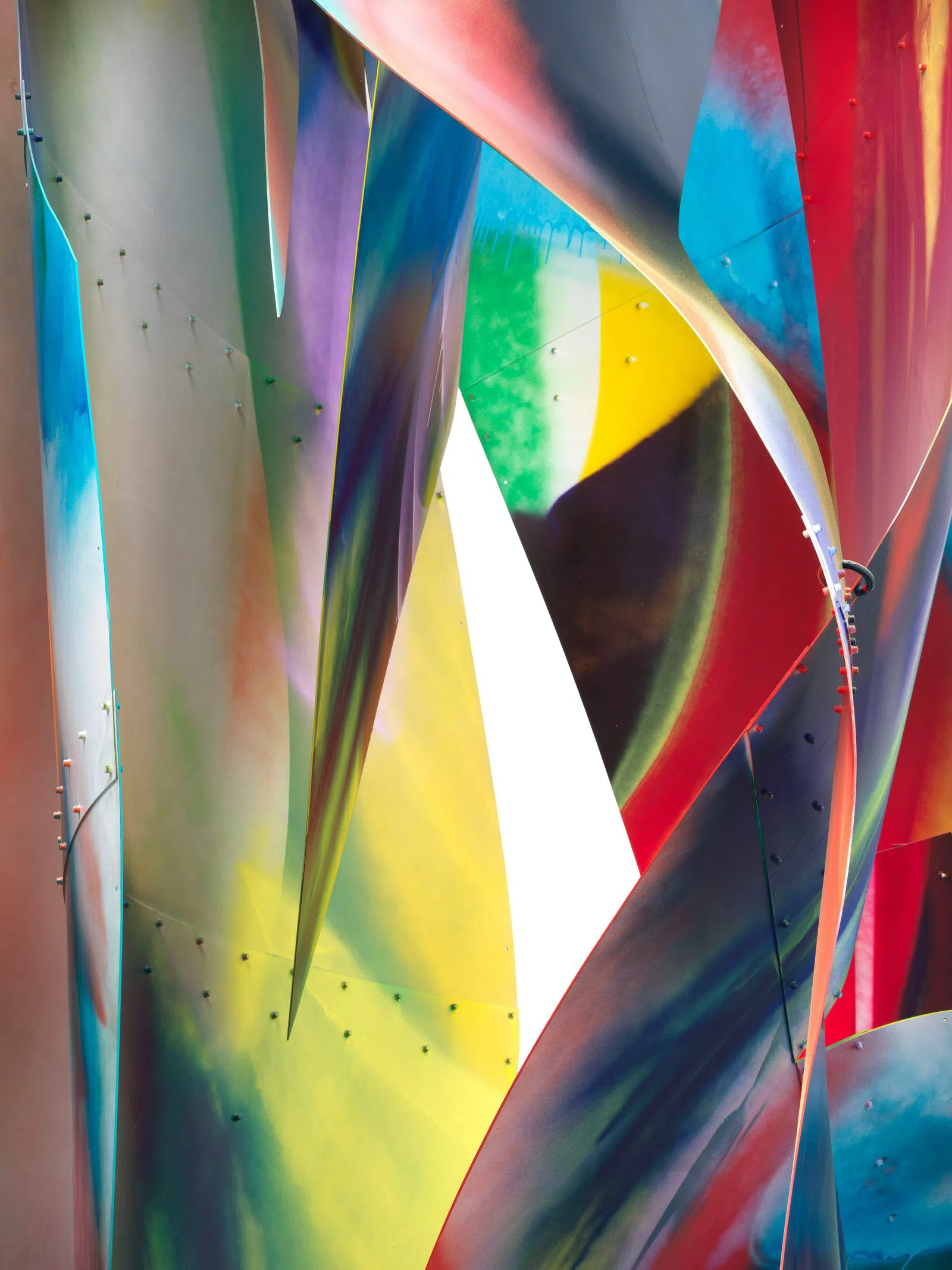
Fondation Louis Vuitton (Bois de Boulogne, 16th) is a trip out and earns it on the building alone. The roof terraces are the one place in Paris where autumn colour and the skyline land in the same frame, and they spread a group across several levels instead of bottlenecking it at a single viewpoint. 'Gustave Fayet: Collector — Designer' opens 9 October 2026. Premium adult entry is €22 and a family ticket is €46 for two adults and up to four under-18s. Closed Tuesdays. Group tickets and guided groups are both available, which is not true everywhere on this list.
Dry hours that barely cost anything
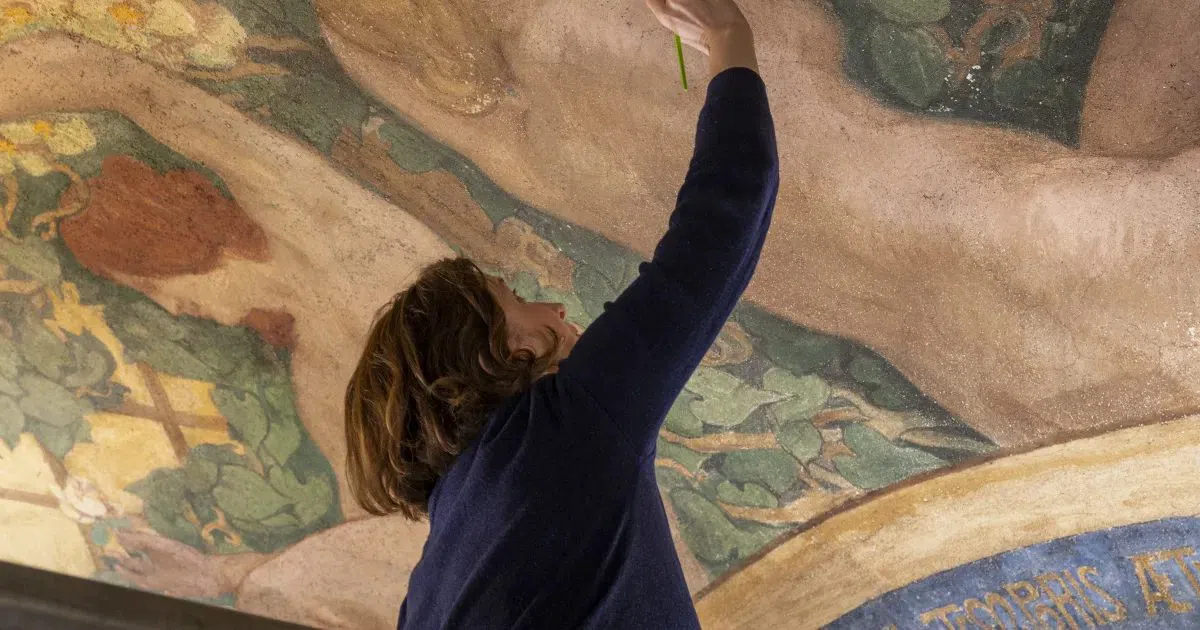
Petit Palais (8th, on avenue Winston-Churchill just off the Champs-Élysées) was built for the 1900 Exposition Universelle and keeps its permanent collection free, which makes it the best free wet-weather hour in the city and a budget release valve halfway through an expensive week. Temporary exhibitions run roughly €8 to €15. It closes Mondays and stays open to 20:00 on Friday and Saturday, and the arcaded garden café keeps serving in drizzle. Free entry means a group walks in without ticketing friction, though guided groups should still book and the café only seats small parties.
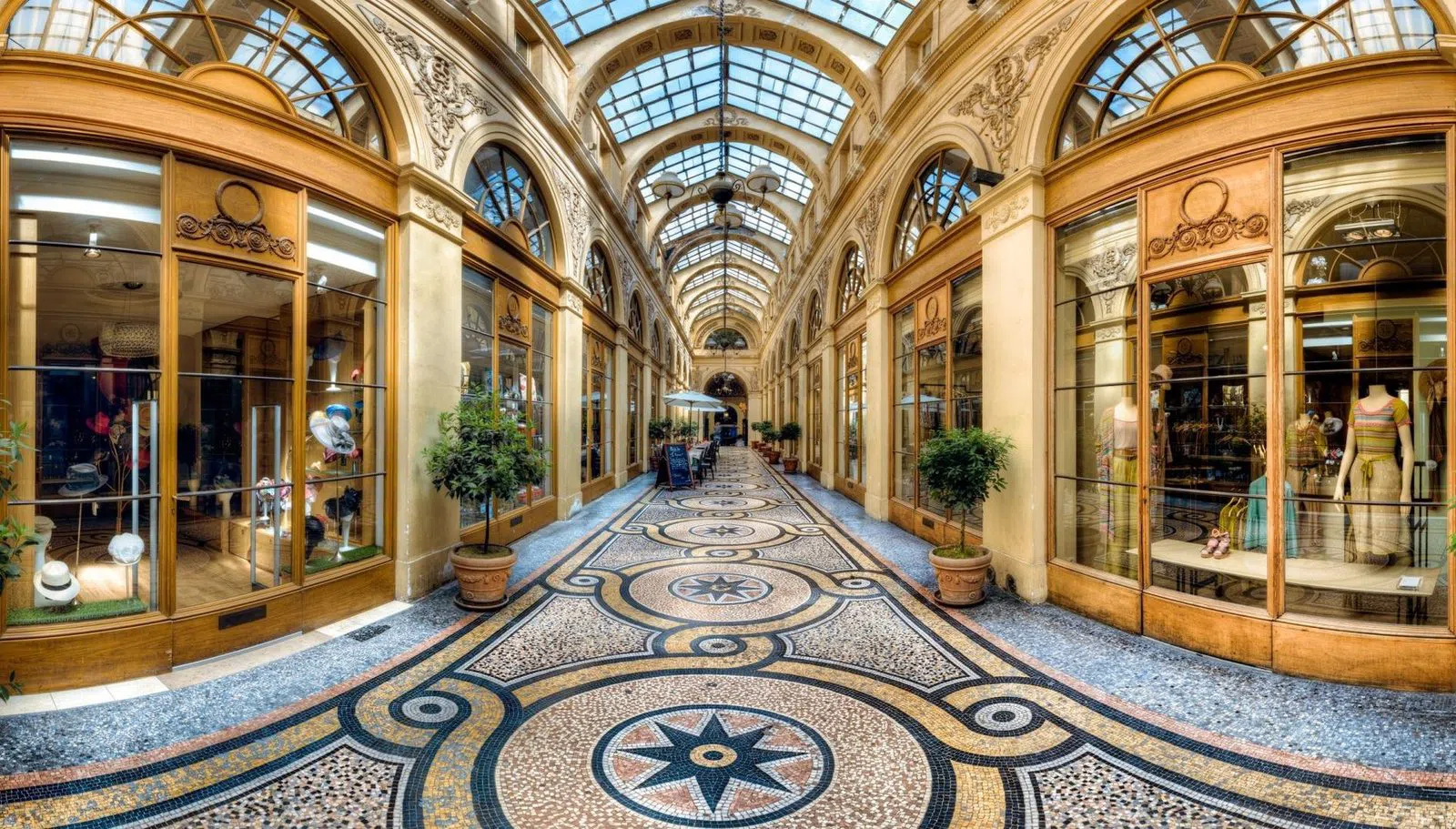
Galerie Vivienne (2nd, tucked behind the Palais-Royal) opened in 1823 and is the rain plan that does not feel like a rain plan. Link it north through the passages des Panoramas, Jouffroy and Verdeau and you have an hour of dry, lamplit walking under glass, with second-hand bookshops and lunch counters on the way. It is a public thoroughfare, so there is no door policy at all, but the individual boutiques and the tearoom take small groups only. Walking it costs nothing; coffee and cake is around €8 to €15.
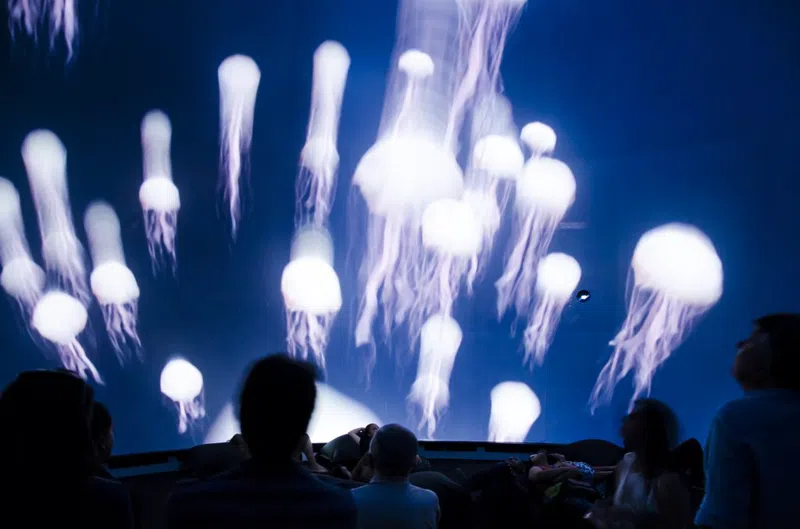
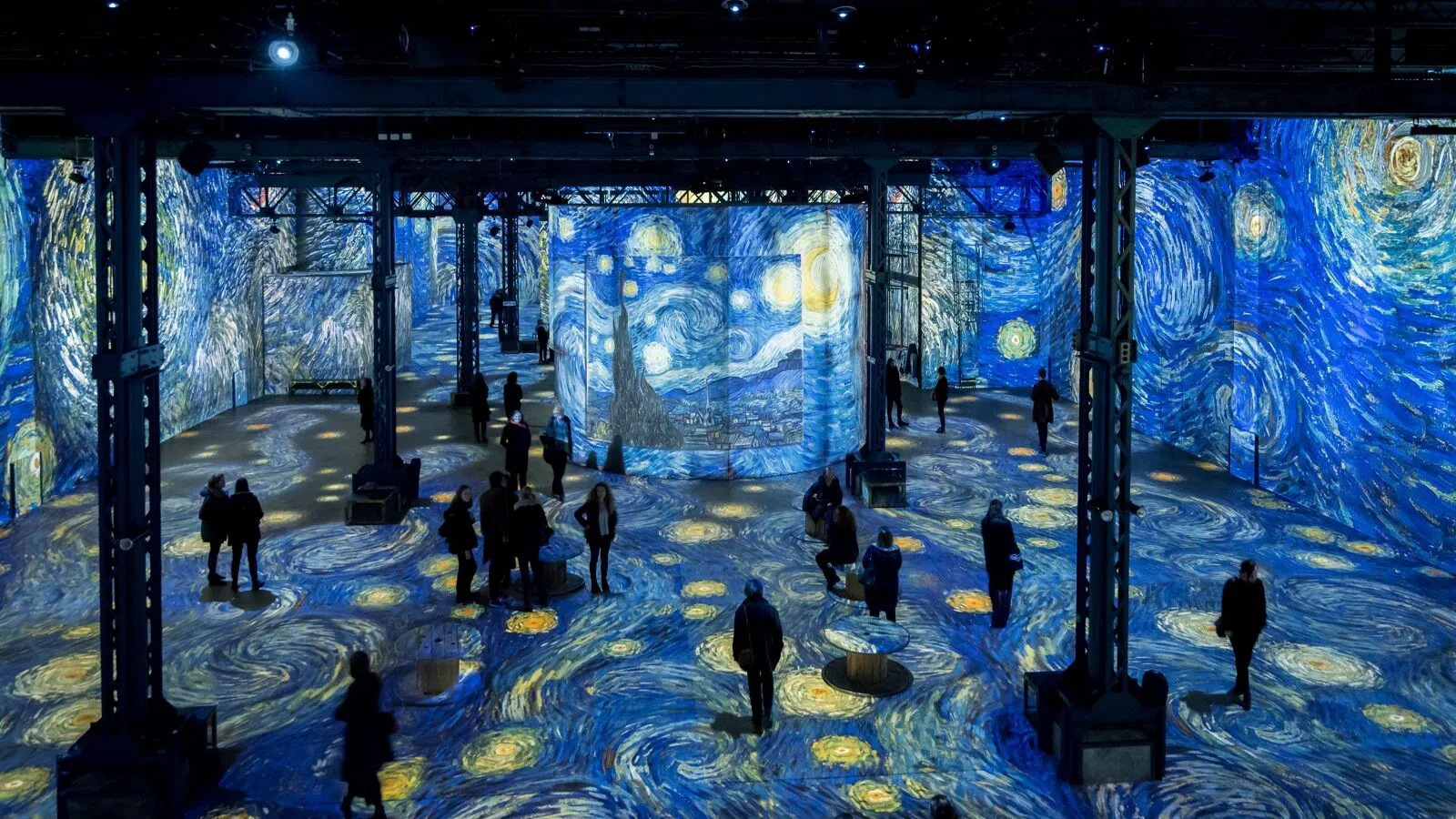
Atelier des Lumières (11th, in a former iron foundry on rue Saint-Maur) has no fixed session times: you walk in and stay as long as you like, which suits a mixed-age group where nobody agrees on how long a room is worth. Tickets run roughly €16 to €22 depending on slot and show, and group and private bookings are taken. Check the calendar before you commit, because each title plays on set weekdays, and the current cycle of Renaissance, Van Gogh, The Little Prince and Coldplay ends between 10 and 14 October 2026, with a new programme after. If your dates straddle that changeover, confirm what is actually on.
The outdoor days, when you get them
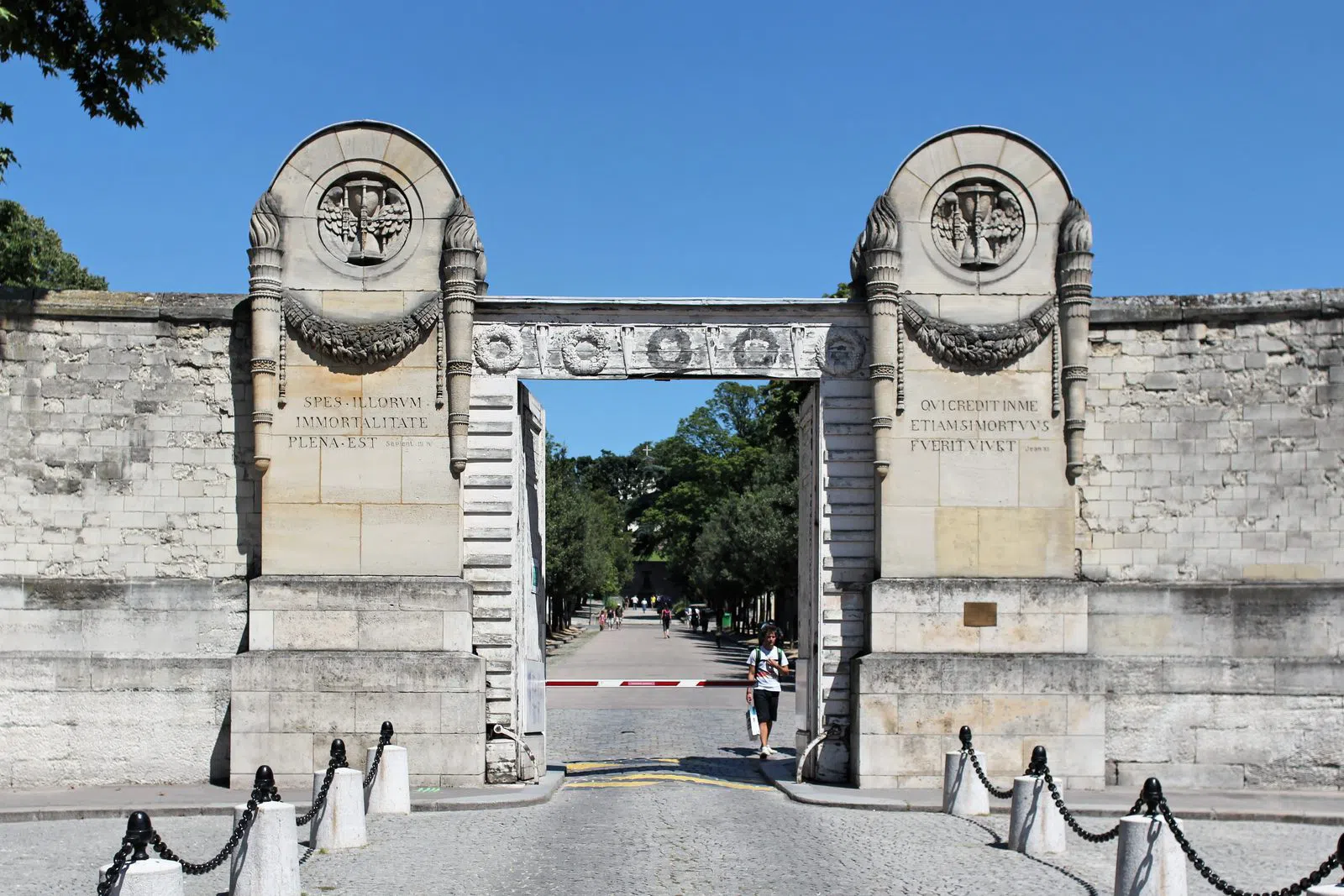
Cimetière du Père-Lachaise (20th, up the hill above Ménilmontant) opened in 1804 as a garden cemetery on what was then farmland outside the city, and October is the month it is at its best: the hillside turns, and the crowds thin at the same time. It is free and unticketed, so any size of group can walk in; free maps are handed out at Porte des Amandiers Tuesday to Friday until the end of October, and guided tours run at weekends. Hours are 8:00 to 18:00 on weekdays through October, dropping to 17:30 from November. The cobbles and worn ledger stones are slippery in rain in a way that surprises people, so wear grippy flat shoes and slow down on the steep paths above Chemin Denon.
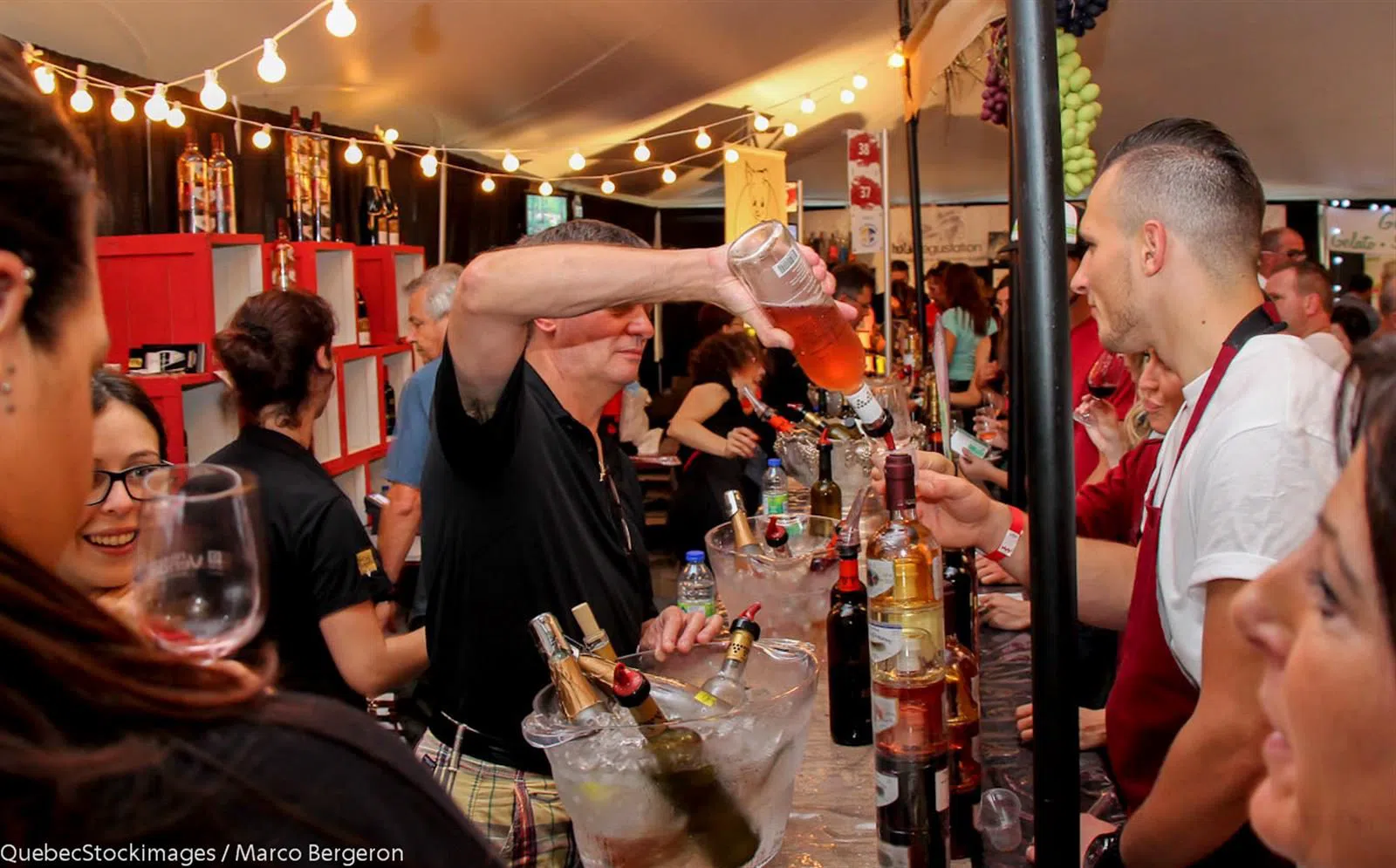
Fête des Vendanges de Montmartre (18th, around the Clos Montmartre vineyard) runs its 93rd edition from 7 to 11 October 2026 on the theme 'Le 18e donne le rythme', five days of concerts, parades and the harvest of the city's own vines. It is an open-air street festival, so there are no tickets or door policies for the parade and street events; tasting passes and food stalls cost extra. Those are also the days Montmartre is at its most crowded, and the tasting marquees get very tight at the weekend. The Wednesday and Thursday are the civilised end of it.
Eating without a reservation
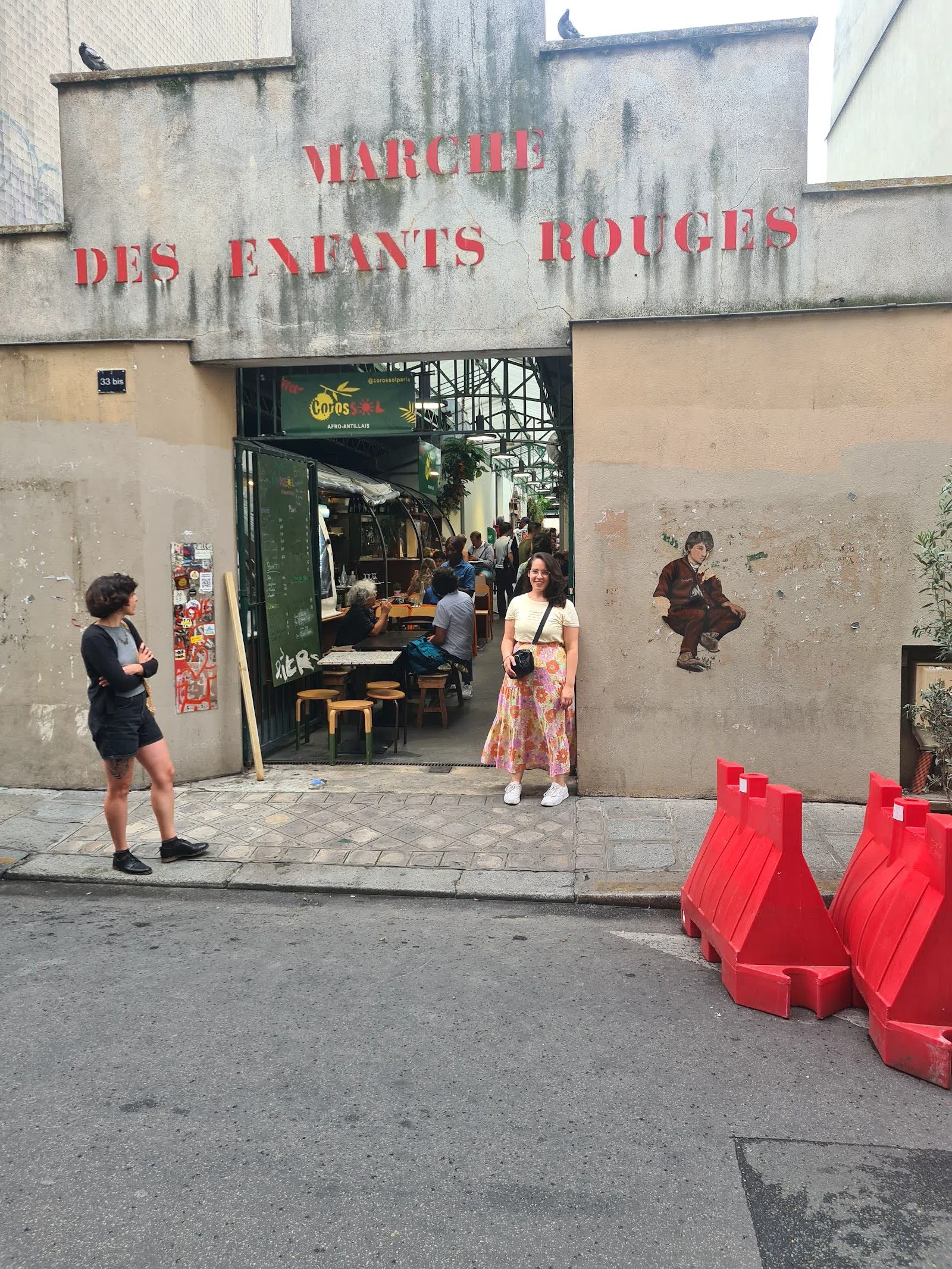
Marché des Enfants Rouges (Marais, on rue de Bretagne in the 3rd) has been running since 1615 and is the fastest roofed lunch in the quarter when the weather turns. Plates are €10 to €20, there are no bookings, and the communal benches will take four to six of you if you are lucky; beyond that you split across stalls and eat standing. Closed Mondays, 8:30 to 19:30 Tuesday to Saturday, and on Sunday it shuts at 14:00. Arrive before 12:30 or you queue.
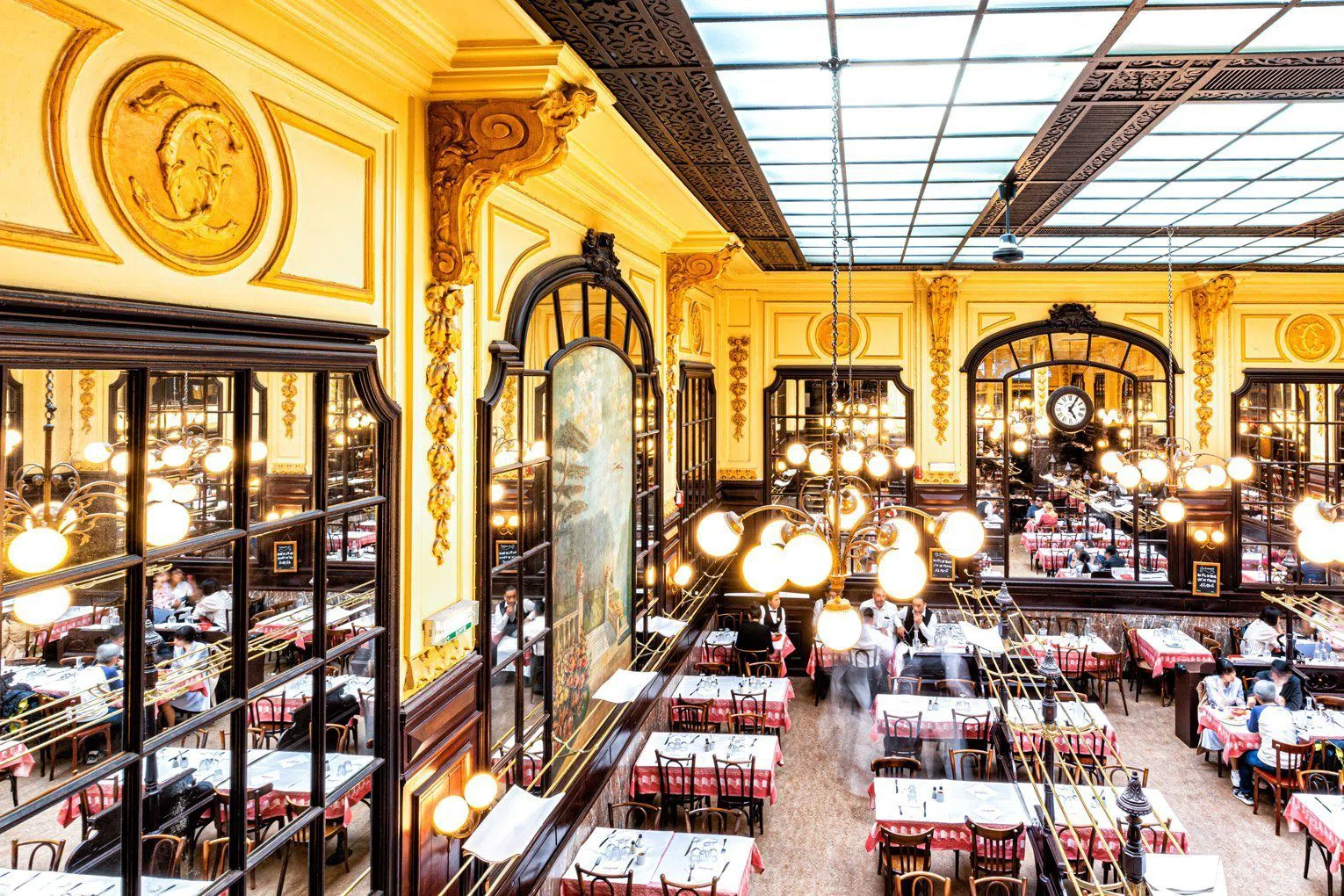
Bouillon Chartier Grands Boulevards (9th, on rue du Faubourg-Montmartre, right where the passage walk spits you out) has fed the district since 1896 and takes no reservations whatsoever. Everyone queues, groups get seated at shared tables as space opens, and big parties should expect to be split up. Starters from €1, mains from €7, desserts from €2, a full meal under €20. It is open 365 days a year, 11:30 to midnight without a break, which makes it the reliable catch when a plan collapses or a train lands late. Go for the room and the price, not for a quiet dinner.
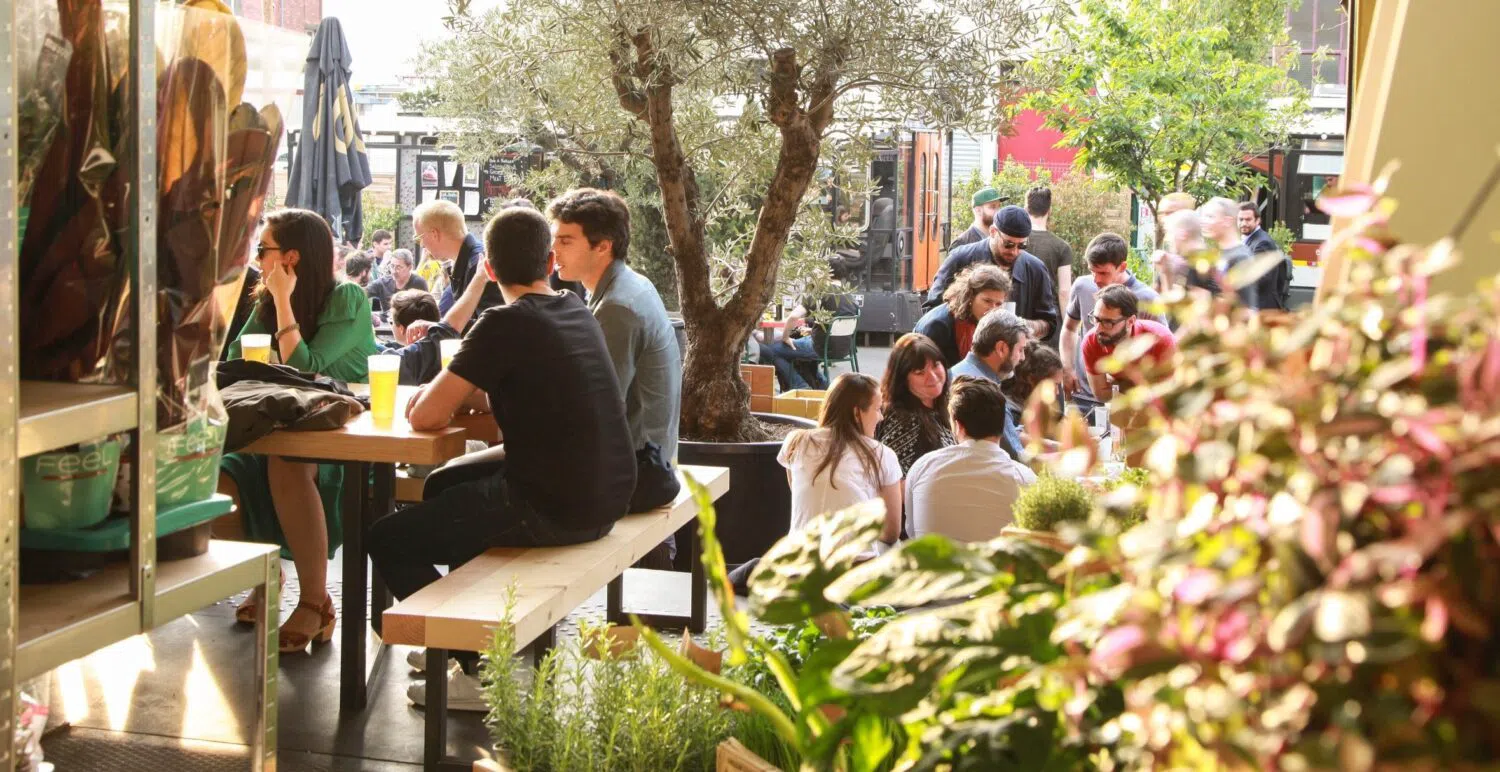
Ground Control (12th, in a former railway building behind Gare de Lyon) is the most forgiving evening in the city for a group that cannot agree on food: 4,500m² of communal seating, walk-in, no door policy, and room for a party that would be turned away anywhere else. Plates are €10 to €20 and drinks €5 to €10, with DJ sets and events most weekends. The Netflix Book Festival takes the hall over from 16 to 18 October 2026. Much of it is covered; the terrace is not, so check the sky before you commit to a table outside.
The one rooftop that still works in the cold
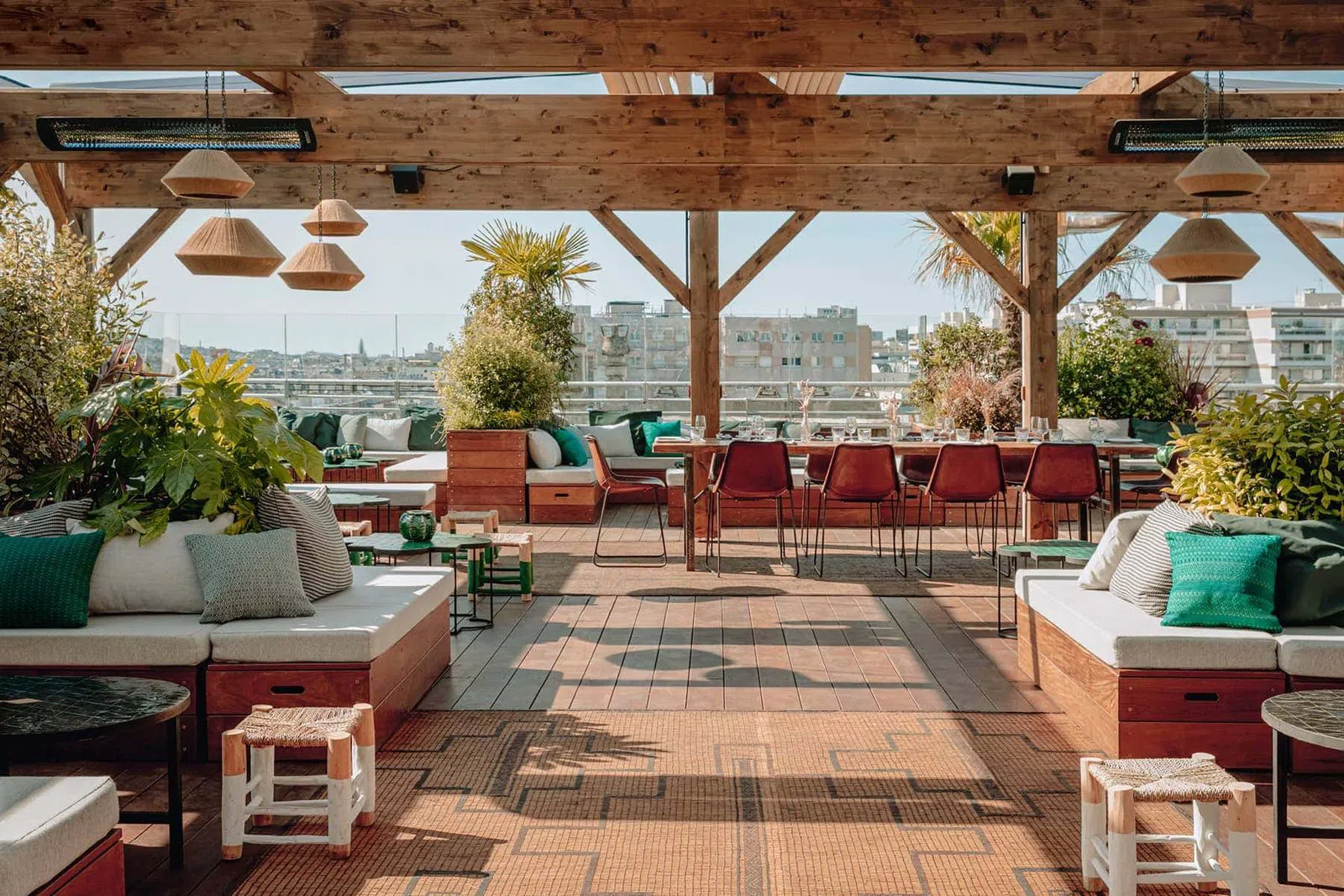
Le Perchoir Ménilmontant (20th, a short downhill walk from Père-Lachaise) matters in October precisely because most Paris rooftops are useless by now. This one has a retractable roof and heaters, so a cold, damp evening up there is still an evening out. Bookings open three weeks ahead and the bar queues at street level, so arrive before 19:00 or accept the line. Cocktails are €13 to €16, and dinner on the Vecchio floor below runs roughly €35 to €55 a head. Privatisation for 50 to 300 people is offered year-round, which is the honest answer for a large group: book it rather than turning up mob-handed and hoping.
An hour that costs your legs nothing
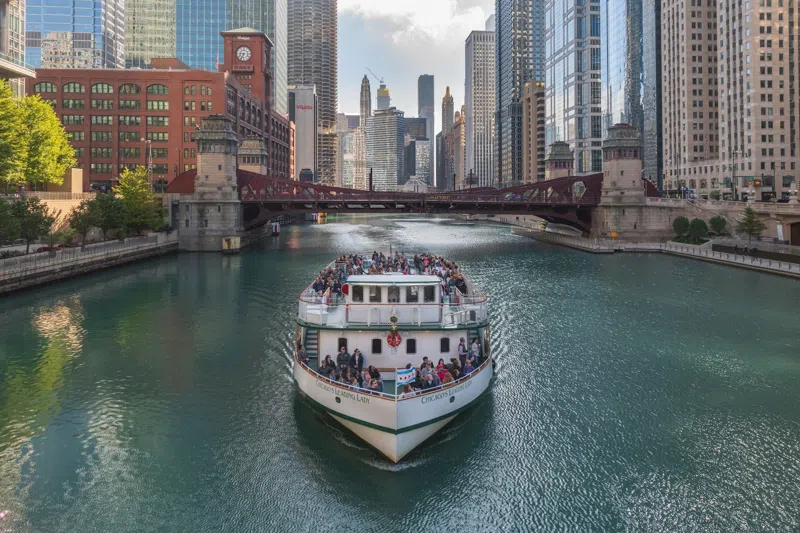
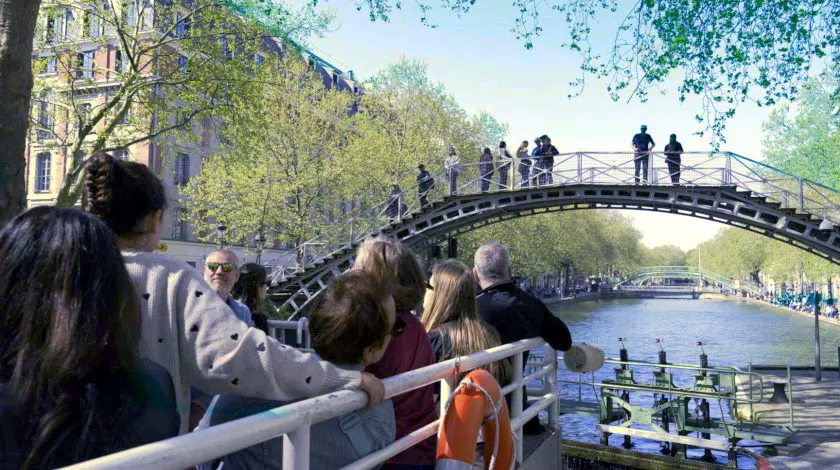
Vedettes du Pont Neuf (Île de la Cité, from the square du Vert-Galant at the western tip) runs daily year-round with glazed, heated decks. The one-hour cruise is from €15 online or €17 at the kiosk, €31 with champagne, and group rates start at 24 people booked direct. A boat in October is recovery rather than sightseeing, so wedge it between two walking days, ideally at dusk, when the bridges light and the river does the work. The covered decks also keep a group together and dry, which no walking tour manages in the rain.
Three day shapes that do not wear you out
A week here fails when it is built as a list of sights rather than three or four walks. The island and Left Bank day: Sainte-Chapelle at opening, lunch in the Latin Quarter, Cluny for the tapestries in the early afternoon, then the boat from Vert-Galant at dusk. The covered-passage day, which is also the wet-weather day: the Orangerie first thing, across the Tuileries and through the Palais-Royal to Galerie Vivienne, north through the passages, and out at Chartier for an early, cheap dinner. The east day: Père-Lachaise while the light holds, Atelier des Lumières when it goes, Le Perchoir after dark, with Ground Control as the backup if the roof is full.
Each of those is one journey out and one back. Basing yourself in the 2nd, 3rd or 11th puts two of the three within walking distance of the door, which is worth more in October than a view is. See the Paris hotel search for what sits where, and the Paris guide for the rest of the city beyond this month.
Practical notes for an October week
Getting around. Buy a rechargeable travel card at any staffed Metro station and load a carnet onto it rather than buying single tickets, which is cheaper per ride and faster at the barrier. Everything above except the Fondation Louis Vuitton sits inside a compact centre; that one is a genuine excursion, so give it a half day rather than wedging it between two other things.
Closed days. Mondays take out the Musée d'Orsay, the Petit Palais, the Musée de Cluny and the Marché des Enfants Rouges, so spend them on Sainte-Chapelle, the passages and Chartier. Tuesdays take out the Orangerie, the Bourse de Commerce and the Fondation Louis Vuitton, so spend them on the Orsay, Cluny and Père-Lachaise. Sainte-Chapelle, Père-Lachaise, the passages, the boat and Chartier run whatever the day.
Cash. Cards work almost everywhere, including most market stalls, but carry €20 to €30 in small notes and coins for the market counters, festival tastings and the odd tabac.
Money. Two paid museums, a market lunch, the boat and a cocktail comes to roughly €70 to €80 a head before dinner. A day of the Petit Palais, Père-Lachaise, the passages and the Montmartre festival costs nothing at the door, and Chartier keeps dinner under €20. Alternating those two kinds of day is how a week here stays affordable without feeling thin.
Shoes and timing. One pair with real grip, because the cemetery paving and the wet cobbles around the passages are the two places people actually go over. Book the timed entries the week before you fly, not the night before, and reconfirm anything involving a group.
Before you go
What is the weather actually like in Paris in October?
Expect highs in the mid-teens Celsius and nights around nine or ten, with rain frequent enough that a week built entirely outdoors will be disrupted at least once. It is comfortable walking weather, less so for sitting outside, so keep a dry alternative in reserve for each day (the Petit Palais, the covered passages, the Orangerie) and decide at breakfast.
Do I need to book museum tickets in advance, or can I still walk up?
Book. Timed entry has been mandatory at the Musée d'Orsay since March 2026, with the renovation running to summer 2028, so there is no walk-up queue. Sainte-Chapelle sells timed tickets on its official site only. The Orangerie and Cluny take reservations and go much faster with one. The Petit Palais permanent collection, Père-Lachaise and the covered passages need nothing.
What is open on a Monday or a Tuesday?
Mondays close the Musée d'Orsay, the Petit Palais, the Musée de Cluny and the Marché des Enfants Rouges. Tuesdays close the Orangerie, the Bourse de Commerce and the Fondation Louis Vuitton. Sainte-Chapelle, Père-Lachaise, Galerie Vivienne and the passages, the Vedettes du Pont Neuf cruise and Bouillon Chartier all run regardless, and Chartier is open 365 days a year, 11:30 to midnight.
When do the clocks change and how much daylight will I lose?
Sunset moves from around 19:30 at the start of October to roughly 18:30 by the 24th, and the clocks go back overnight on 24 to 25 October 2026, after which it is dark before six. A late-October trip should front-load the outdoor sights and route the evenings through interiors with late openings: the Orangerie to 21:00 on Fridays during exhibitions, the Bourse de Commerce to 21:00 on Fridays, Cluny to 21:00 on 1 and 15 October.
Can a group of eight or more eat and drink without reservations?
Sometimes, but plan for it. Ground Control is walk-in, with 4,500m² of communal seating and no door policy, so it is the safest bet for a big group. Bouillon Chartier takes no reservations at all and will split a large party across shared tables. Marché des Enfants Rouges handles four to six on the benches, and beyond that you eat spread across stalls. Le Perchoir Ménilmontant should be booked three weeks ahead, and privatises for 50 to 300 people.