The Paris issue
Where to Sleep in Paris Without Losing Days to the Métro
Seventeen Paris addresses picked for how few métro rides they cost you: a €45 hostel bed in the Marais at one end, a five-star on the Left Bank at the other.

By Sasha LindholmThe unhurried side of Paris
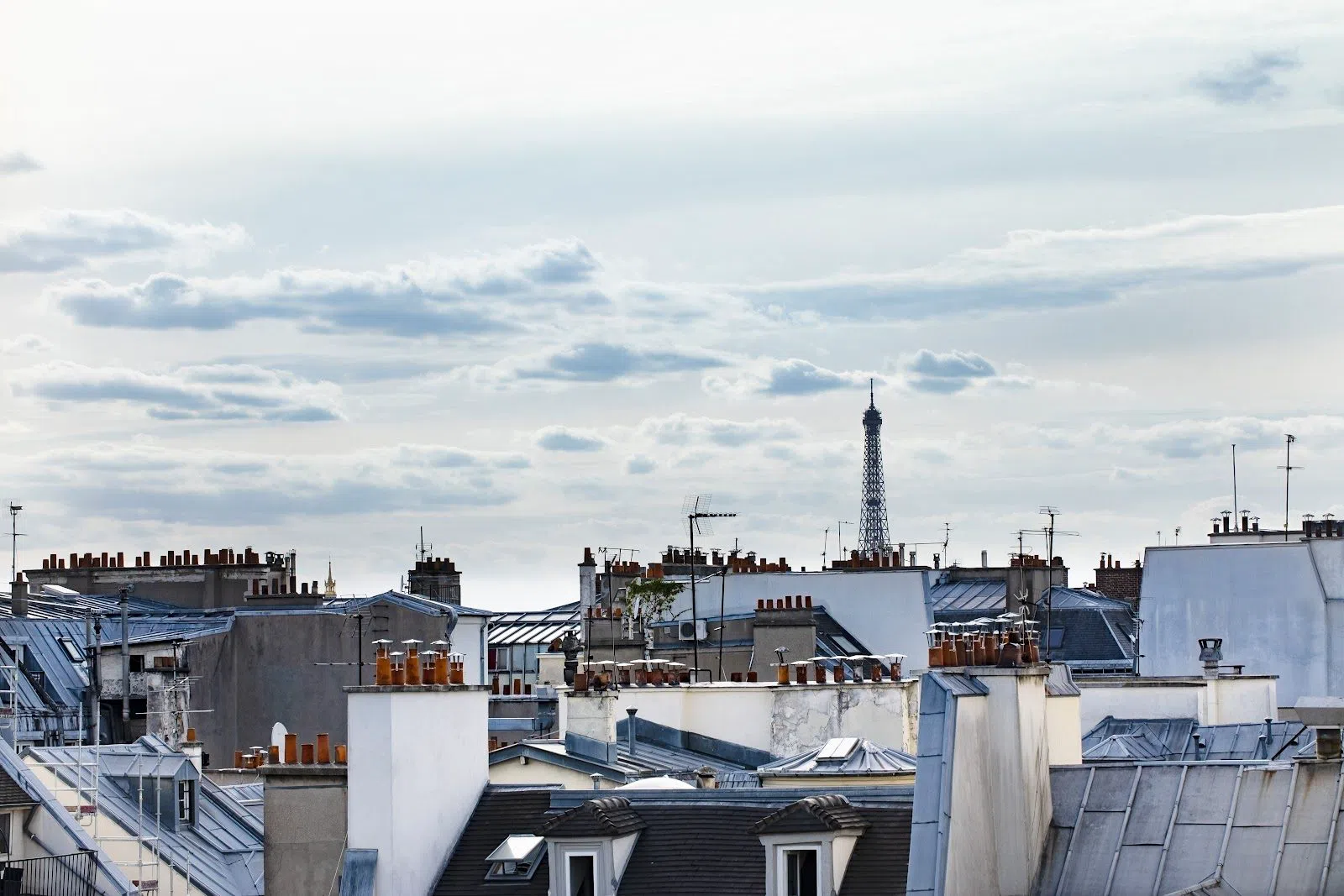
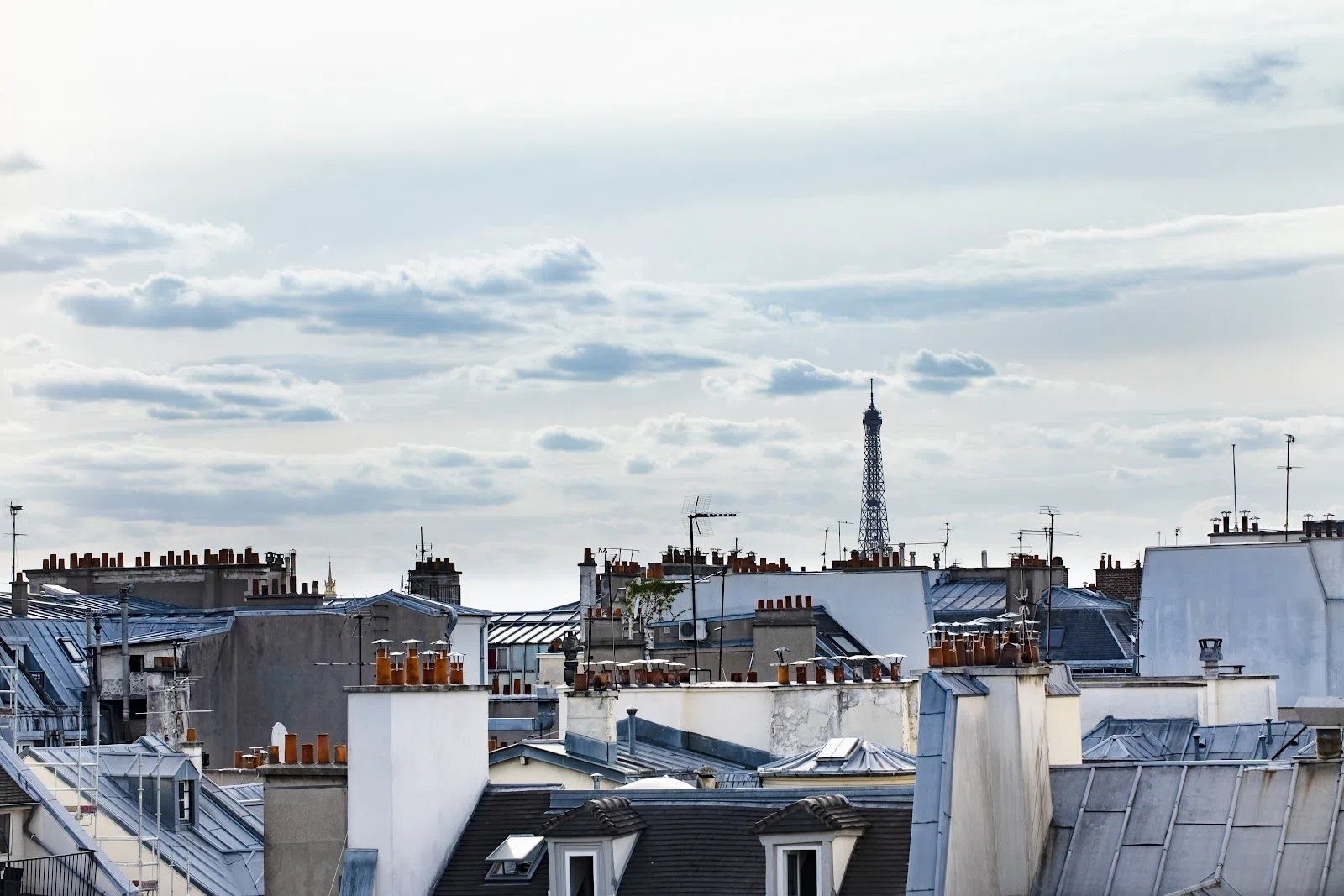
Paris is a small city that behaves like a large one. Stand at Châtelet and the Eiffel Tower, Montmartre and Bastille are each about twenty minutes off; walk instead, and the Louvre to Notre-Dame is a quarter of an hour along the river. What exhausts people on a first trip is rarely the sights. It is the four extra journeys a day that the wrong bed adds to every plan.
The pattern is simple enough. Sleep inside the ring made by the 1st, 2nd, 3rd, 4th, 5th and 6th arrondissements and most days become a walk with a métro ride at either end. Sleep further out for the same nightly rate and you buy floor space, then spend the difference underground. What follows are addresses across that ring and just beyond it, grouped the way you would actually plan a trip: by where you want to wake up, and by whether you are two people or twenty. If you want to sort them by date and price rather than by street, run a Paris hotel search once you have decided which of these areas you want.
Châtelet, where the lines converge
Châtelet–Les Halles is the reason the centre costs what it does. Five métro lines and three RER lines meet under one set of tunnels, so nothing in the city is more than a single change from your front door, and a good deal of it is no change at all. The trade is noise and crowds at street level; the reward is that a tired afternoon never turns into a forty-minute commute back to the room.
Hôtel Britannique (1st, a minute from Châtelet) has been trading on that geography for a long time. Thirty-nine keys, doubles at €180–280 a night, with connecting family rooms and a junior suite for anyone travelling four-deep. Small parties are fine; coach groups are not, and the hotel says so rather than letting twenty people discover on arrival that the lobby is the size of a living room. If your list is the Louvre, the Île de la Cité, the Marais and one museum on the Left Bank, this is the most time-efficient address in this guide.
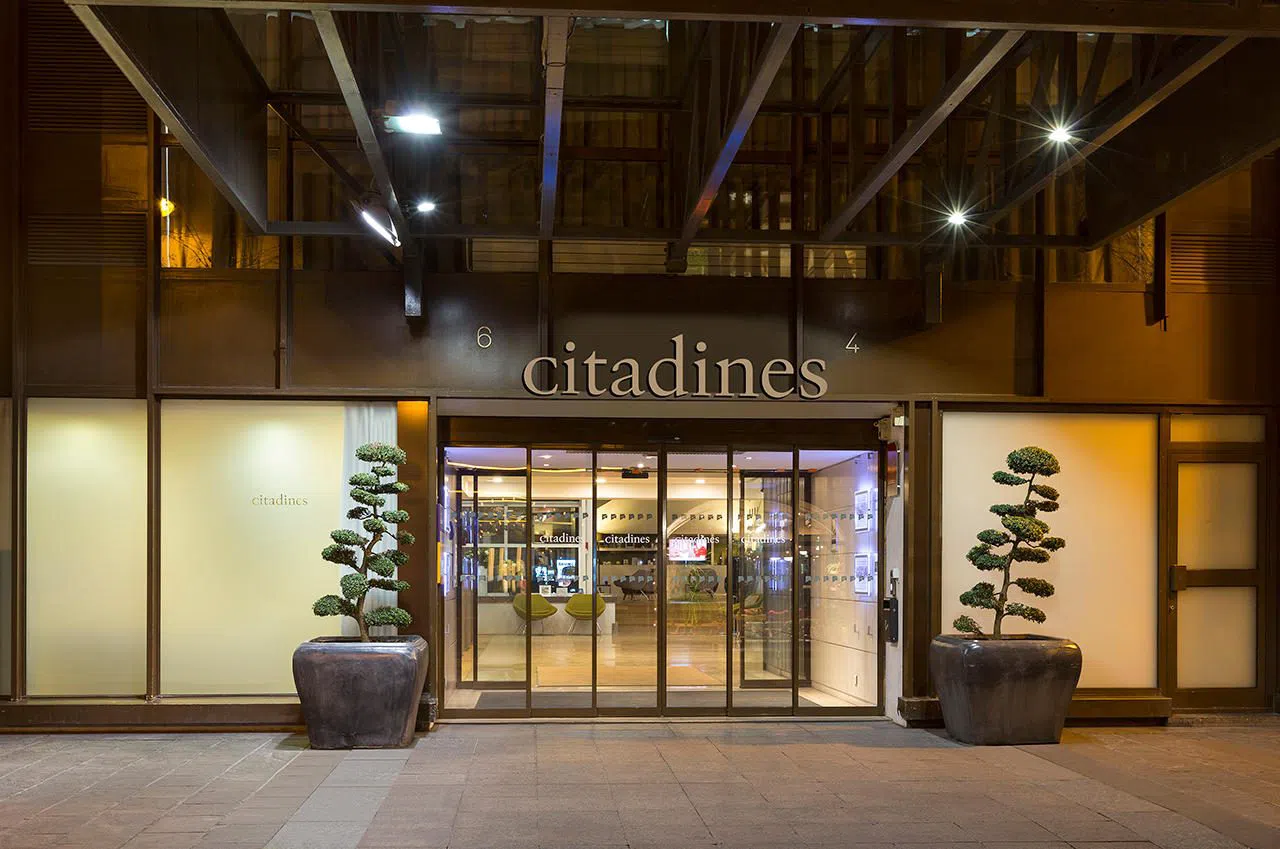
Citadines Les Halles Paris (1st, two minutes from Châtelet–Les Halles) answers a different question. It is an aparthotel: 189 units, studios at €180–320 and one-bedroom apartments sleeping three or four above that, cots free for under-twos, multi-unit bookings treated as routine business. The kitchen matters more than it sounds. Two adults and two children eating breakfast in the apartment, with one proper dinner out, is a materially different week from four restaurant meals a day. It also sits on the RER B, the line in from Charles de Gaulle, which is worth real money when you are arriving with luggage and a jet-lagged six-year-old.
Plan your Paris trip
Live prices from our booking partners.
Free cancellation on many rooms. We may earn a commission when you book.
Montorgueil and the Grands Boulevards, ten minutes from the Louvre
North of Les Halles the 2nd arrondissement narrows into old trade streets, cloth in Sentier and food on Montorgueil, and the walk south to the Louvre takes about ten minutes. This is where central Paris is still priced like a working district rather than a monument.
The Hoxton, Paris (2nd, Sentier) is the rare central hotel with genuine scale: 172 rooms at €200–350, which means availability in months when the Marais has none. It runs an explicit group desk for parties of ten and up, and the large lobby and Jacques' Bar absorb a crowd without anyone working a door policy. Sentier and Grands Boulevards stations are both close, and you can walk to the Louvre or into the Marais without touching the métro at all.
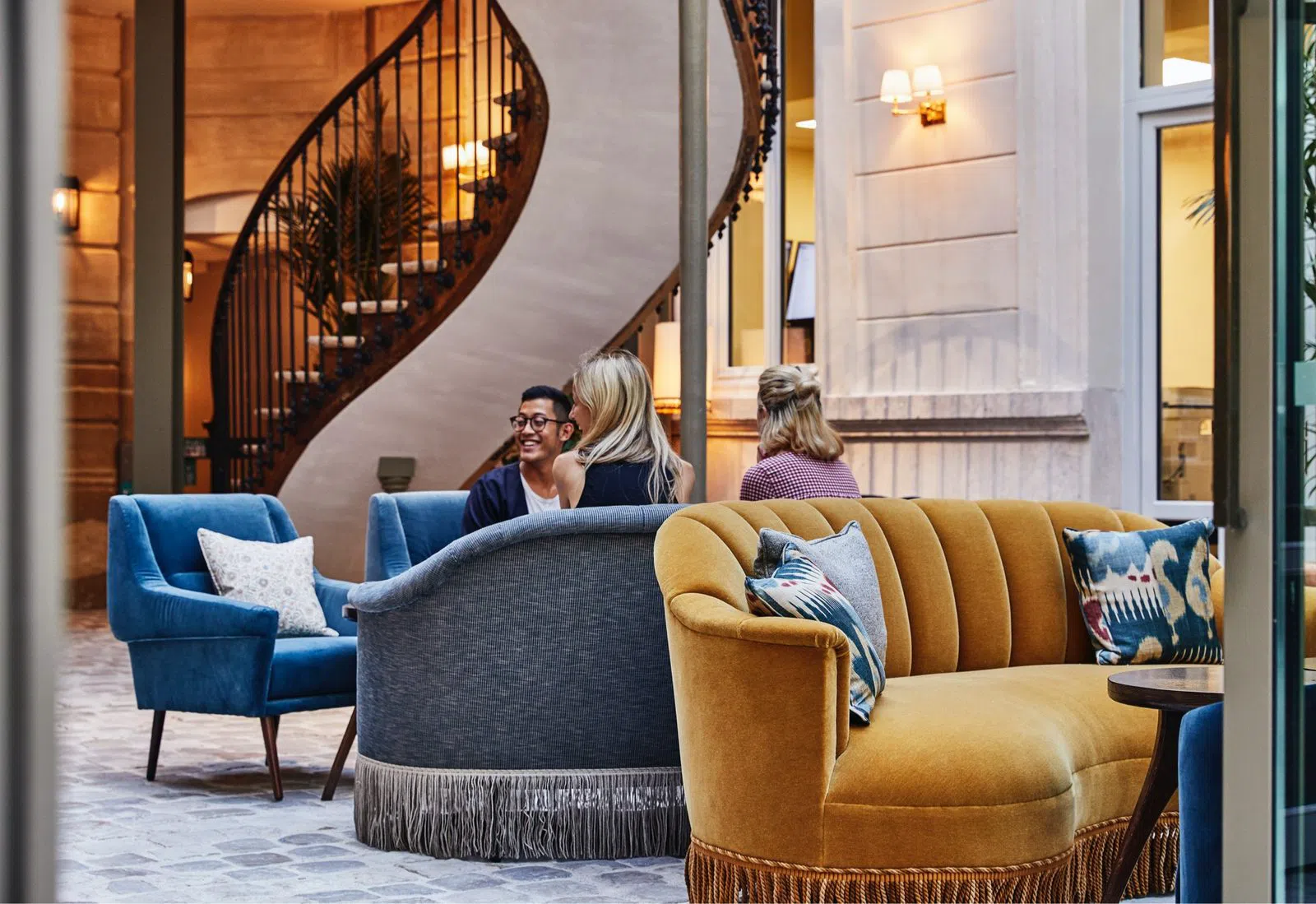
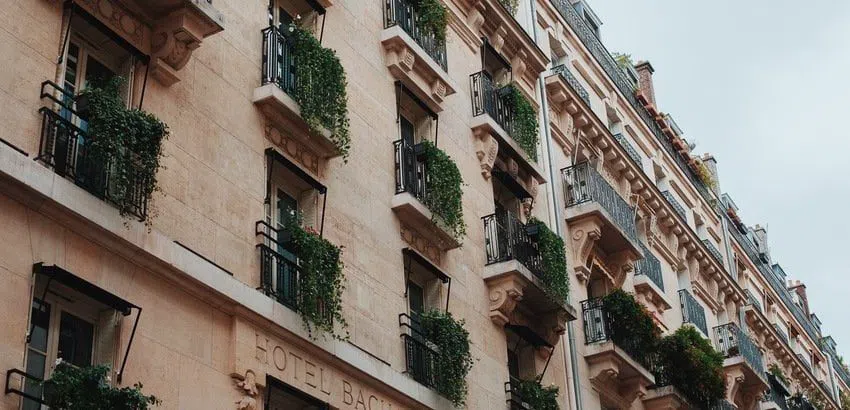
Hôtel Bachaumont (2nd, Montorgueil) sits on the food street rather than near it. The cheese, the oysters and the bakeries are effectively the ground floor of the building, which removes the nightly argument about where to eat. Forty-nine rooms at €250–400, including two family suites of 40–50 sqm that sleep four. Groups are taken by arrangement, not by walking in and asking.
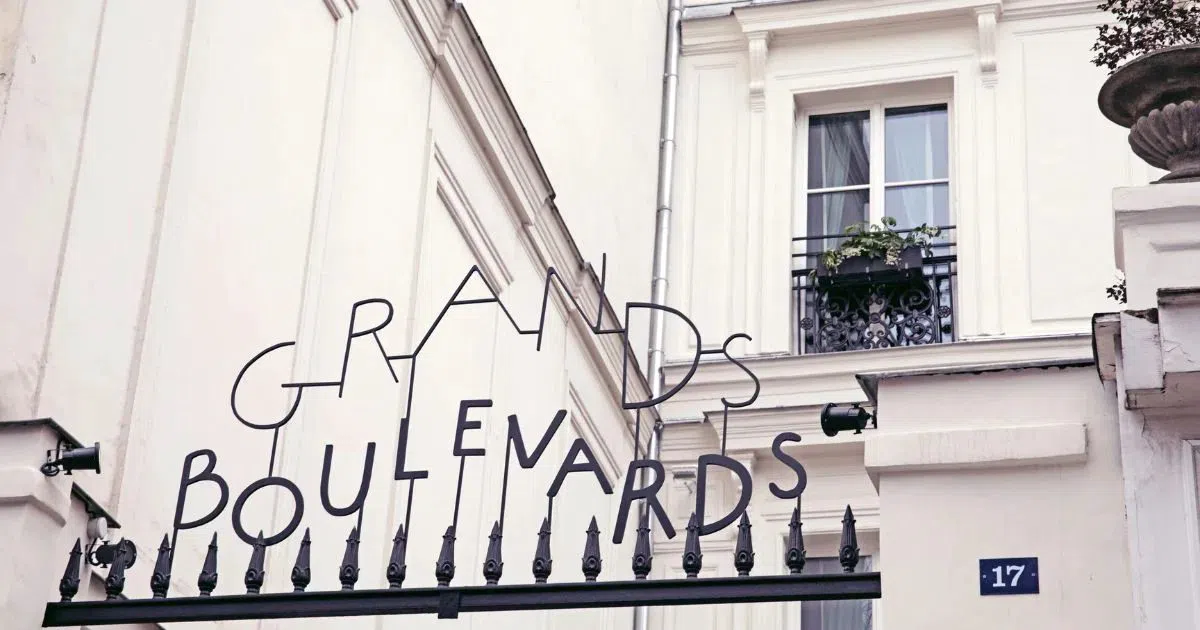
Grands Boulevards Experimental (2nd, Grands Boulevards) holds one Michelin Key, and has a restaurant, a patio and two bars that all take bookings, useful when you want dinner without a plan. Rooms are couple-sized at €250–400, so a group of six ends up spread across three keys. Lines 8 and 9 are at the door, putting Opéra, the Marais and Bastille inside fifteen minutes with no change.
Four ways to sleep in the Marais
The Marais mostly escaped the nineteenth-century rebuilding that straightened the rest of Paris, which is why its streets still run at their old angles and why the walk from the Pompidou to Place des Vosges feels like moving through a different century every two blocks. It is also the district first-timers most often wish they had slept in. Four very different doors, at four very different prices.
Hôtel National des Arts et Métiers (3rd, upper Marais) puts lines 3 and 11 underfoot at Arts et Métiers, with the Pompidou and Le Comptoir Général both walkable. Sixty-four rooms at €250–450, plus a 100 sqm penthouse that sleeps four and event spaces for private groups. It is the most workable option here if you are travelling as an extended family. The rooftop reopened after seasonal maintenance in summer 2026.
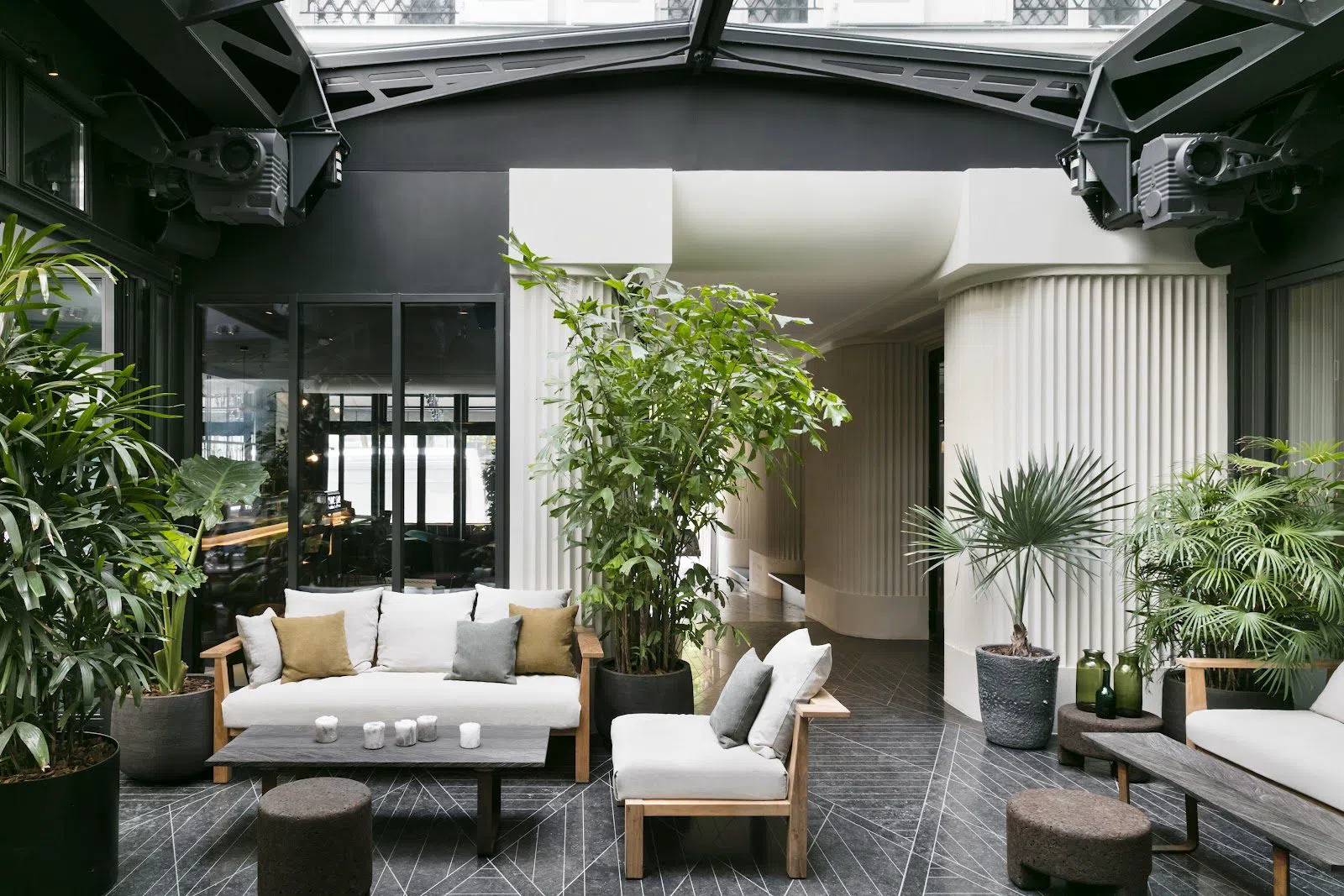
Le Grand Mazarin (4th, Marais) is the splurge that still saves time: €600–1,200 a night across 61 rooms, with Hôtel de Ville (lines 1 and 11) 200 metres away and Notre-Dame a ten-minute walk. There is no group door policy as such, and Assaf Granit's Boubalé downstairs will take a large table, which is a genuinely rare thing in this part of the city.
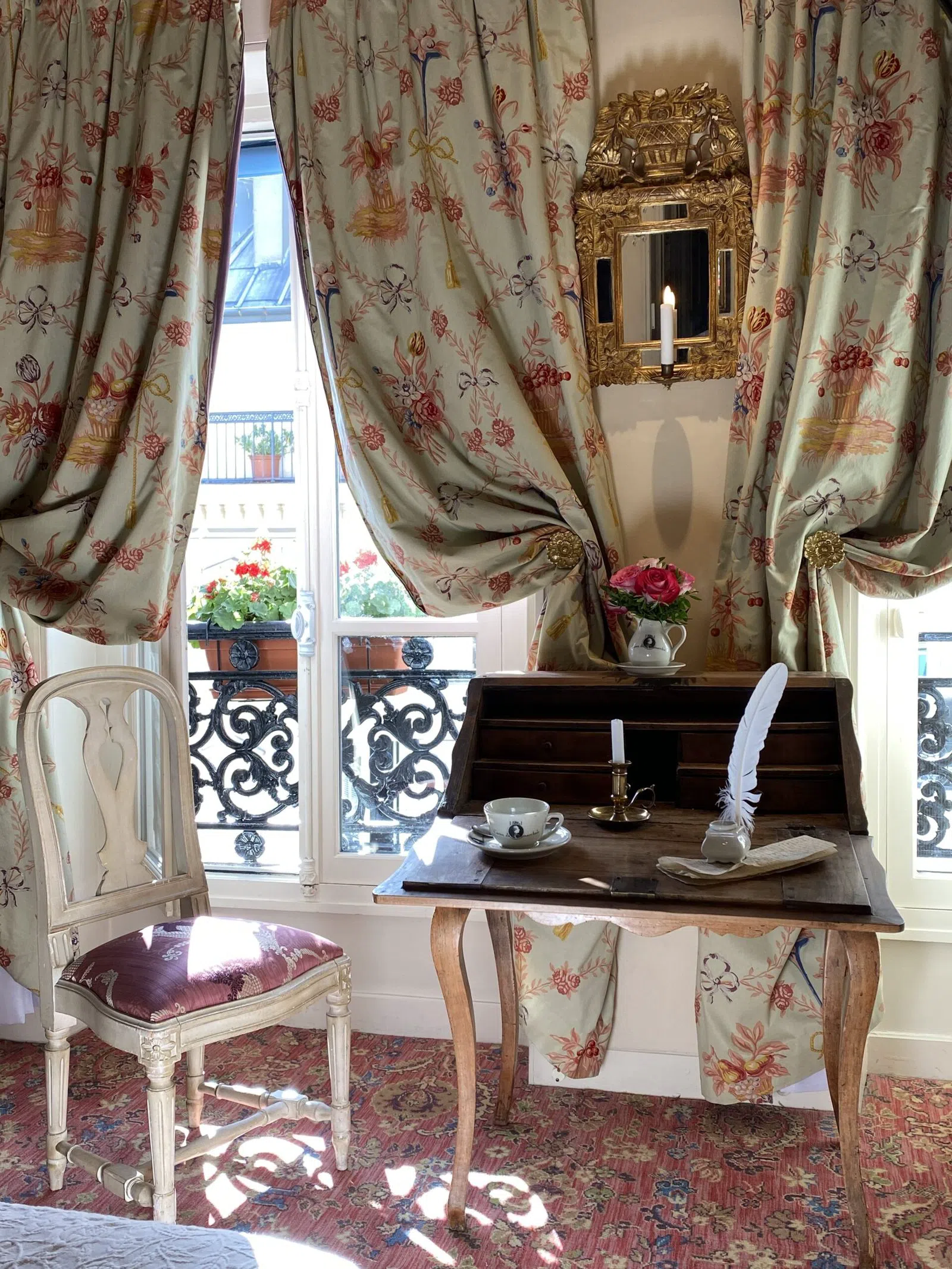
Hôtel Caron de Beaumarchais (4th, Marais) does something harder: real period character in the middle of the Marais at three-star money, €180–260 a night, five minutes from Saint-Paul on line 1. Rooms are mostly doubles and the place suits couples and pairs; a party of eight would be splitting across floors and irritating everybody.
MIJE Marais (4th, Marais) is the cheapest honest way to sleep inside the district rather than commuting into it. It occupies historic mansions, holds over 400 beds in rooms of three to ten, keeps twin rooms for group leaders and rents two meeting rooms; it hosts around 1,850 school trips a year, so nothing about a group of thirty surprises the front desk. Beds run €45–100 per person per night, plus a compulsory €3 annual membership card. Saint-Paul (line 1) and Pont Marie (line 7) are both short walks.
The Left Bank without the long walk back
Cross the river and the logic changes. The 5th and 6th are for people whose days are built around the Latin Quarter, the Seine and the museums, and the good addresses here are close enough to a station that you are not paying for the view in walking time.
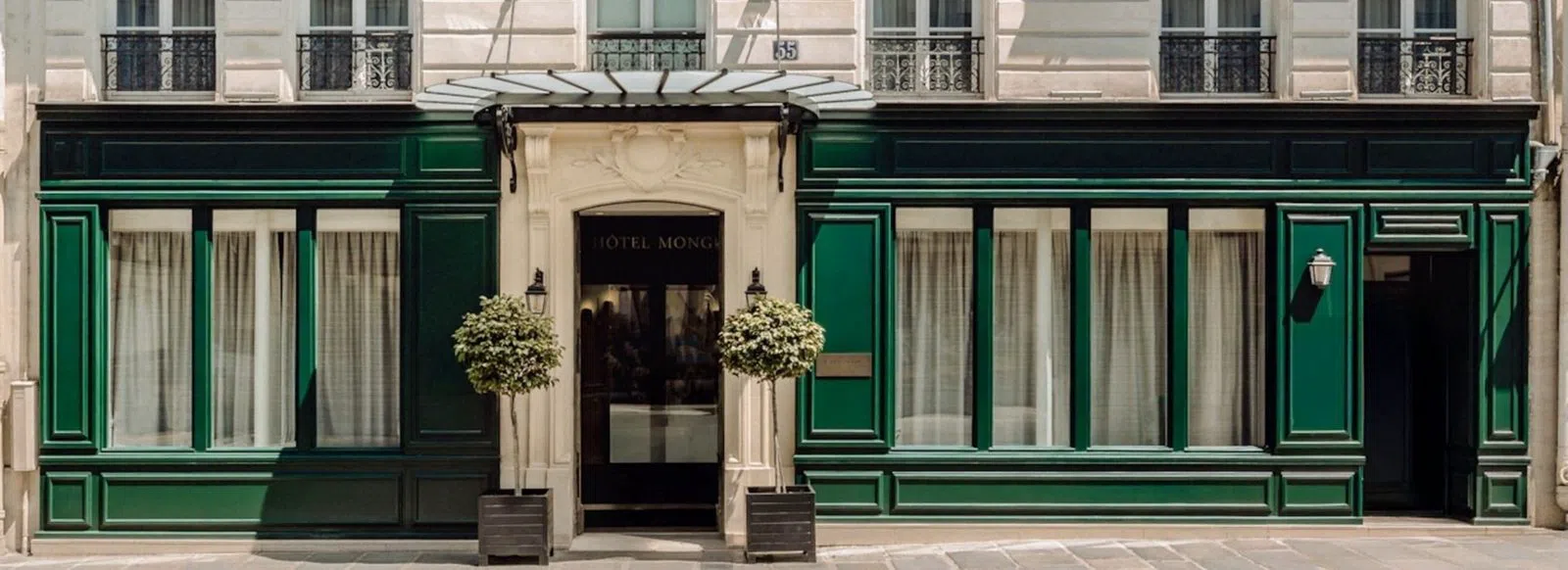
Hôtel Monge (5th, Latin Quarter) has Place Monge on line 7 and the rue Mouffetard market on one side, the Jardin des Plantes and Notre-Dame on the other, so a lot of a first-trip list gets crossed off on foot. Thirty rooms at €250–400, including deluxe triples, and a private hammam and massage room open to all guests, which counts for more on day four than it does on day one. Small parties yes, coaches no.
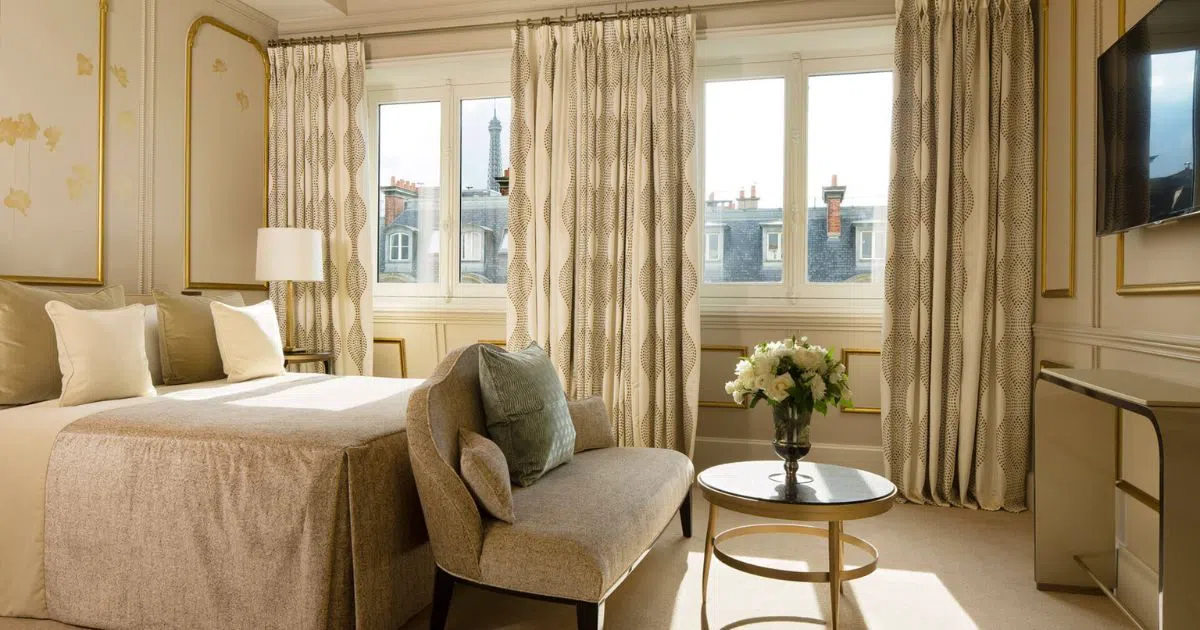
Hôtel Dame des Arts (6th, Odéon side) holds the strongest transit hand on the Left Bank: rue Danton is two minutes from Saint-Michel–Notre-Dame, which gives you the RER B in from the airport and the RER C running west towards the château from the same station. Doubles are €300–500, some with terraces, and the rooftop takes walk-ins, good for a drink without booking, less good if you wanted the building quiet at ten at night. There is no formal group programme.
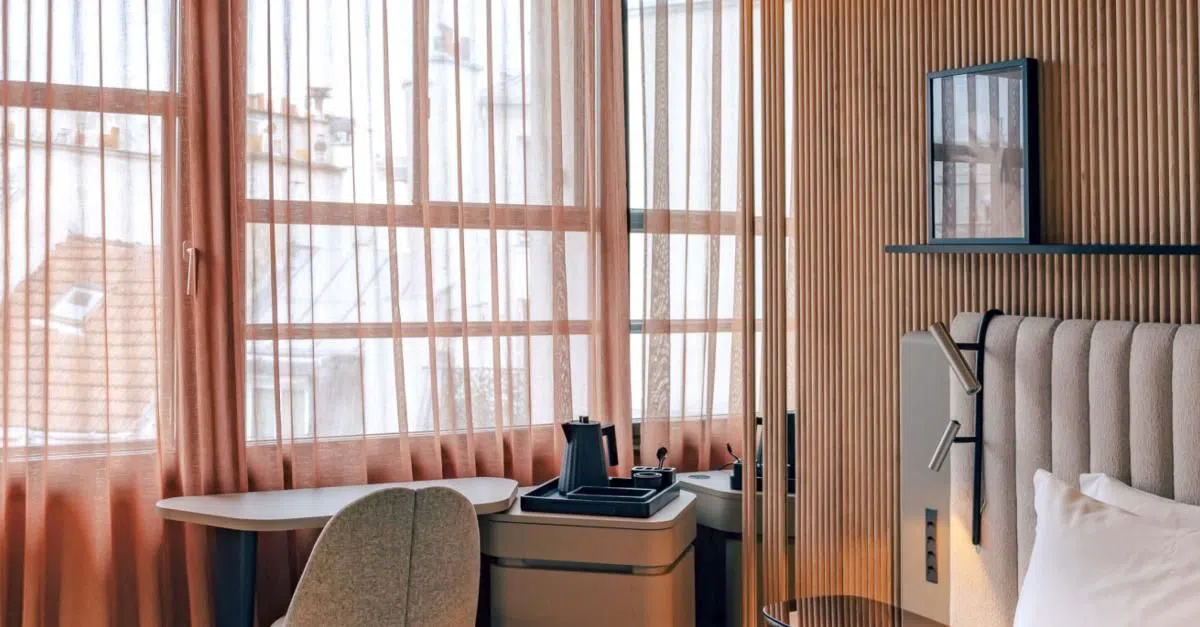
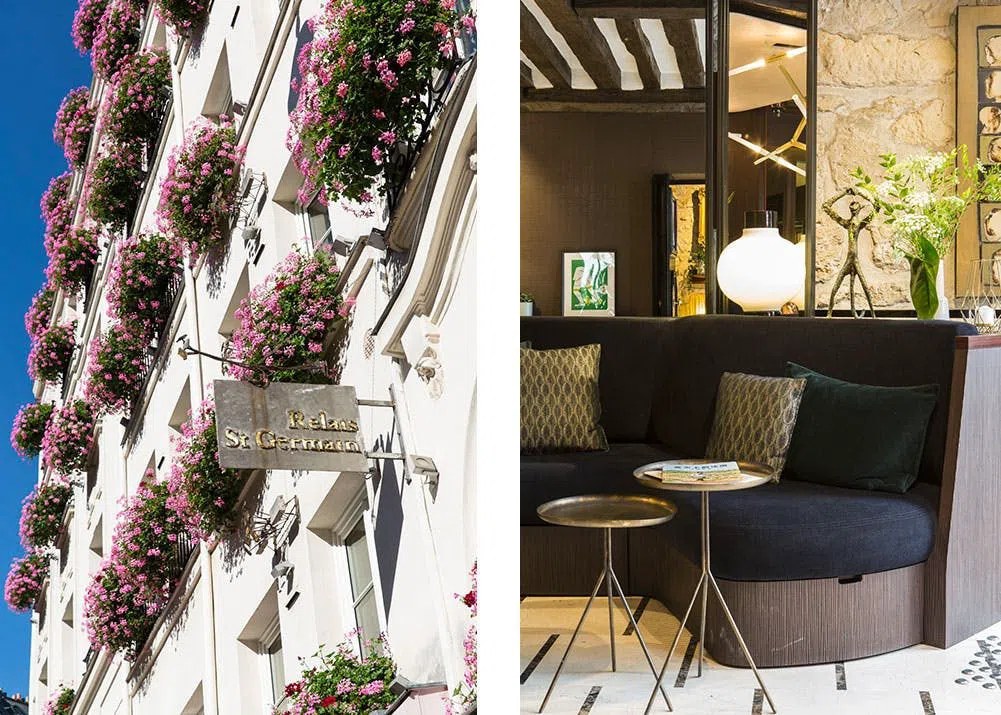
Le Relais Saint-Germain (6th, Odéon) is 22 rooms at €290–450 with breakfast usually included, and what you are really booking is a table: guests get a seat at Yves Camdeborde's Le Comptoir du Relais, which walk-ins queue for. Odéon (lines 4 and 10) is at the corner. Two honest caveats: there is no lift-friendly access for guests with reduced mobility, and at 22 rooms it is unsuitable for groups. Book far ahead or not at all.
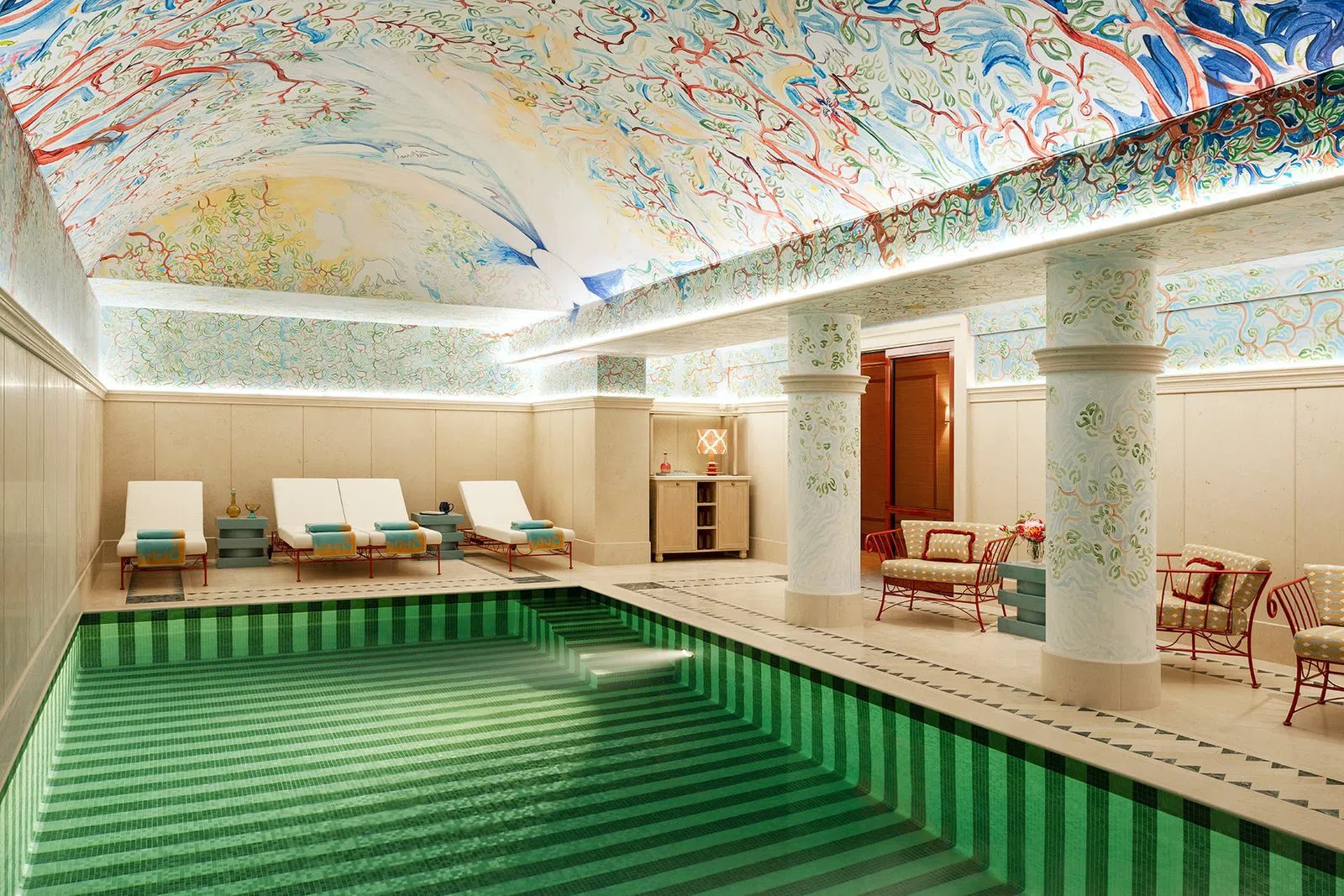
Le Narcisse Blanc (7th, Invalides) is for the trip built around the Eiffel Tower and Invalides rather than the Marais. Suites are styled as Parisian apartments, some with garden terraces, at €400–800; there is a pool to recover in; La Tour-Maubourg on line 8 is at the door and the Pont Alexandre III a short walk. Couples and families rather than groups.
One stop out, where the money goes further
Hôtel Rochechouart (9th, Pigalle) is Montmartre without the hill: an Art Deco building with 105 rooms at €200–350, family rooms, kids' activity kits, and a rooftop and restaurant that can absorb a sizeable booking. Anvers and Barbès-Rochechouart sit outside, so you have lines 2 and 4, and line 4 runs straight down through Châtelet to the Left Bank. Ten minutes gained on the Sacré-Cœur end, ten minutes given back on the Seine end.
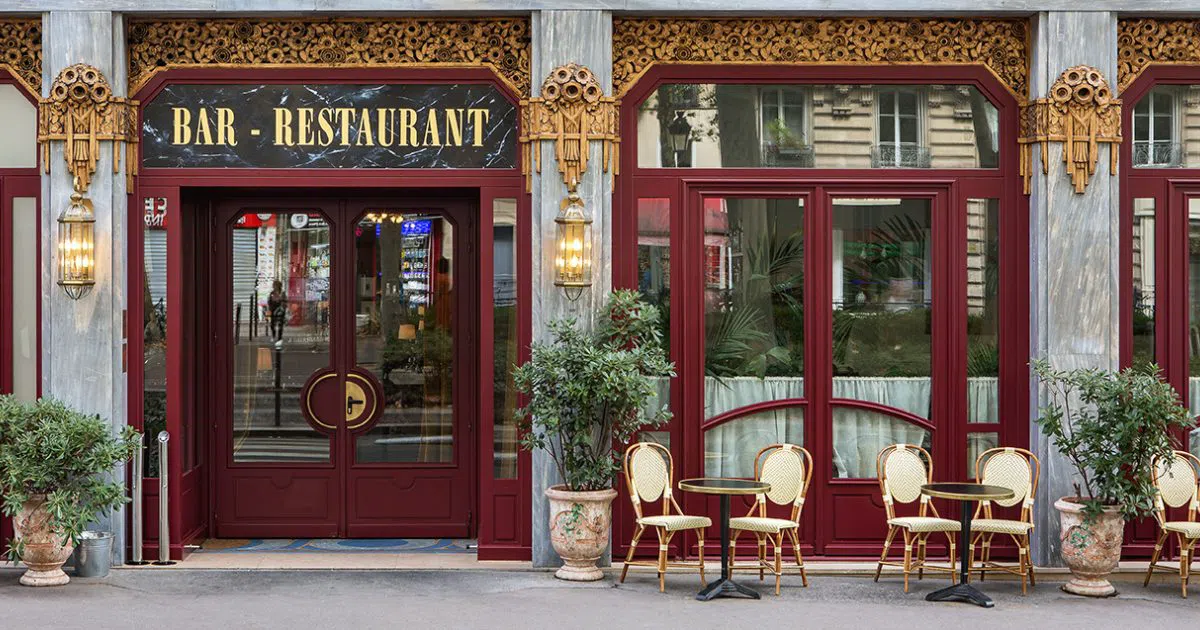
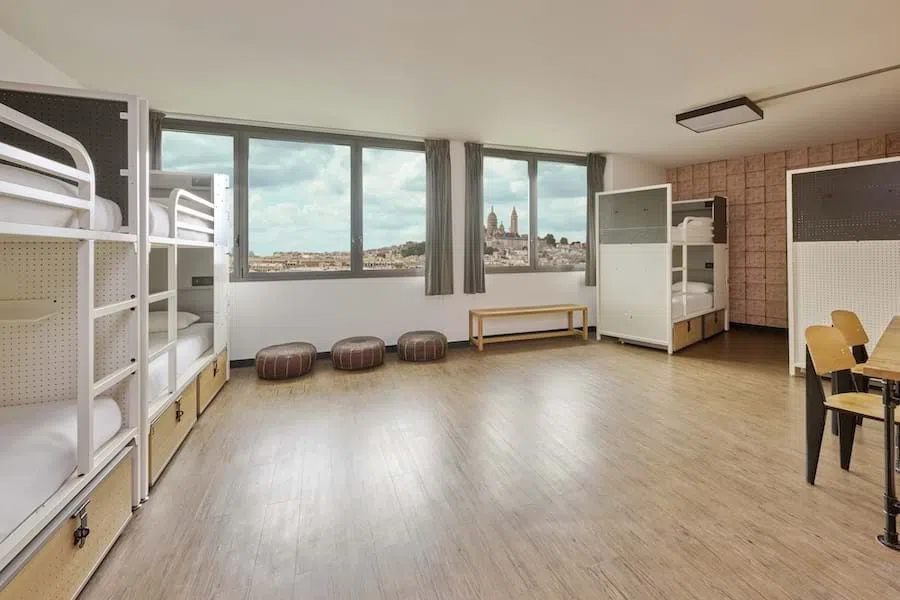
Generator Paris (10th, Colonel Fabien) has the strongest group handling in this list: rooms up to ten beds, a dedicated group team and an allocated coach drop-off, which is the detail that decides whether a school trip starts calmly or not. Dorm beds are €24–30, private and family rooms €107–171, and the rooftop is free to guests. Colonel Fabien on line 2 is off the tourist spine (a residential stretch, not a scenic one), but it is a straight run to Gare du Nord.
Hôtel Fabric (11th, Oberkampf) sits between République and Bastille, which means the bistros and bars around it are local rather than touristed and priced accordingly. Thirty-three rooms over four floors at €180–300, with step-free access for guests with reduced mobility, a steam room and an honesty bar for the end of a long walking day. It is too small for a real group.
Who each door actually takes
If you are travelling as ten or more, the list narrows fast and honestly: MIJE Marais and Generator Paris are built for it, The Hoxton has a group desk, Citadines Les Halles handles multi-unit bookings as normal business, and Hôtel National des Arts et Métiers has the penthouse and event spaces. Hôtel Bachaumont and Hôtel Rochechouart will take groups by arrangement.
If you are two, the small houses are the better night: Le Relais Saint-Germain, Hôtel Caron de Beaumarchais, Hôtel Fabric and Grands Boulevards Experimental all trade scale for character, and none of them pretends otherwise. For step-free access, Hôtel Fabric states it plainly; Le Relais Saint-Germain states the opposite just as plainly, which is the more useful kind of honesty.
Practical notes before you book
Arriving at Charles de Gaulle, the RER B is the direct line into Châtelet–Les Halles and Saint-Michel–Notre-Dame, which is exactly why the Citadines and Dame des Arts addresses are worth their rates on arrival day. Buy a travel pass covering your stay rather than single tickets and stop thinking about it. One warning about Châtelet–Les Halles: the interchange tunnels are long, so if you are moving with suitcases, change elsewhere or take the shorter surface walk.
Cards work almost everywhere, including for small café bills, but carry €20–40 in coins and notes for market stalls on rue Mouffetard and Montorgueil and for the occasional bakery with a minimum spend.
Small hotels here sell out first: Le Relais Saint-Germain at 22 rooms and Hôtel Monge at 30 need months, not weeks. Group blocks at MIJE and Generator should be the first thing you book, before flights if possible. Standard check-in is mid-afternoon, so plan a walk rather than a museum for the first few hours.
Budget roughly: €24–30 a dorm bed, €45–100 a person at MIJE, €180–300 for a solid central double, €250–450 for four-star boutique, and €400–1,200 at the top. An aparthotel kitchen or a hotel with breakfast included changes the daily total more than the headline rate does. For what to do once you are settled, routes, markets and the museums worth a morning, see the Paris guide.
Before you go
Which arrondissement is best for a first trip to Paris if I want to walk everywhere?
The 1st and 4th give you the most on foot. From Hôtel Britannique by Châtelet or Hôtel Caron de Beaumarchais in the Marais you can reach the Louvre, the Île de la Cité and Place des Vosges without a métro ride, and every line you might need meets at Châtelet or Hôtel de Ville.
Where should we stay in Paris with children and a limited food budget?
Citadines Les Halles Paris (1st) has one-bedroom apartments that sleep three or four, free cots for under-twos, and a kitchen that turns breakfast and one meal a day into groceries rather than restaurant bills. Hôtel Rochechouart in the 9th is the cheaper hotel alternative, with family rooms and kids' activity kits at €200 to 350.
Which Paris hotels actually take groups of ten or more?
MIJE Marais (400+ beds, rooms of three to ten, meeting rooms, around 1,850 school trips a year) and Generator Paris (dedicated group team and an allocated coach drop-off) are built for it. The Hoxton runs an explicit group desk for parties of ten-plus, and Citadines Les Halles handles multi-unit bookings routinely.
How do I get from Charles de Gaulle to my hotel without a taxi?
Take the RER B, which runs to Châtelet-Les Halles and Saint-Michel-Notre-Dame. Staying two minutes from either station (Citadines Les Halles or Hôtel Dame des Arts) means one train and a short walk with your luggage instead of a change deep inside the interchange tunnels.
Is it worth paying more to stay in the Marais or the 6th?
It is, if your days are built around the centre, because you stop paying for return journeys. Le Grand Mazarin at €600 to 1,200 puts Hôtel de Ville 200 metres away and Notre-Dame ten minutes on foot; if that rate is out of range, MIJE Marais sleeps you in the same streets from €45 per person.