The Paris issue
Paris in August Without the Queues or the Shut Kitchens
Which bistros stay open through the annual closure weeks, which rooms hold 14C in a heatwave, and how to plan a day that works around the crowds.
By Leïla HaddadParis by the plate and the market stall
The notices go up in the last days of July, hand-written and taped inside the glass: fermeture annuelle, back on the 24th. By the first Monday in August whole streets of good kitchens are dark. At the same hour the queue outside the Louvre is folded back on itself in full sun, the platform at Châtelet is holding 33C, and a first-time visitor is standing on a pavement at three in the afternoon discovering that lunch service ended at 2.30pm and dinner does not exist here until 7.30pm. Paris in August still works. The city is simply running on a different timetable, and the timetable is knowable.
The two closures that wreck a Paris day
There are two, and they catch people separately. The first is the annual one, the stretch from roughly 3 to 23 August when family-run bistros lock up and the owners go south. It is not universal and it is not published anywhere central; a place can post nothing online and simply not answer the phone for three weeks. The second is Monday, which takes out most of the municipal and national museums, several markets and a good number of restaurants that use it as their weekly day off. Stack a Monday inside the closure window and you can lose an entire day of a five-day trip to locked doors.
You do not have to avoid August. Build the trip around addresses that are confirmed open, keep the middle of the day underground or behind thick stone, and eat at the hours the city actually serves rather than the hours you are used to. Everything below is chosen on that basis: it works in the closure weeks, it works in heat, and it works whether you are two people or seven.
Plan your Paris trip
Live prices from our booking partners.
Free cancellation on many rooms. We may earn a commission when you book.
Six kitchens that stay lit through the closure weeks
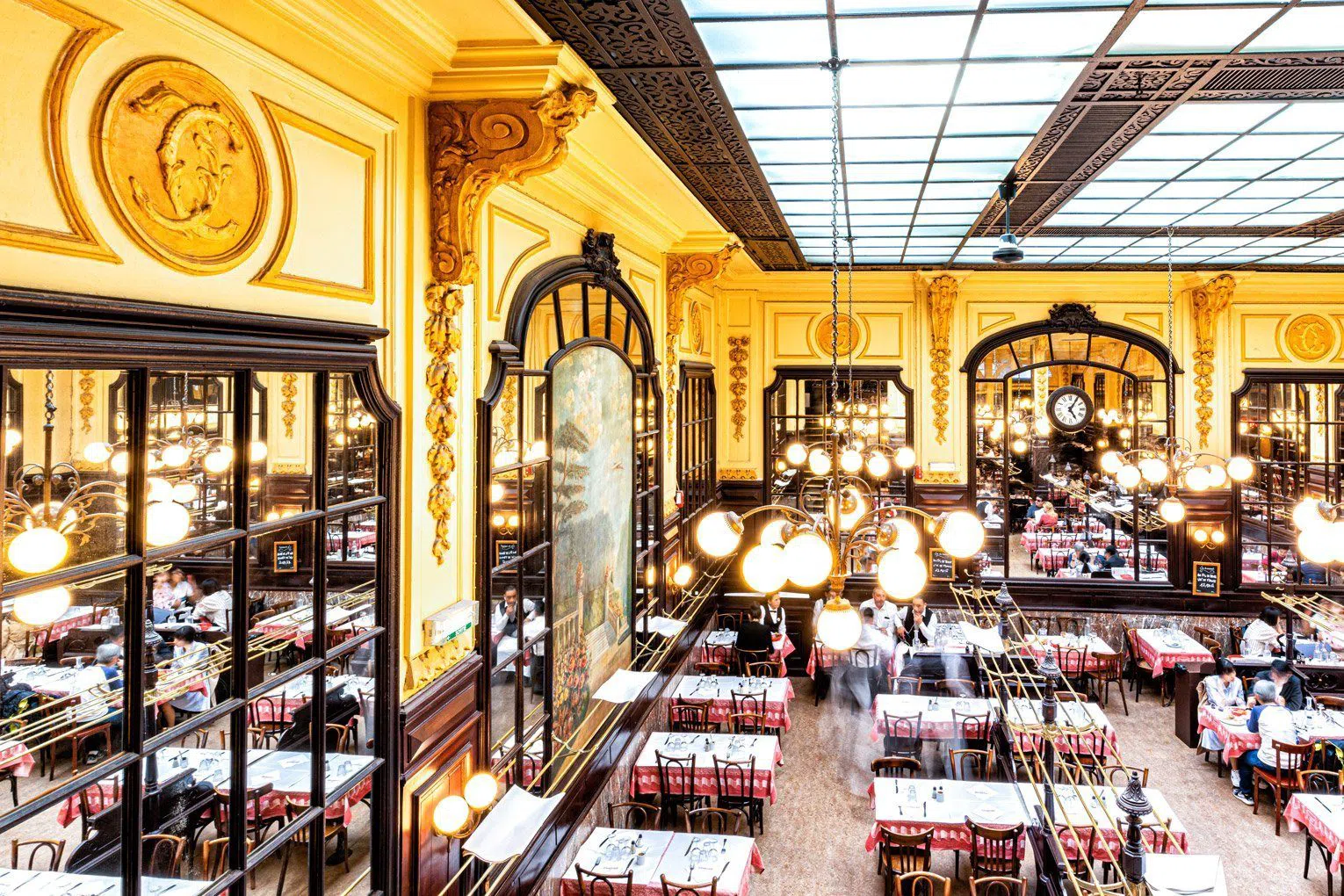
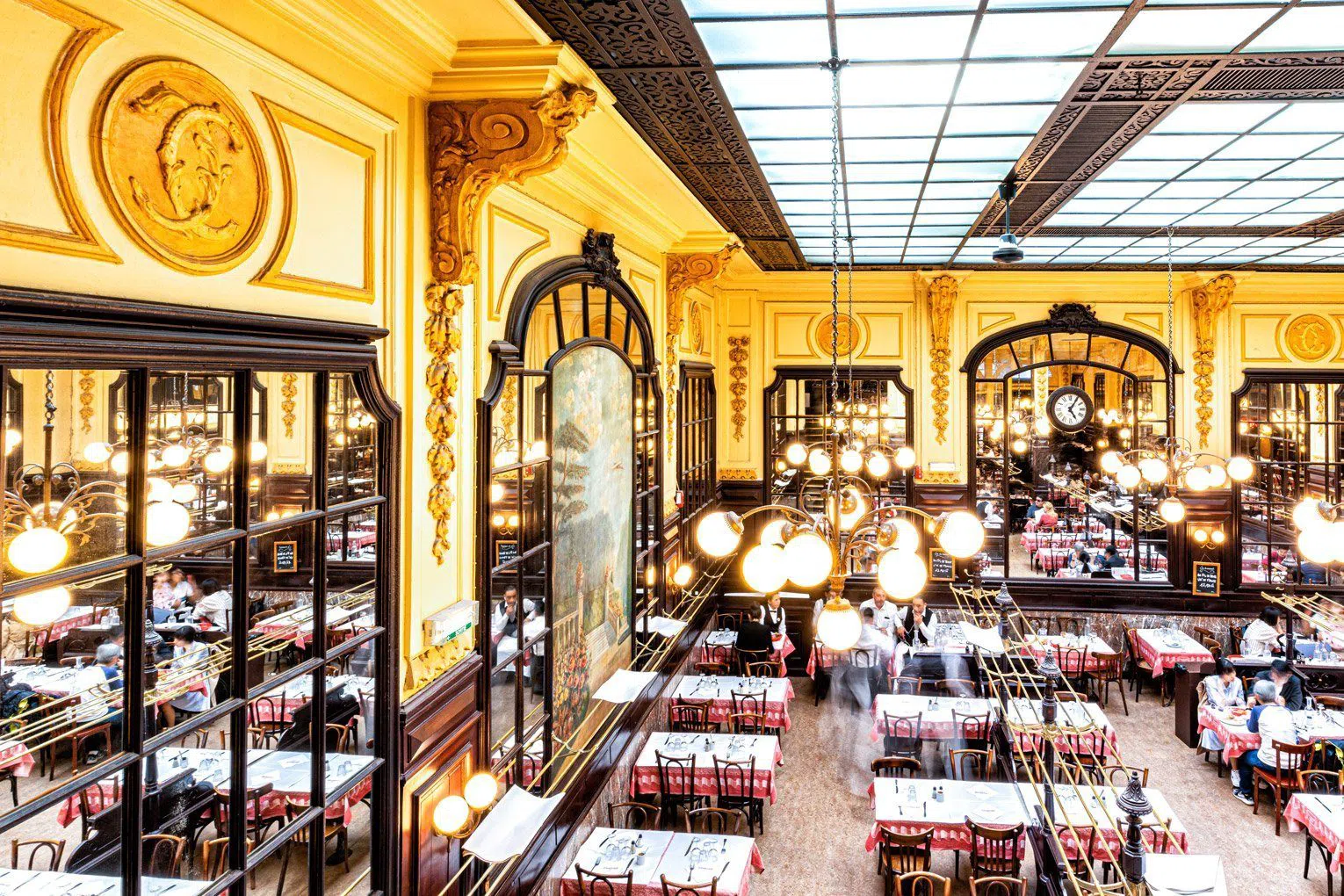
Bouillon Chartier Grands Boulevards (9th, off the Grands Boulevards) is the blunt instrument and the most useful one. It opens 365 days a year, so it never falls into the August window at all, and mains sit at roughly €10-16 in a listed 1896 dining room with brass racks and waiters who still write the bill on the paper tablecloth. It takes groups without blinking and seats strangers together at shared tables, which is either the charm or the problem depending on your party. Walk-ins queue on the pavement; for a group, book at least 24 hours ahead. Two honest warnings: the queue is real at peak service, and the room runs hot when it is full. Go at the 11.30am opening or after 9pm and both problems mostly disappear.
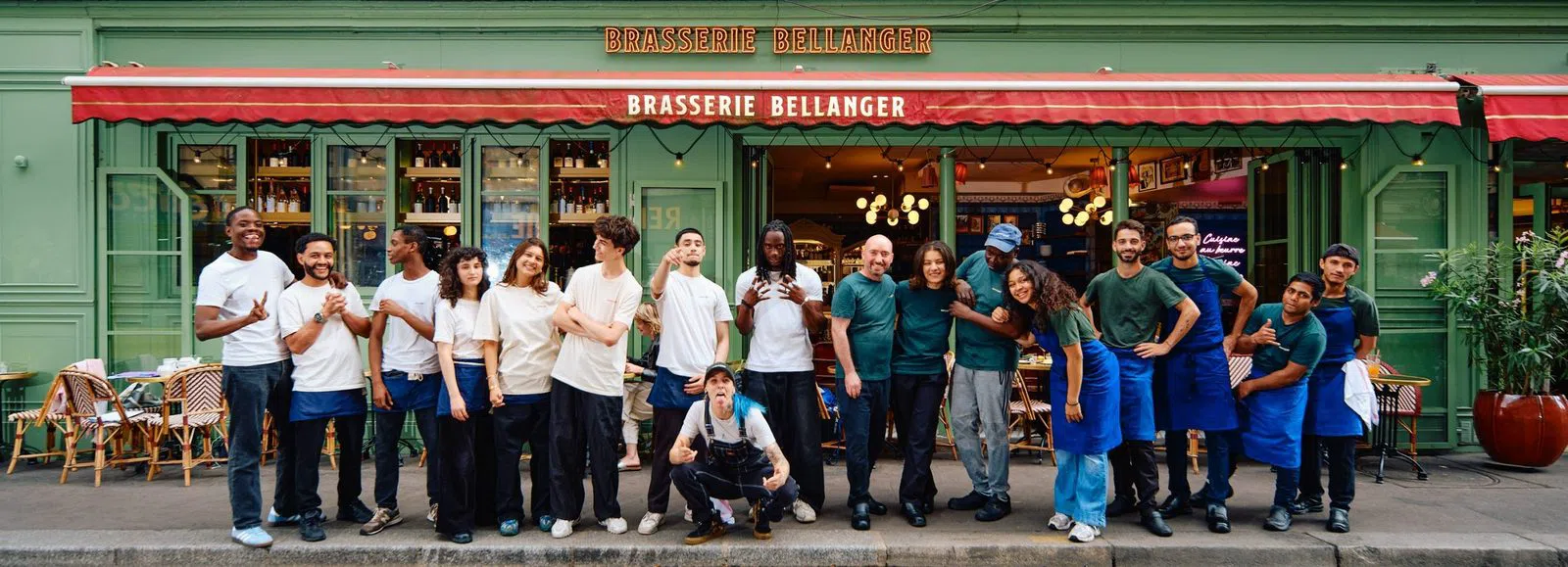
Brasserie Bellanger (10th, Faubourg Poissonnière) is the one I hand to people who arrive on an afternoon train. It is confirmed open every day right through the 3-23 August weeks, and it serves continuously from 9am to midnight, which is the single most valuable sentence in this article, because it solves the 3pm-arrival-and-everything-shut problem outright. Three courses land around €30-35 for cooking that is more considered than the price suggests. Large banquettes make it genuinely good for a group; book ahead for six or more.
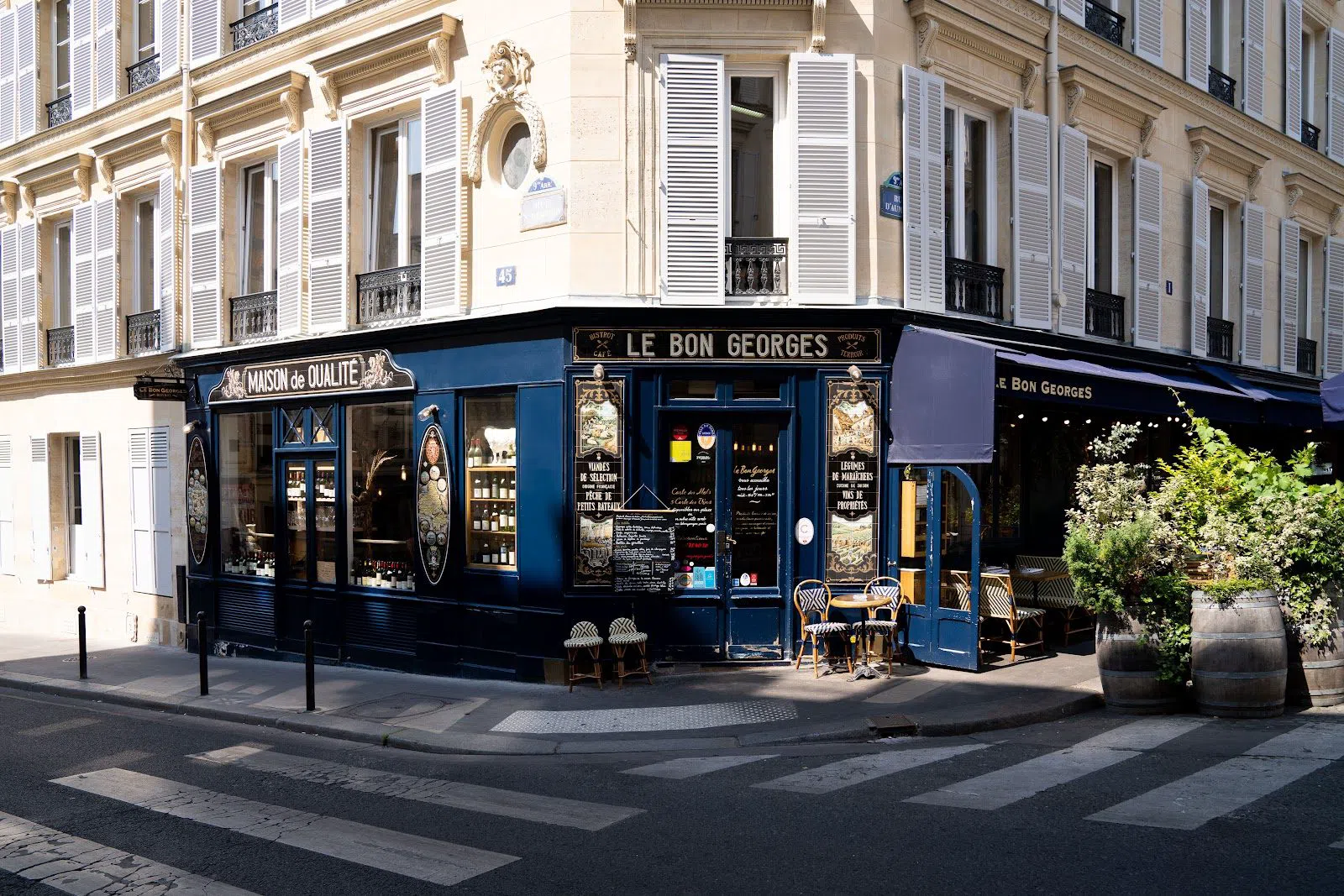
Le Bon Georges (9th, rue Saint-Georges) is the produce-led bistro I would send a couple to on their best night. It is open seven days a week and confirmed serving through every August week, mains run about €28-40 with steak for two higher, and the cellar holds around 2,000 bottles. That is a Michelin-guide standard without any tasting-menu commitment or theatre. The room is small. Four to six is comfortable; anything larger needs a phone call well in advance, and in August that means as soon as you have dates.
Joséphine Chez Dumonet (6th, rue du Cherche-Midi) is old-guard Paris (Burgundy-red banquettes, confit de canard, a soufflé that arrives at the table still climbing) and one of the few of its kind confirmed open across all three peak closure weeks. Mains are €30-50, but the detail that matters is half-portions, which let two people order across four dishes instead of two. Capacity is small and the room is cramped at full service; tables of four to six work, larger parties should call directly rather than book online. Booking is essential, not advisory.
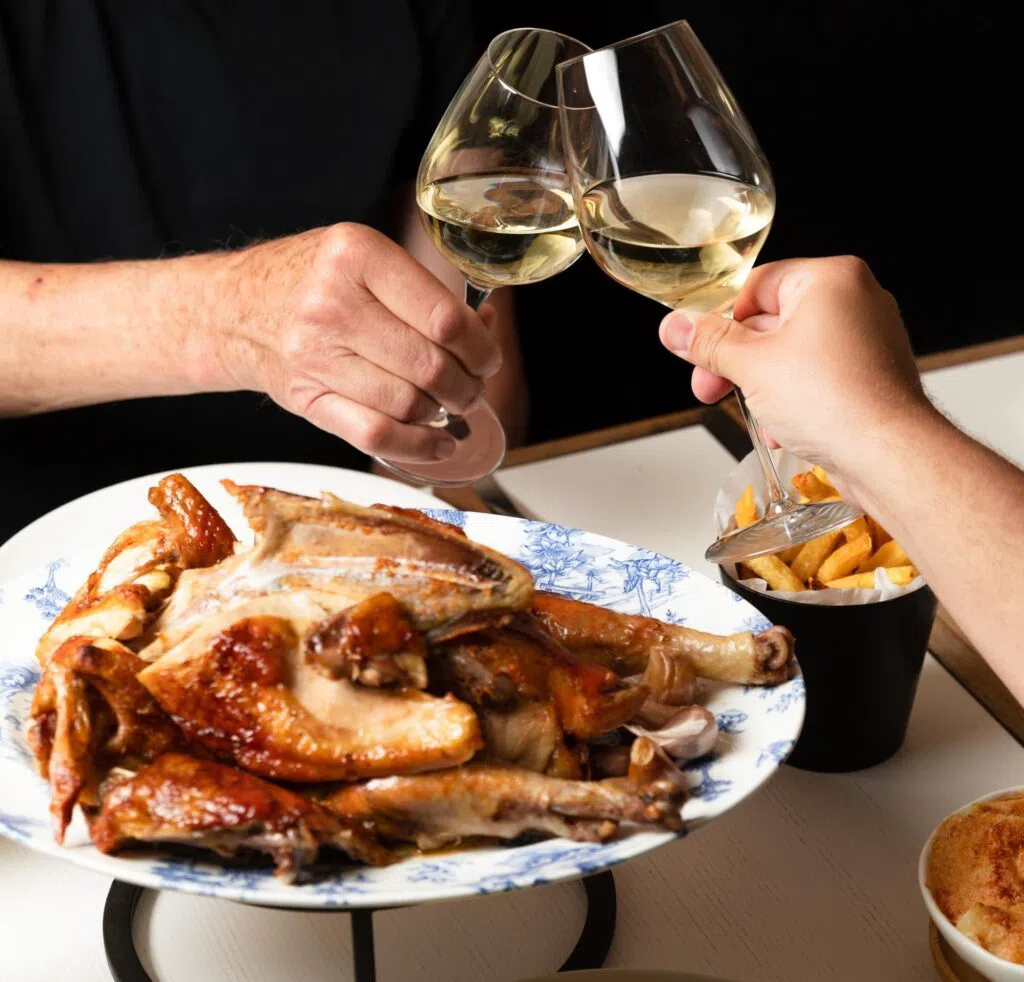
Le Coq & Fils (18th, Montmartre) is the best group answer in the city in August by a distance. Antoine Westermann's poultry house, formerly Le Coq Rico, is flagged open all summer, and the format does the work for you: whole birds, roasted properly and priced to share between two, three, four or more, at roughly €60-110 for the bird with starters at €12-18. Nobody negotiates over a menu, nobody ends up with the wrong dish, and the bill divides cleanly. For six adults it is the calmest hour you will have all trip.
Marché des Enfants Rouges (3rd, Marais) is the cheap, covered, no-booking option, with plates around €12-18 from a dozen stalls under a roof that keeps the sun off. It runs Tuesday to Sunday, so it keeps working when the individual bistros around it go dark, but note the two catches: it closes Mondays and shuts early on Sundays, and the seating is first-come and genuinely cramped at lunch. Go before noon or after 2pm. A group of six will not sit together at 1pm; split across stalls, take what you can find, and treat it as a market rather than a restaurant.
Who fits where, honestly
Groups above six have exactly two easy answers in August, Chartier and Le Coq & Fils, plus a workable third in Bellanger with notice. Le Bon Georges and Joséphine Chez Dumonet are couple-and-foursome rooms; taking eight people into either is asking a small kitchen to do something it was not built for, and you will feel it in the service. If you are a party of eight or more, book two tables at Chartier for the same time and accept that you are eating at a shared table anyway. Nobody minds. That is the point of a bouillon.
Underground, where it is always 14C
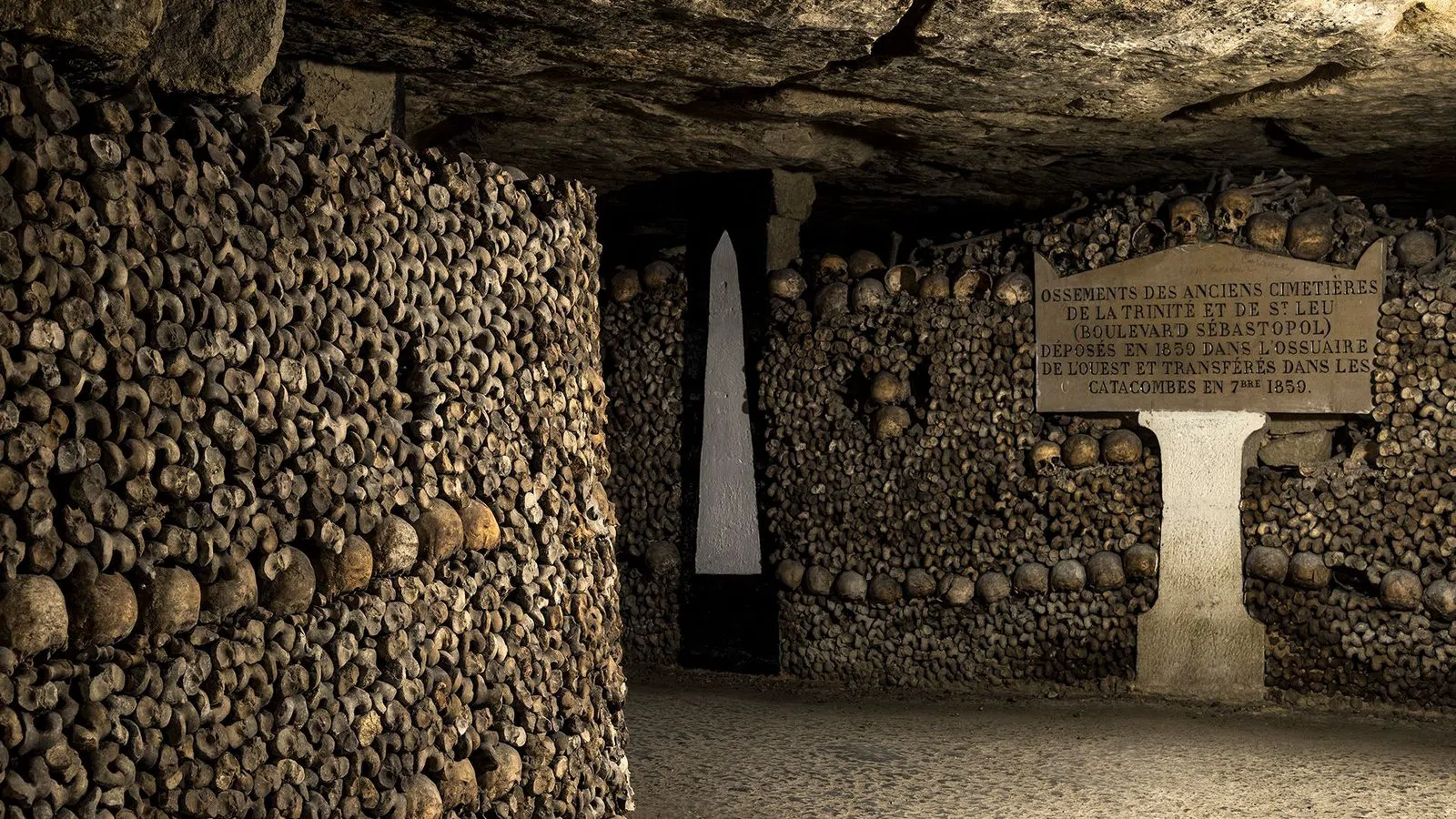
When the pavement is unbearable, go below it. Les Catacombes de Paris (14th, Denfert-Rochereau) hold a constant 14C year-round, which makes them the most reliable heat escape in Paris, but the rules are strict. There is a hard cap of 200 people underground at once, entry is timed online only with no walk-up sales, and official slots open just a week ahead. Adult entry is €31, €25 reduced, €15 for ages 8-17. Afternoon slots are the ones that stay available; morning and small-group special-access tours vanish immediately. Set a reminder for the day the slots drop.
Musée des Égouts de Paris (7th, by the Pont de l'Alma) is the underrated one: the sewer museum, an hour-long circuit beneath the street, cool, step-free with a lift, and almost never queued. It is €9 full, €7 reduced, and free for EU residents under 26. Group visits run in slots from 10am to 3.30pm, it closes Mondays, and last admission is 4pm. It is also exactly as pungent as it sounds, which is the honest reason it stays empty in August while everything above ground is rammed. Under €10 to remove the hottest hour of the day from your itinerary is good value.
Musée de la Libération de Paris - musée du Général Leclerc - musée Jean Moulin (14th, Denfert-Rochereau) is free, air-conditioned and barely on the tourist map, and it sits directly above a command bunker 20m down. The museum needs no reservation. The bunker descent is a guided tour with strictly limited places handed out on-site on the day only, no advance booking, so it rewards arriving at opening. Closed Mondays. Pair it with the Catacombes, a five-minute walk away, and you have a whole cool half-day within one square.
Free rooms with very thick walls
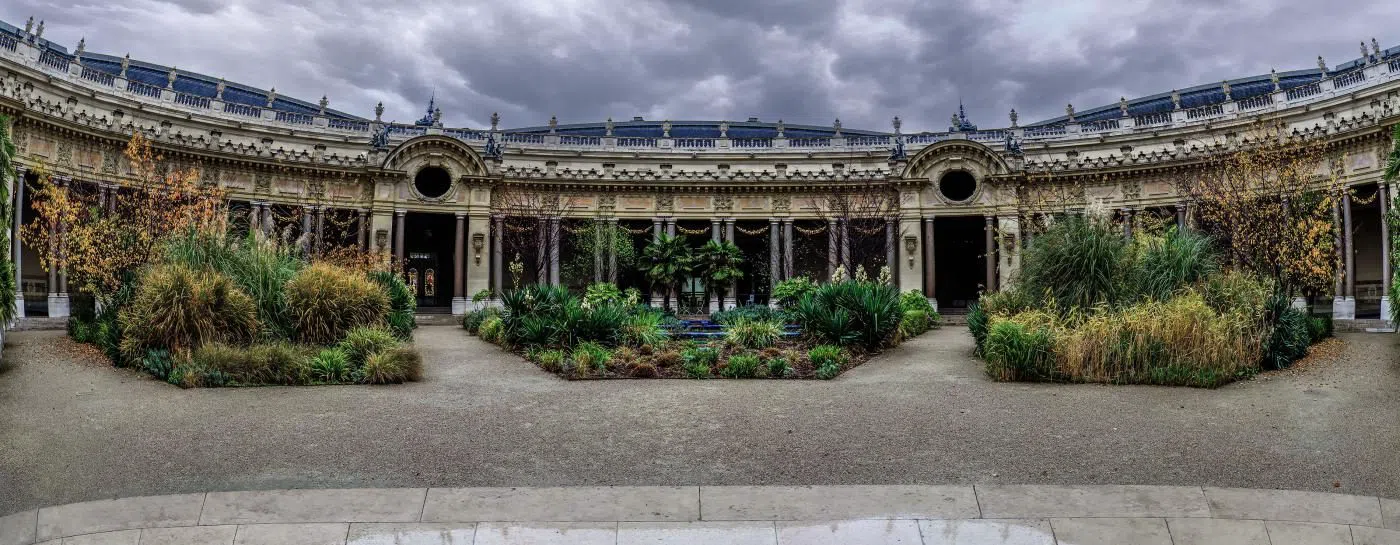
Petit Palais (8th, off the Champs-Élysées) is the best zero-commitment bolt-hole in central Paris. Permanent collections are free with no booking, so a group can simply walk in off a blazing avenue, and it maintains designated cool areas open to everyone at no charge plus a shaded garden courtyard with a small cafe. Closed Mondays; the garden cafe keeps its own hours, so do not build lunch around it. Temporary exhibitions are ticketed separately.
Musée Carnavalet - Histoire de Paris (3rd, Marais) is the strongest crowd-free indoor option in the city. The permanent collection is free every day, the building is climate-controlled, and it is consistently quieter than the Louvre or Orsay. Groups walk straight in; only temporary shows need timed tickets. It closes Mondays and last entry is 5.15pm, which is earlier than people expect and the one way to get caught out.
Musée de Cluny - musée national du Moyen Âge (5th, Latin Quarter) is not free (€12 full, free for EU residents under 26) but the heavy Roman stonework and proper climate control make it one of the coldest rooms on the Left Bank on a 35C afternoon. World-class medieval collection, no Louvre-scale queue. Timed tickets, closed Tuesdays, and the tapestry room is the one bottleneck; groups fit comfortably if you avoid late morning.
Musée Jacquemart-André (8th, boulevard Haussmann) is fully reopened after renovation and open seven days a week through August, including the restored Nélie tea room. It is €18-20 including the exhibition, it takes about an hour, and the rooms are small enough that a group should split rather than move as a block. This is the visit for the stretch when the big museums are unbearable and you want somewhere quiet and cool that does not demand a half-day.
The Thursday night that beats the crowd
Musée d'Orsay (7th, Left Bank) is the exception to the avoid-the-headline-museums rule, on one evening. The Thursday nocturne runs to 9.45pm with last admission at 9pm, and it is cheaper: €12 online or €10 on site, against €16 standard. You get the Impressionist floor after the coach groups have gone and after the worst of the day's heat has come off the building. Timed slots still must be booked; the museum is closed Mondays. If you are going to do one blockbuster collection in August, do this one, on a Thursday, at 7pm.
Tea, tiles and the Seine
Grande Mosquée de Paris (5th, by the Jardin des Plantes) is the rare Paris address that is genuinely pleasant at 3pm in a heatwave. The courtyard costs €3, mint tea and pastries are a few euros, and the tea room runs from 9am to midnight under fig trees with a fountain going. Walk-in, and the courtyard absorbs a group easily. The hammam is €30 including tea, takes no bookings, and alternates men's and women's sessions, so check the day's schedule before turning up rather than after.
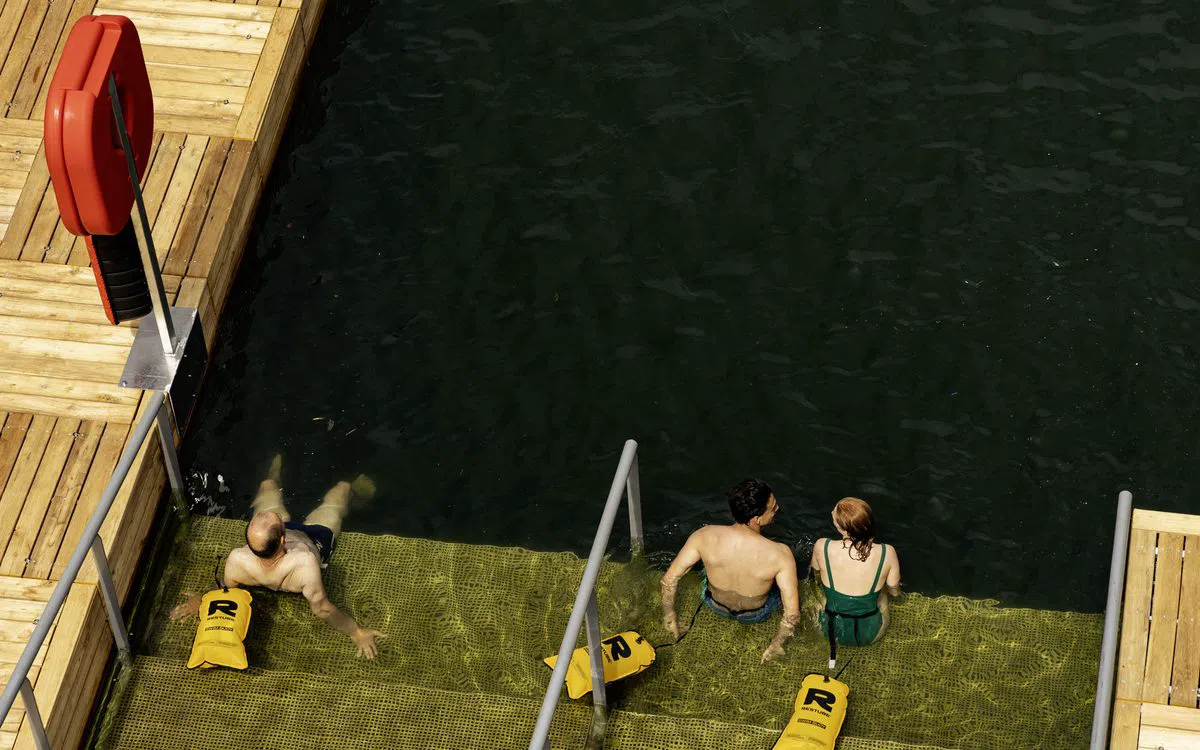
Baignade de Bercy (12th, Bercy) is the Seine swimming site to know, because it is the only one of the three official spots open into the evening: daily 11am to 9pm, from 4 July to 30 August 2026, free, supervised, no reservation. Water quality is tested daily. The honest caveat is that swimming is suspended whenever currents or test results say so, and capacity is managed on the day with queues building in the evening, so treat it as a bonus rather than a plan. Go at 11am or around 6pm; skip the 2pm crush.
A day that actually works at 35C
Eat early and eat late, and put nothing outdoors between noon and 4pm. A day that holds up: coffee and the market before noon at Enfants Rouges; underground or behind stone from 1pm to 4pm (Égouts, Catacombes, Carnavalet, Cluny, whichever is nearest); tea and shade at the Mosquée at 4.30pm; the Orsay nocturne or the Bercy river site at 6pm; dinner at 8.30pm or 9pm, when the light finally goes soft and the pavement gives its heat back. That is a full, unhurried Paris day with no queue in it.
Transport, money and timing
The metro is fast and largely un-air-conditioned; lines 1 and 14 have the newest, coolest trains, and a bus with working air conditioning often beats a hot platform for the same journey time. Buy a Navigo Easy card or use contactless directly at the barrier; single tickets are €2.50 and there is no longer a paper carnet. Carry a refillable bottle, since the city's Wallace fountains and green drinking points run all summer and are free.
Cards work everywhere that matters, including the market stalls, but keep €20-30 in coins and small notes for the Mosquée courtyard, the hammam and market plates. Budget roughly €25-40 a person per day for food if you mix a market lunch with a bouillon dinner, €70-100 if you are eating at Le Bon Georges or Joséphine Chez Dumonet in the evening, and about €40-60 for museums across a week given how many of the best ones are free.
Book in this order: Orsay's Thursday slot and the Catacombes as soon as they open a week out, restaurants two to three weeks ahead for anything above six people, and nothing else. Leave the free museums unbooked; they are your weather insurance. For where to base yourself, the closure window matters less than the metro line you sit on, so start with the Paris hotel search, and the wider Paris guide covers the practicalities beyond August. Confirm every restaurant by phone in the first week of August rather than trusting a website. It is a two-minute call, and it is the difference between dinner and a locked door.
Before you go
Do Paris restaurants really close for the whole of August?
Plenty of them, though not the whole city. The heaviest closure stretch runs roughly 3 to 23 August, when family-run bistros shut for their annual break, often with no notice online. Bouillon Chartier opens 365 days a year, Brasserie Bellanger serves 9am to midnight daily, and Le Bon Georges, Joséphine Chez Dumonet and Le Coq & Fils are all confirmed open through those weeks. Call ahead anywhere else.
Where can I escape the heat in Paris without paying much?
Free: Petit Palais keeps designated cool areas open to everyone at no charge, and it has a shaded garden courtyard. Musée Carnavalet is free, climate controlled and much quieter than the big museums. Musée de la Libération de Paris is free too. Cheap: Musée des Égouts is €9, the Grande Mosquée de Paris courtyard €3.
How far ahead do I need to book the Catacombes?
Official timed slots open only about a week in advance, and there are no walk-up sales: the site caps visitors at 200 underground at once. Set a reminder for the day slots release. Morning times and the small-group tours with special access go immediately; afternoons hold out longest. Entry is €31 adult, €25 reduced and €15 for ages 8-17.
What is the best way to see the Musée d'Orsay without the crowds?
The Thursday nocturne. It runs until 9.45pm, last admission 9pm, and costs €12 booked online or €10 on site, against €16 standard. The coach groups have gone by then and the building has cooled. You still need a timed slot, and the museum is closed Mondays.
Where should a group of six or more eat in Paris in August?
Le Coq & Fils in Montmartre is the strongest answer: whole roast birds at roughly €60-110 are priced and served to share, so the bill divides cleanly. Bouillon Chartier takes groups readily at €10-16 a main if you book 24 hours ahead, and Brasserie Bellanger has large banquettes with continuous service. Le Bon Georges and Joséphine Chez Dumonet are small rooms, better for four to six.