Paris neighbourhood guide
Saint-Germain-des-Prés, Paris: A Neighbourhood Guide to the Left Bank's Literary Quarter
Inside the café tables, antique dealers and one 25-hectare garden that still make the 6th Arrondissement the most storied corner of the Left Bank.
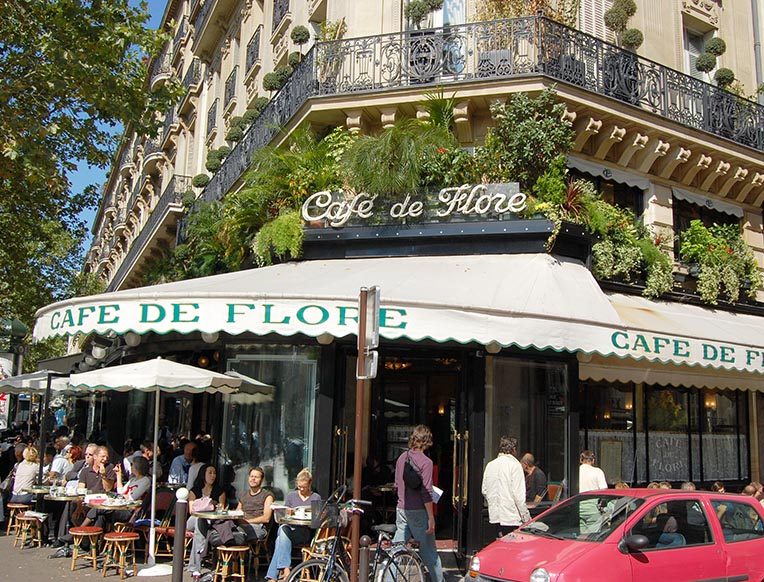
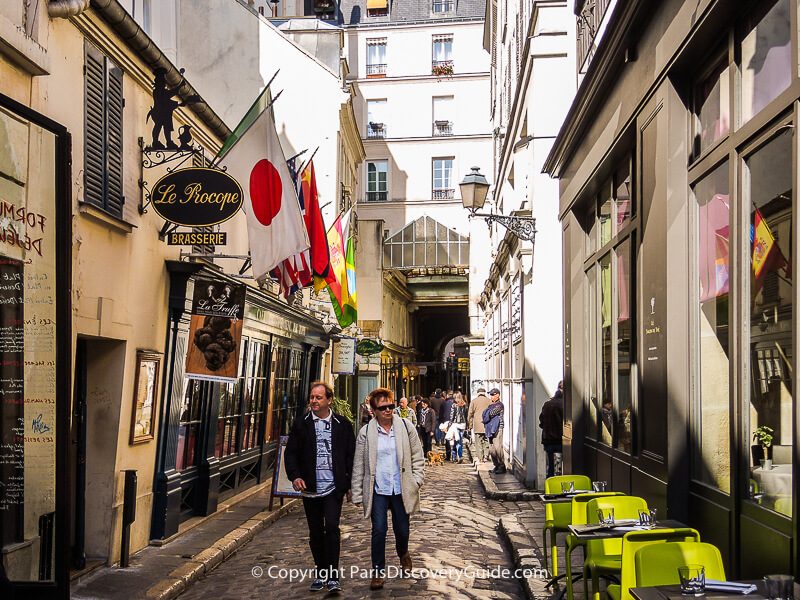
At Café de Flore and Les Deux Magots, waiters in black waistcoats still carry trays past the tables where Jean-Paul Sartre and Simone de Beauvoir once argued philosophy over cooling coffee. The two cafés sit forty-four metres apart on Boulevard Saint-Germain, and have done for over a century — close enough that regulars picked sides the way other neighbourhoods pick football teams. A few streets back, in the covered arcade of the Cour du Commerce Saint-André, Le Procope has been pouring since 1686, which makes it, by most reckonings, the oldest continuously running café-restaurant in Paris. Saint-Germain-des-Prés doesn't have to work at its reputation; it just keeps setting the same tables it always has.
What's changed less than you'd expect is the rhythm. This is a neighbourhood that runs on ritual — waiters who know a regular's order before it's spoken, antique dealers who leave their shopfronts half-empty on purpose, a pace on Boulevard Saint-Germain that slackens into a saunter by mid-afternoon. The stone is Haussmannian and the colour of pale butter, the streets narrow into something closer to a village the further you get from the boulevard, and none of it is cheap. This is the Left Bank at its most polished, and it knows it.
The literary café quarter
The neighbourhood's reputation was built in the mid-20th century, when Sartre and Beauvoir installed themselves for hours at a stretch at Café de Flore and Les Deux Magots, working, arguing, and apparently ignoring the cooling coffee entirely. It wasn't only philosophy — the area's cellars, clustered around rue Saint-Benoît, hosted Paris's postwar jazz scene, smoke-filled rooms where a different kind of late-night argument was happening at volume. Even the vocabulary of 20th-century art owes something to these streets: Guillaume Apollinaire is generally credited with coining the word "surrealism" at Café de Flore, a single word thrown out on a terrace that ended up naming an entire movement.
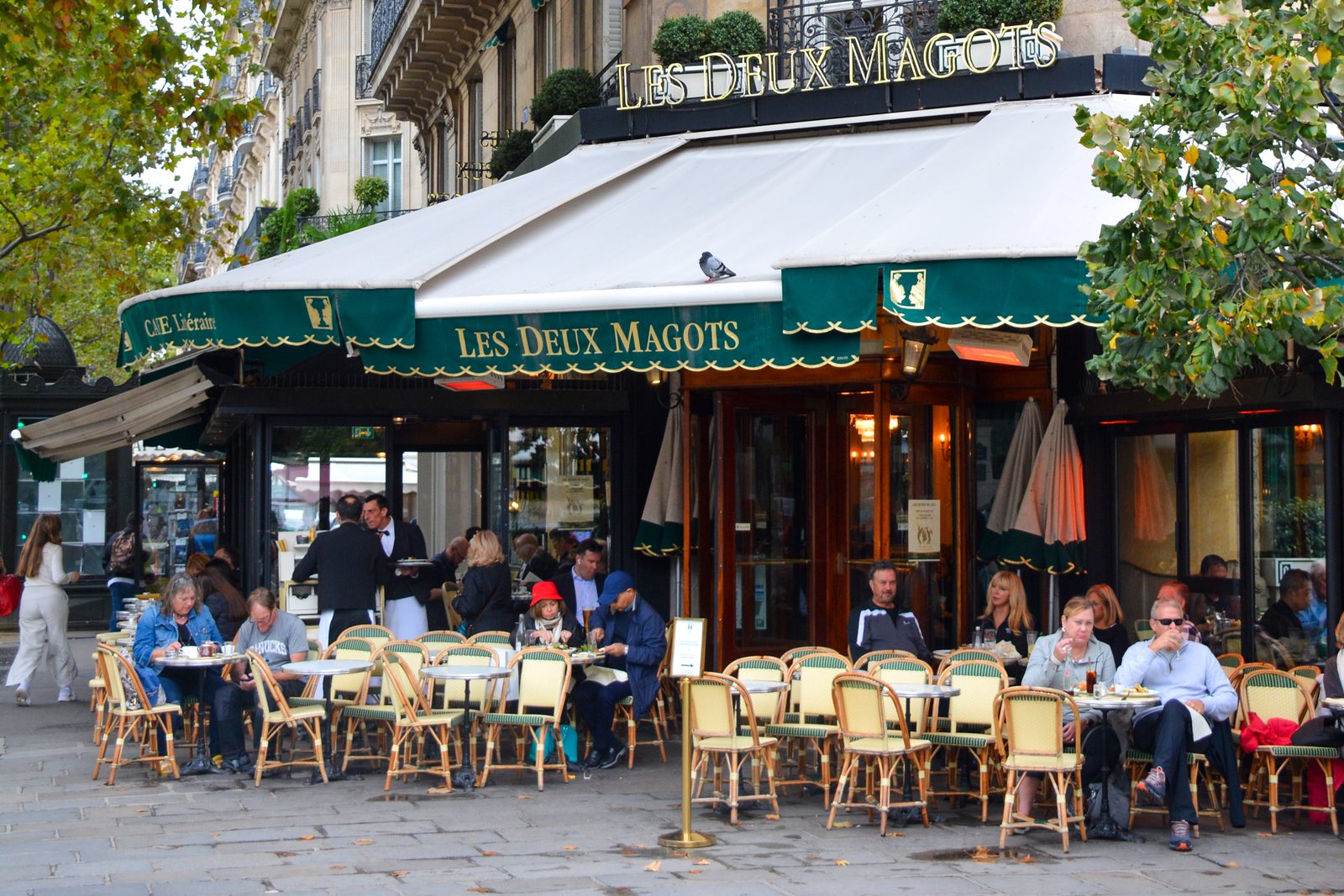
That literary weight is still legible if you know where to look — a plaque, a table by the window, the particular hush of the Deux Magots dining room before noon — but it never tips into museum stillness. These are working cafés, full of locals reading Le Monde as much as tourists retracing Hemingway's Paris, which is exactly the balance that keeps the mythology from curdling into kitsch.
Where to eat and drink
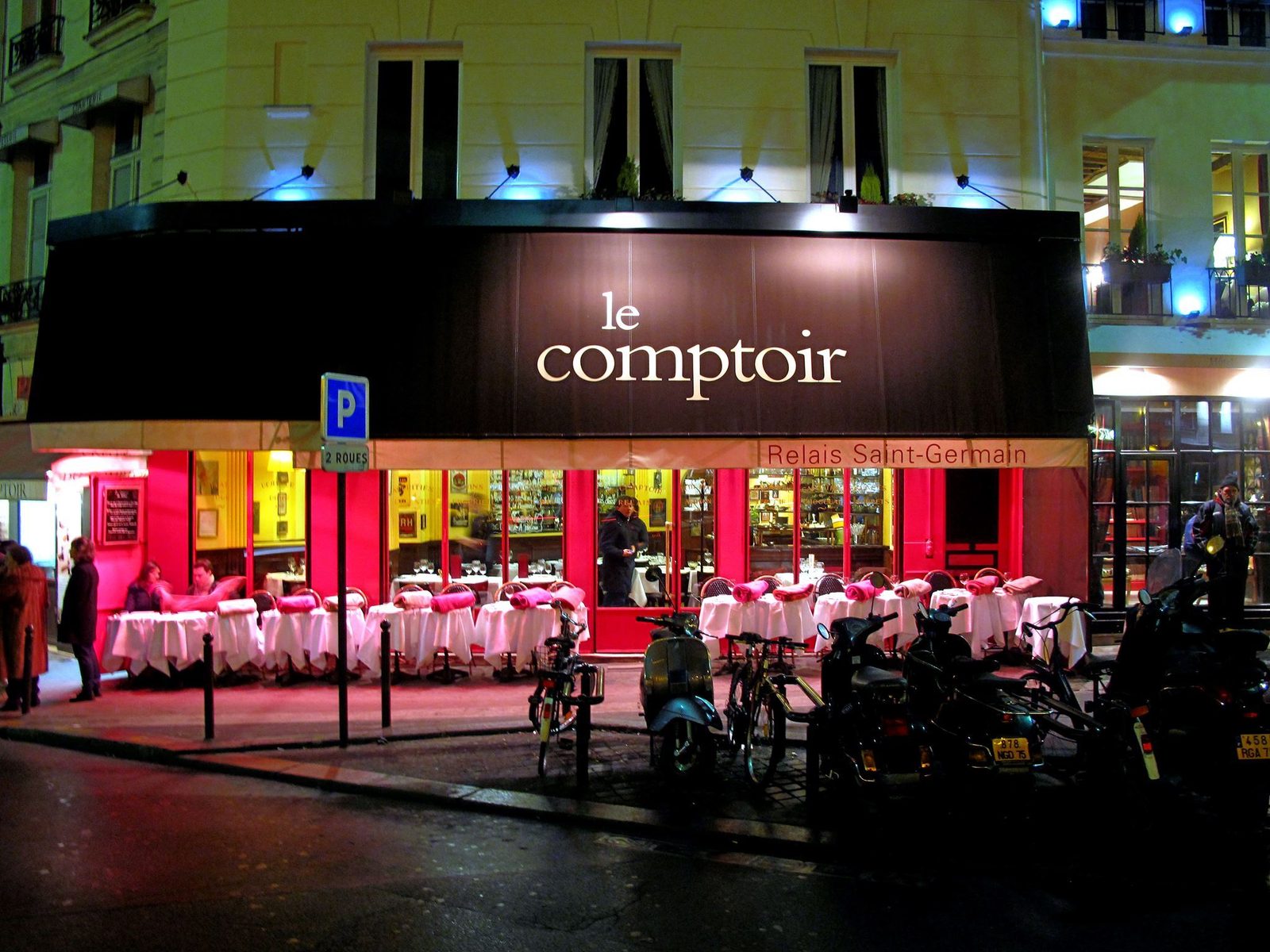
Start with the address that made a whole style of cooking famous. Yves Camdeborde's Le Comptoir du Relais, tucked inside the Hôtel Relais Saint-Germain at the Carrefour de l'Odéon, is the bistronomy landmark — the place credited with fusing fine-dining technique onto bistro plates and prices. Sit-down dinner service needs a reservation booked months in advance, but the trick locals use is the attached walk-in bar, L'Avant Comptoir, which serves the same kitchen's small plates to anyone willing to stand at the counter.
A short walk along rue de Seine turns up two more anchors of the same neighbourhood-bistro tradition. Fish La Boissonnerie is the reliable one — a Left Bank bistro built around a small-producer wine list that leans largely organic and biodynamic, the kind of place you can trust on a Tuesday without checking reviews first. Across the street, its more ambitious sibling Semilla pushes the cooking further, and sources its own wine from La Dernière Goutte next door, which tells you something about how tightly this stretch of rue de Seine is wired together — restaurants, wine shops and kitchens all leaning on each other within a hundred metres.
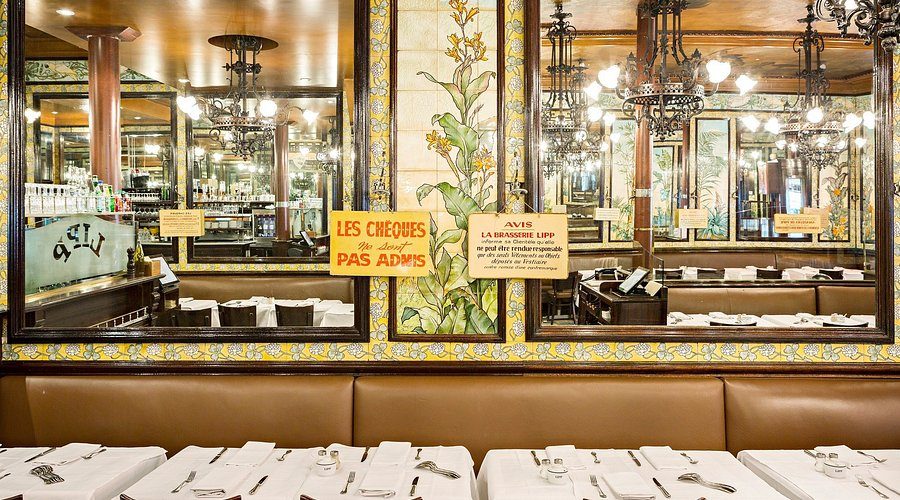
For something older and louder, Brasserie Lipp has been serving choucroute garnie and calf's head under numbered-pin waiters since 1880, its Art Nouveau dining room barely altered since. It's brasserie theatre as much as dinner — a room that rewards watching as much as eating.
And then there are the two cafés that anchor the whole neighbourhood's identity, Café de Flore and Les Deux Magots, both still serving the coffee that Sartre's generation nursed for entire afternoons — pricier than it should be, worth it once for the room alone. For older Paris still, Le Procope's dining room inside the Cour du Commerce Saint-André is less a restaurant than a piece of the 17th century that happens to still take reservations.
Nightlife: wine bars over clubs
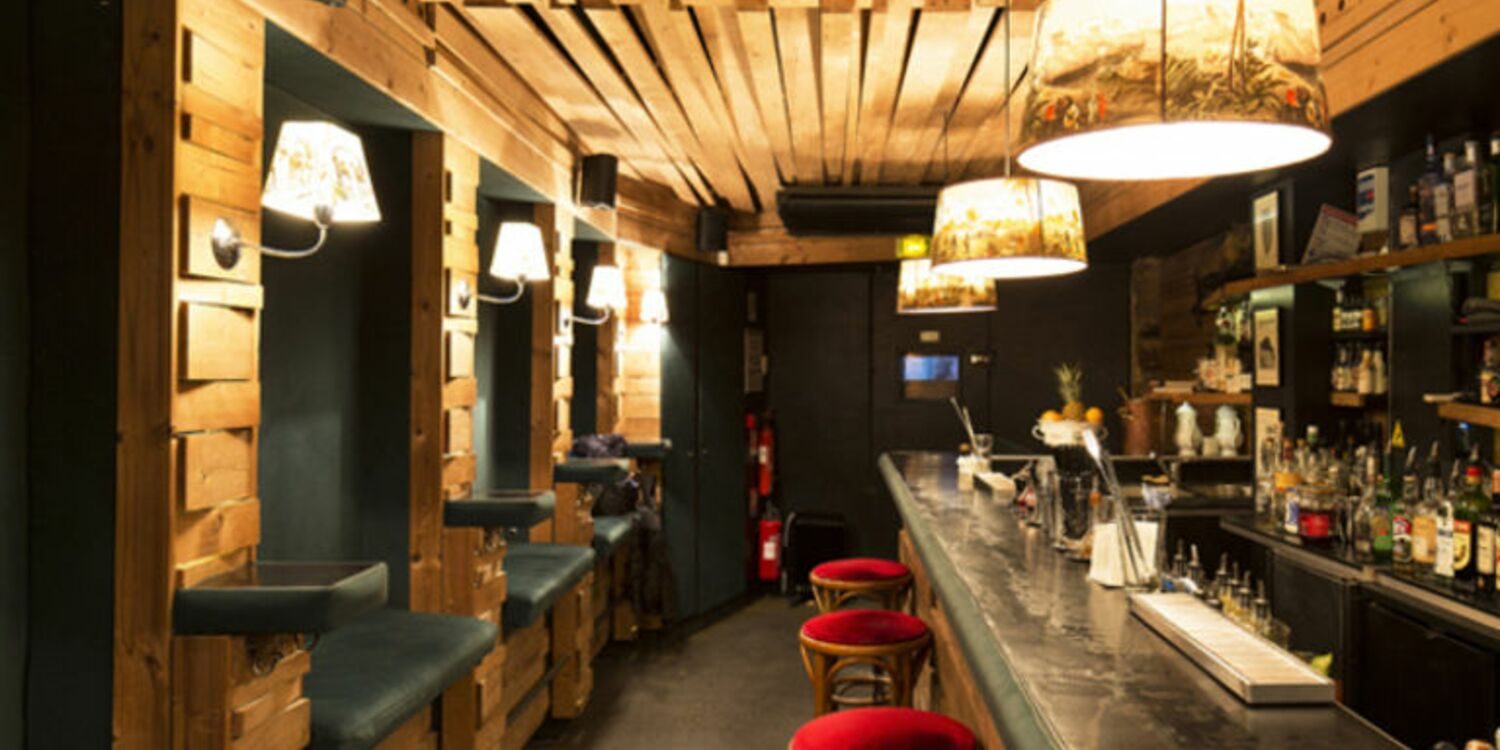
Saint-Germain-des-Prés doesn't do nightclubs, and it isn't trying to. This is wine-bar-and-cocktail-den territory, where the late crowd is dressed for dinner rather than dancing, and the night tends to wind down rather than build to a peak. Castor Club, behind heavy wooden doors on rue Hautefeuille with no sign to mark it, has been mixing serious cocktails inside a room styled like a hunting lodge since 2011 — the kind of bar you need to already know about to find. A few streets over on rue Mazarine, Prescription Cocktail Club has been running its own speakeasy-styled room since 2009, equally serious about the drinks, equally uninterested in a dance floor.
If you came from the Marais or Pigalle expecting the night to run until dawn, recalibrate: here it closes down earlier, and that's the point. The neighbourhood's version of a big night out is a good bottle and a long conversation, not a queue.
What to do
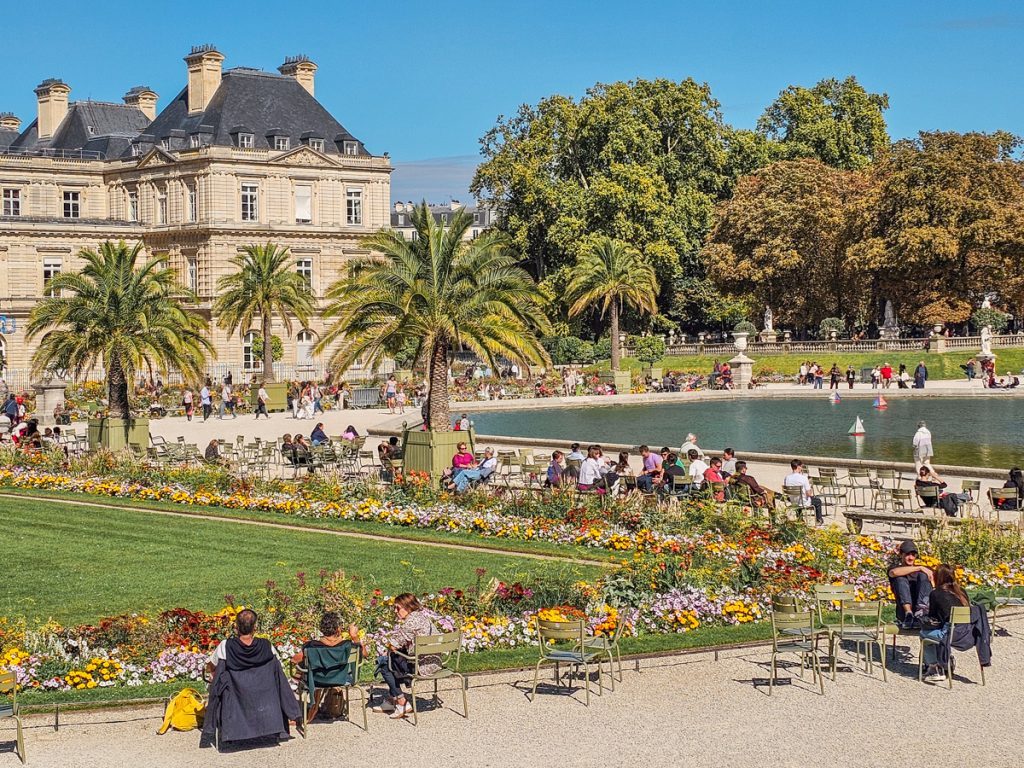
The Jardin du Luxembourg is the neighbourhood's real living room, sitting on Saint-Germain-des-Prés's southern edge where it shades into the Latin Quarter. Marie de Médicis commissioned the twenty-five-hectare gardens in 1612, and what she left behind is still doing exactly what it was built for: a working apiary tucked among the trees, an orchard planted with heirloom apple varieties, a formal rose garden, and — the detail everyone who's spent an afternoon here remembers — free green metal chairs scattered around the Grand Bassin, where you can sit and watch children push toy sailboats across the water near the Médicis fountain for as long as you like.
For something quieter and considerably less crowded, the Musée National Eugène Delacroix occupies the painter's actual apartment and studio on rue de Furstemberg, one of the smallest and calmest museum experiences in central Paris — no queue, no crowd, just the rooms where the work happened. Nearby, Église Saint-Germain-des-Prés is the oldest standing church in Paris, its green bell tower the landmark that gives the whole quarter its skyline signature, and it costs nothing to walk in. And back at the Cour du Commerce Saint-André, the covered 1776 passage anchored by Le Procope is worth a slow walk on its own merits — one of the last intact fragments of the Paris that existed before Haussmann's boulevards cut through everything around it.
Don’t miss in Saint-Germain-des-Prés (6th Arrondissement)
The manicured lawns and fountains of the Jardin du Luxembourg.
The historic literary cafes like Café de Flore and Les Deux Magots.
The independent art galleries tucked along Rue de Seine.
Antiques, design and the market street
Rue Jacob, rue de Seine and rue Bonaparte form the neighbourhood's antique-and-design spine, a run of shopfronts mixing eighteenth-century furniture dealers with contemporary galleries, many of them barely changed in footprint since the postwar gallery boom that first made this stretch famous. The formal centre of the trade is the Carré Rive Gauche, a compact grid of streets where the dealers cluster densely enough that a single afternoon's walk can take in furniture, silver, old maps and contemporary art without crossing a single major road.
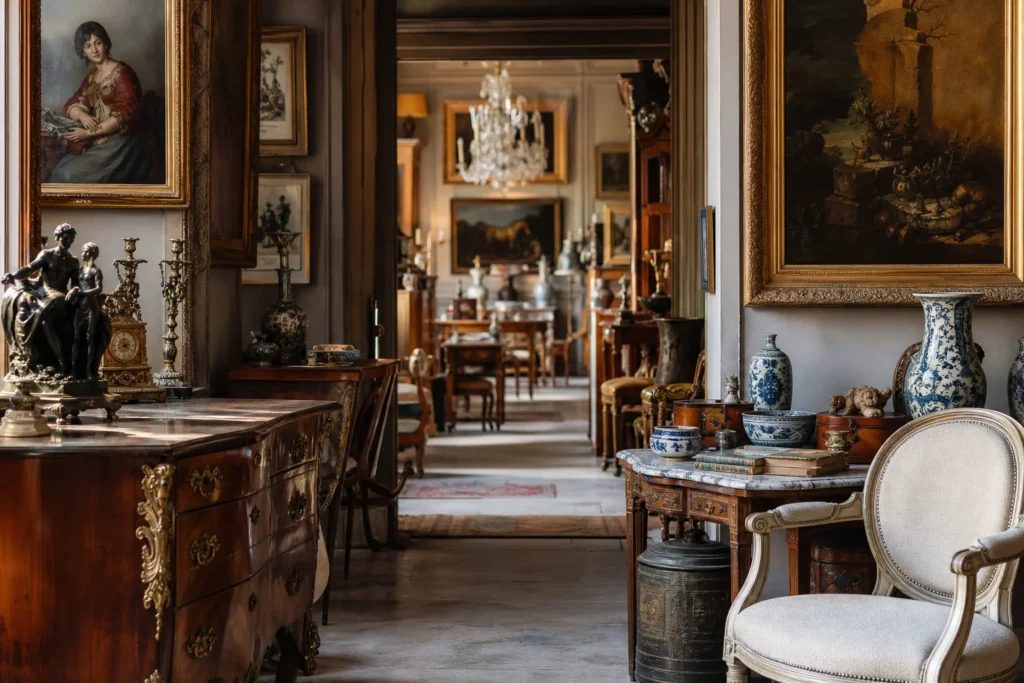
This isn't shopping in the browsing-a-high-street sense — half the doors are deliberately unwelcoming, half-empty windows meant to signal seriousness rather than invite foot traffic. But that's part of the theatre too, and even a non-buyer can spend a satisfying hour window-gazing along streets that have looked more or less like this for decades.
Where to stay in Saint-Germain-des-Prés (6th Arrondissement)
Be clear-eyed about the cost before you book: this is one of the most expensive corners of the Left Bank to sleep in, and it prices accordingly — a boutique double here routinely runs higher than an equivalent room in the Marais or the 10th arrondissement. What that premium buys is location. Everything described above — the cafés, the garden, the antique streets, Le Procope's seventeenth-century dining room — sits within a fifteen-minute walk, with the Seine and the Louvre just as close on the other side.
Where to stay here
Hotels in Saint-Germain-des-Prés (6th Arrondissement)
Our best-rated stays in this neighbourhood. Prices are approximate “from” rates — confirmed at the provider when you continue. We may earn a commission if you book through our partners — at no extra cost to you.
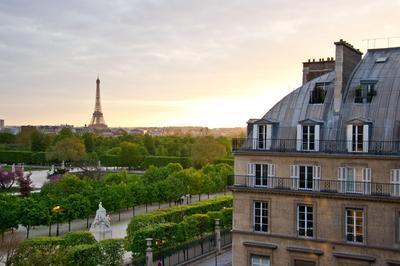 In this area
Hôtel Regina Louvre
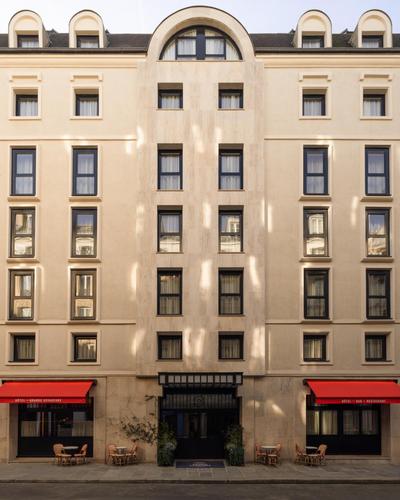 In this area
Hôtel Des Grands Voyageurs
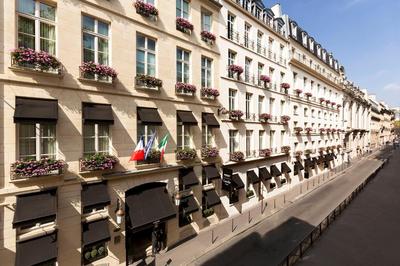 In this area
Castille Paris – Starhotels Collezione
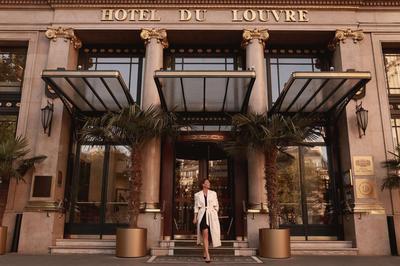 In this area
Hôtel du Louvre, in The Unbound Collection by Hyatt
 In this area
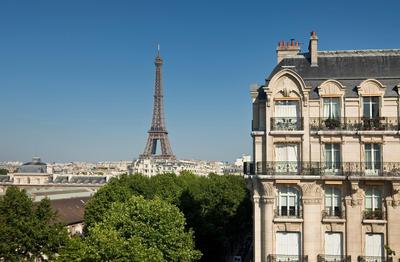
Hotel Duquesne Eiffel
 In this area
Citadines Les Halles Paris
 In this area
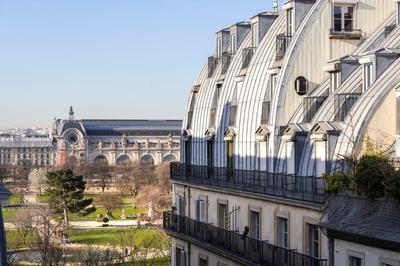
Hotel Louvre Montana
 In this area
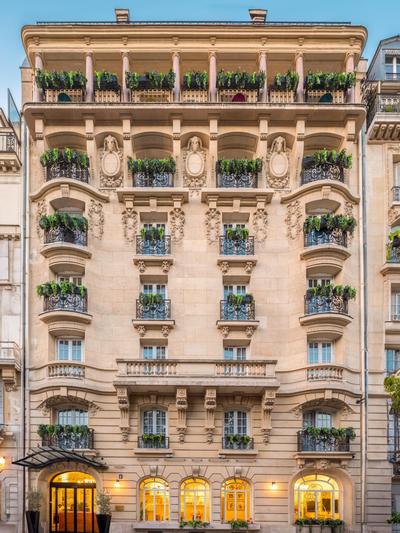
Solly Hôtel Paris
 In this area
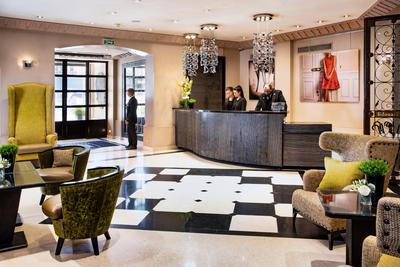
Edouard 7 Paris Opéra
 In this area
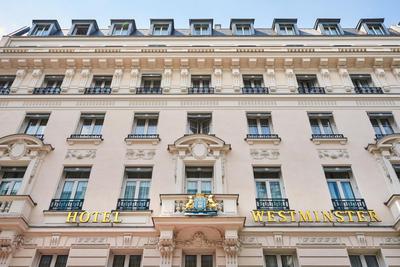
Hotel Westminster
 In this area
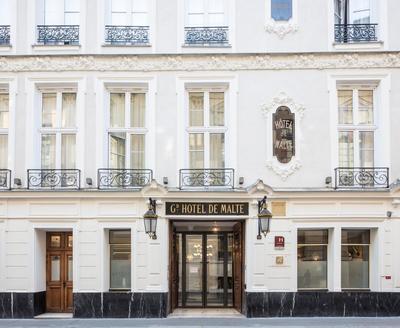
Hotel Malte - Astotel
 In this area
Hotel Atmospheres
Getting around
Three métro stations do the work here, all within roughly 400 metres of each other. Saint-Germain-des-Prés on Line 4 sits at the top of Boulevard Saint-Germain; Mabillon on Line 10 is two minutes further south; and Odéon, served by both Lines 4 and 10, lands you at the Carrefour de l'Odéon, right by Le Comptoir du Relais. Between the three, almost the entire neighbourhood is walkable from a métro exit in under ten minutes. For airport connections, the RER B and C lines are a short walk east at Saint-Michel Notre-Dame — from there, Orly is roughly thirty minutes by tram and train or a fifteen-to-twenty-minute drive, while Charles de Gaulle runs closer to forty minutes to an hour by taxi depending on traffic, or a direct RER B ride with a walk on either end.
It's a neighbourhood built for feet more than transit anyway. The distances are short, the streets narrow, and the whole point of Saint-Germain-des-Prés is the version of Paris you only get by walking it slowly — past the antique dealers on rue Jacob, through the Cour du Commerce Saint-André, and back out onto Boulevard Saint-Germain where the two most famous café terraces in the city are still, as ever, forty-four metres apart.
Good to know
Saint-Germain-des-Prés (6th Arrondissement) — your questions
Is Saint-Germain-des-Prés a good area to stay in Paris?
Yes, if you can afford it — it's one of the most central, walkable, classically Parisian bases, with the Seine, the Louvre and the Latin Quarter all within 15-20 minutes on foot. It's also one of the pricier neighbourhoods for both hotels and dining.
What is Saint-Germain-des-Prés known for?
Its mid-20th-century literary history — Sartre, Beauvoir and Hemingway's café haunts Café de Flore and Les Deux Magots — plus its antique dealers around the Carré Rive Gauche and the Jardin du Luxembourg on its southern edge.
How do you get to Saint-Germain-des-Prés from Charles de Gaulle or Orly airport?
Orly is closer — about 30 minutes by tram and train, or a 15-20 minute drive. From Charles de Gaulle, take the RER B to Saint-Michel Notre-Dame and walk, or budget closer to 40 minutes to an hour by taxi depending on traffic.
Is Saint-Germain-des-Prés safe to visit?
Yes — it's genuinely one of the safer, more affluent central Paris neighbourhoods, with violent crime rare. The usual pickpocket caution around busy café terraces and métro stations still applies.
Gallery