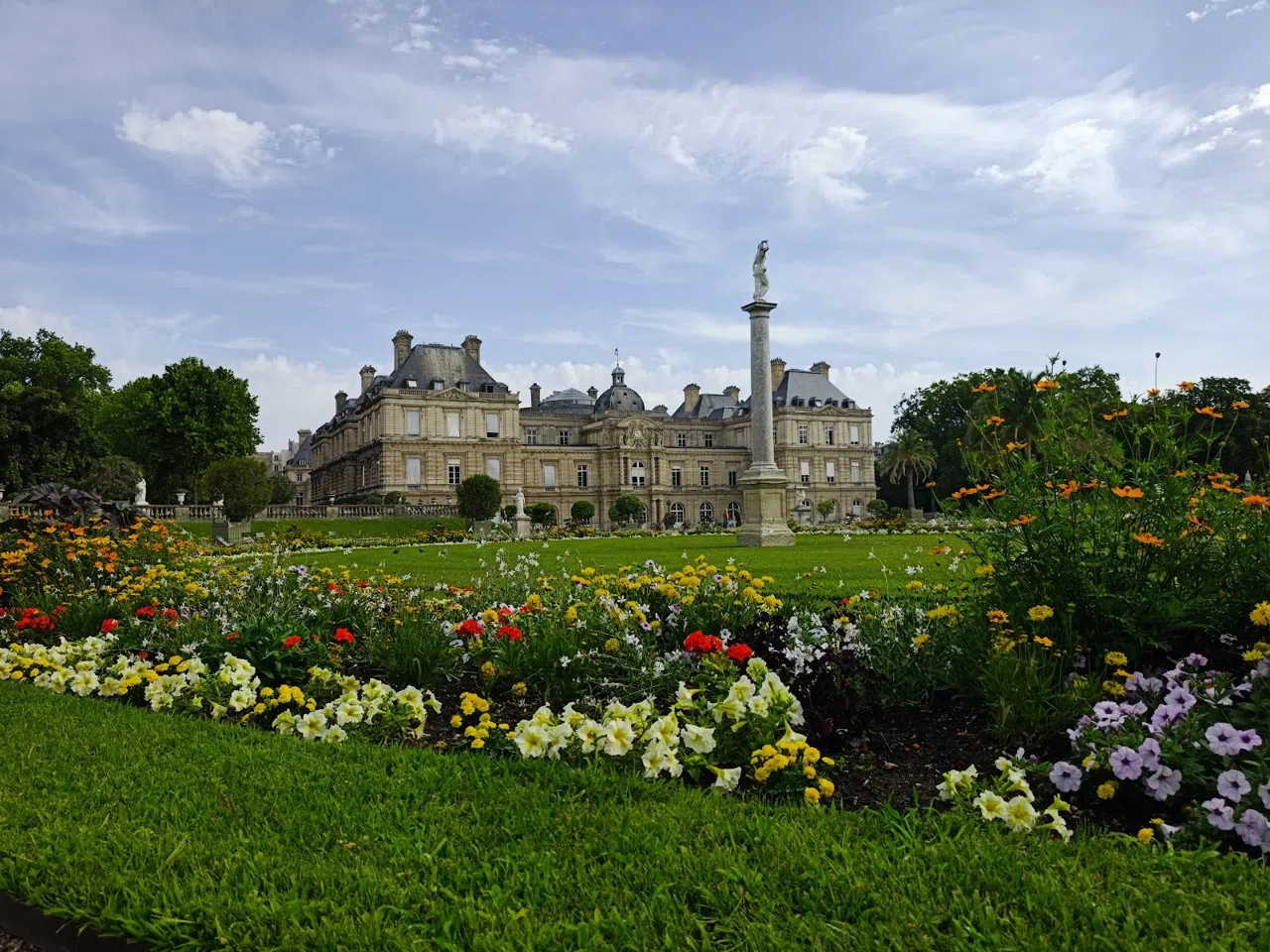

A green metal chair in the Jardin du Luxembourg weighs 7.3 kilograms, has no chain, no coin slot and nobody watching it, and will travel as far across the gravel as you can be bothered to drag it. There are roughly 4,500 of them loose in that one garden alone. You pick a chair, choose your light and sit until the light moves. It costs nothing, it fills an afternoon, and no part of it involves buying anything.
The chair, and the year it stopped costing money
Jardin du Luxembourg (6th arrondissement, a short walk from Odéon and the top of rue Soufflot) belongs to the Sénat rather than to the city, which is why it feels administered rather than municipal. Ten gates, no ticket, no barrier: a group of twenty walks in and nobody asks anything, which is not true of much else in central Paris. The Sénat's conservation team runs occasional heritage and horticulture walks through the garden, worth catching if you want the planting explained by the people who do it.
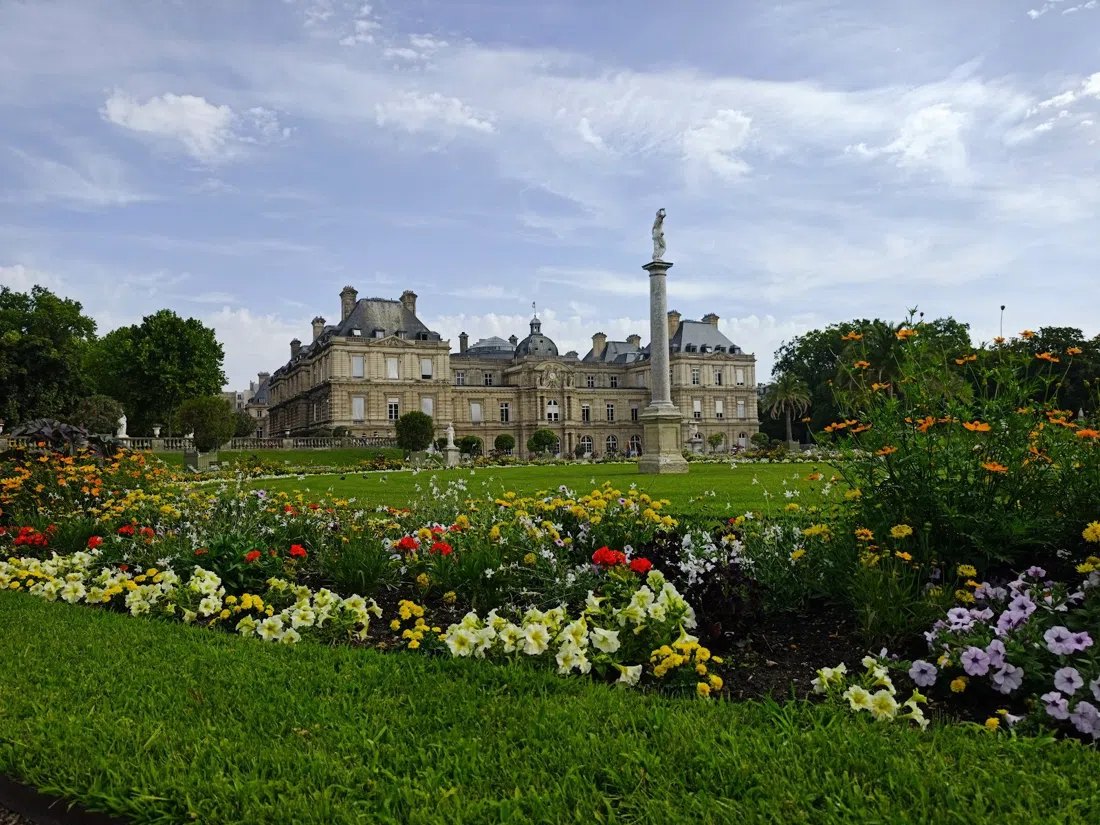
The seats come in two generations and you can tell them apart by weight. The heavy one is the 1923 steel Sénat pattern, 7.3kg for the upright chair and 13.5kg for the reclining version, and it lands on gravel with a sound every regular here knows. Alongside it sits Frédéric Sofia's 2002 aluminium redesign, the one actually named "Luxembourg", lighter under the hand and easier to carry one-handed while holding a coffee. Sitting on either only became free in 1974. Before that the seat was a paid service, and once the fee went the chairs stopped being furniture and turned into a habit.
They do not redistribute themselves. Gardeners inspect the stock weekly and carry the chairs back by hand, which is why there is always one near the big octagonal basin even at five in the afternoon in September, when logic says they should all have migrated to the sunny western terrace. Take two: one to sit on, one for your feet. Drag four into a circle if you are a group. The chairs are movable precisely so a family can build a room out of them, and nobody will come and straighten them out while you are still in them. You cannot lie on the lawns, though. In the Luxembourg the grass is scenery, patrolled and enforced, so the chair is the only seat you get.
Lunch without leaving the garden
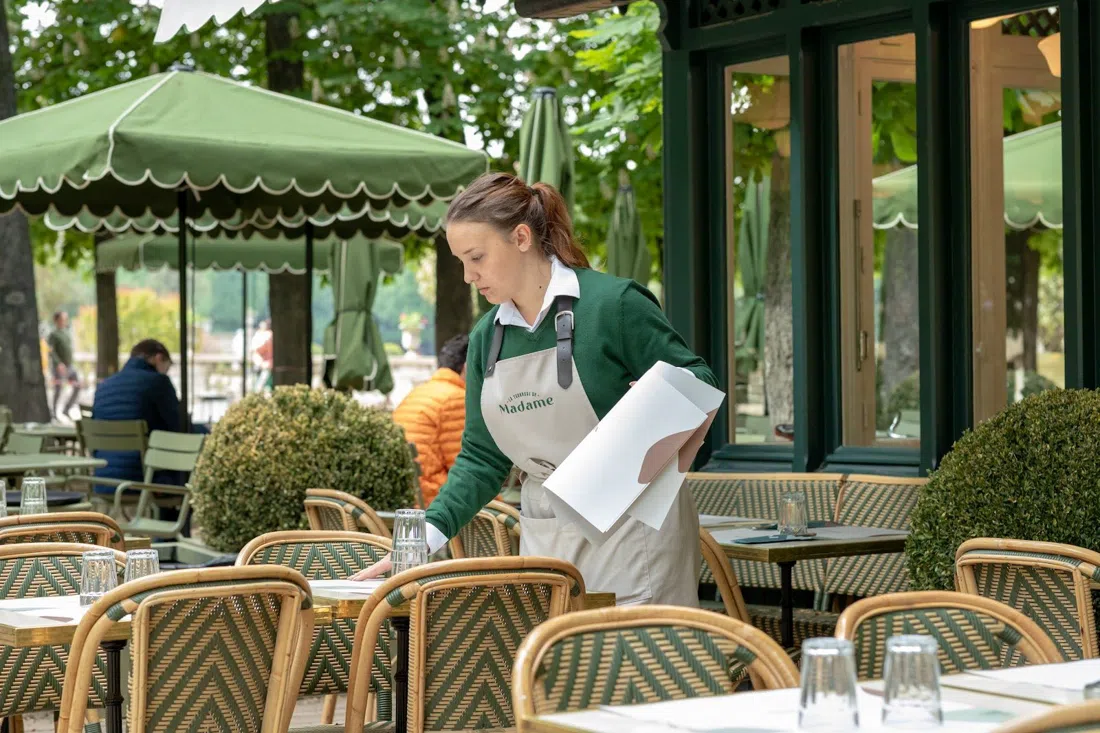
Most people break the afternoon by walking out to a café on rue de Vaugirard and then never quite come back. La Terrasse de Madame (6th, inside the garden near the Vaugirard side) solves that. It is open daily, roughly 08:30 to 18:30, serving brasserie plates and large salads at around €20 to €35 a head, and it is the only proper sit-down option actually within the Luxembourg's walls. Run by Groupe Bertrand, it takes group bookings and can be privatised outright, which makes it the obvious anchor for any gathering bigger than six. The distinction matters more than the food: eating inside the garden keeps the afternoon intact, while eating outside it turns the day into two errands.
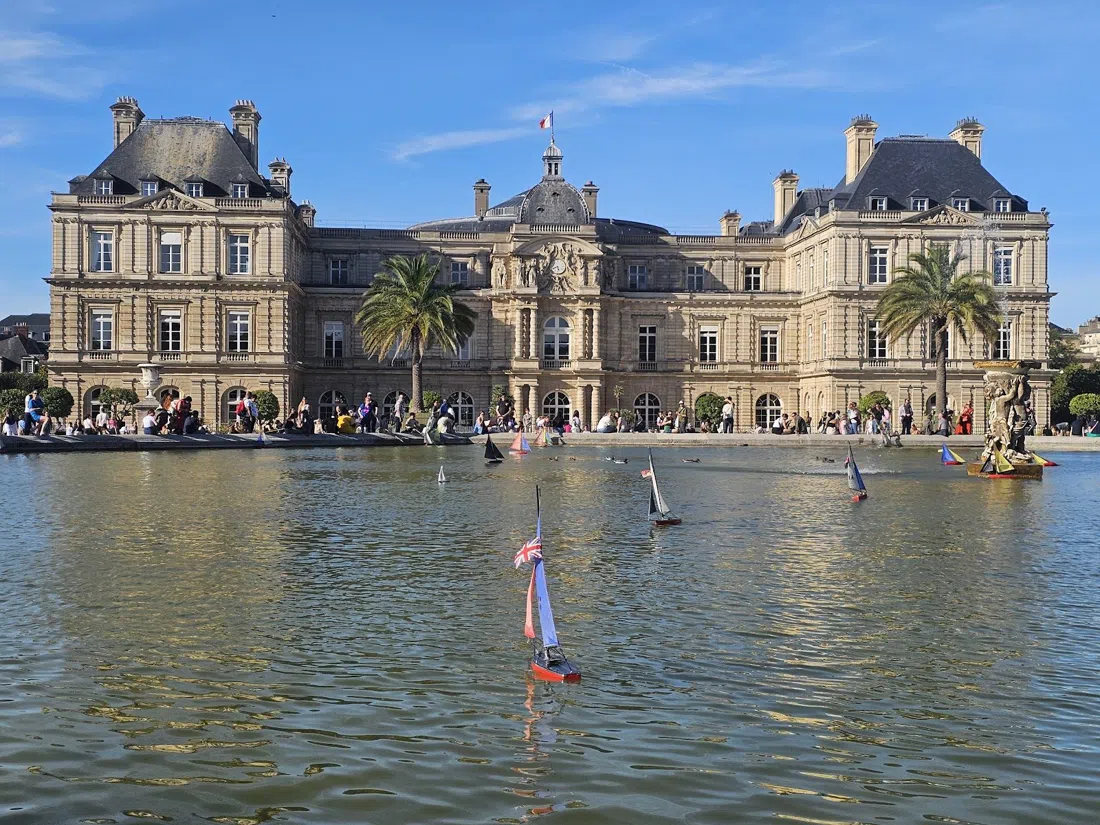
If you are travelling with children, check the calendar before you promise anything. Les Voiliers du Luxembourg (6th, at the octagonal basin) rents pointed wooden sailing boats for about €6 per thirty minutes, first-come, no booking, several boats at once if there are several of you. Boats have circled that basin for well over a century. But the hut runs daily 11:00 to 18:00 from June through August, then only on Wednesdays and during French school holidays. On an ordinary weekday in the second half of September it is shut, and a child told otherwise will not forgive the garden for it.
Walking north to the Tuileries
The stretch between the two gardens is worth doing on foot: out of the north gate, up rue de Tournon past the Sénat's back, then rue de Seine to the river and across the Pont du Carrousel. Twenty-five minutes at a slow pace, less if you stop for nothing, which you will not.
Jardin des Tuileries (1st, running from the Louvre to Concorde) has been managed by the Louvre since 2005 and holds around 3,000 chairs, enough that a party of twenty can colonise a basin edge without negotiating with anyone. The crowd is broader here: office workers on a lunch hour, tourists recovering from the Louvre, and a light off the Concorde end that is flatter and harder than anything in the 6th. The basin edges are the seats worth having. The round basin at the Louvre end catches the morning; the octagonal basin at Concorde holds the late sun until the gates close, and September hours run roughly 07:00 to 21:00, so there is no rush.
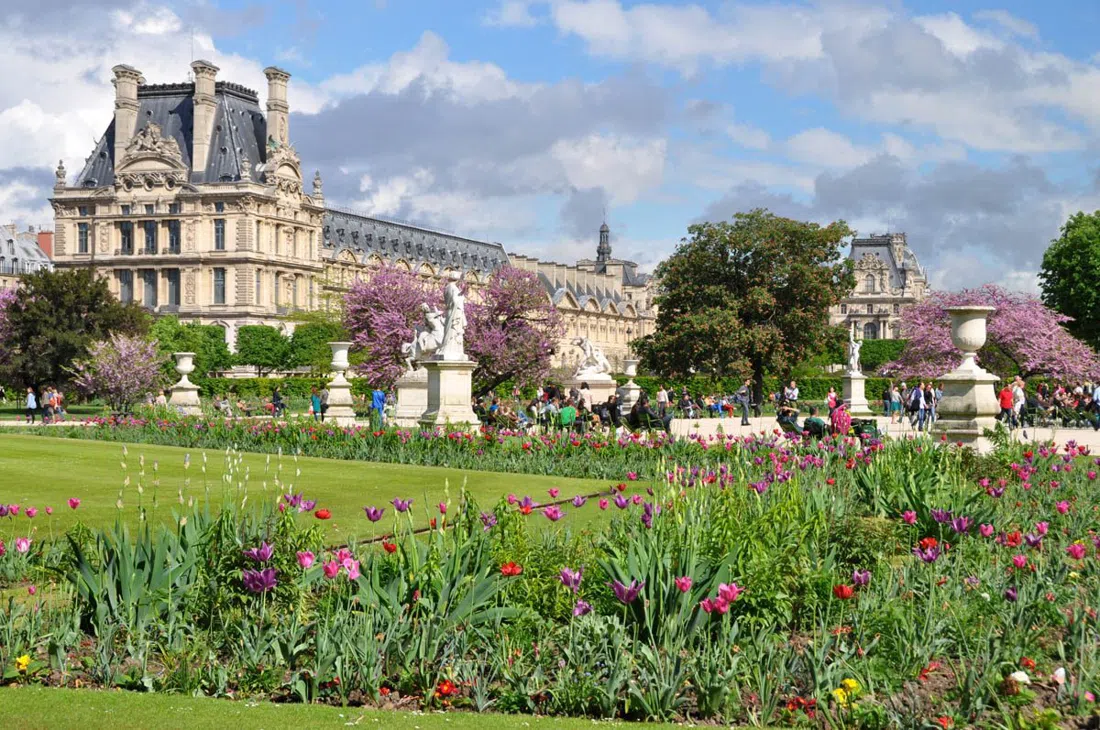
The Louvre is restoring the garden's 166 cast-iron benches from the 1880s, a separate heritage project from the green chairs. The chairs were never the grand furniture here. They were the cheap, temporary, movable answer to a garden built for processions.
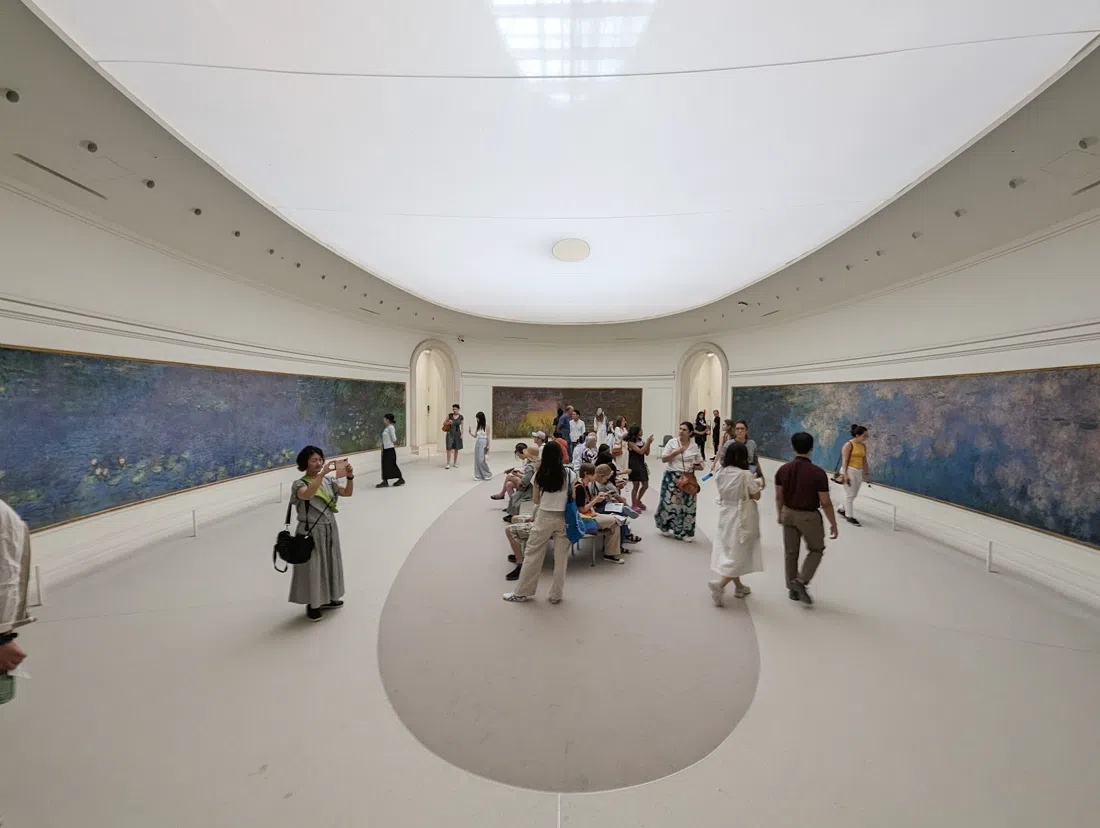
Thirty seconds from the octagonal basin, Musée de l'Orangerie (1st, at the Concorde corner of the garden) is the indoor version of the same idea: two oval rooms built for people to sit still in. Entry is around €13, free for under-18s and for EU residents aged 18 to 25, open Monday and Wednesday to Sunday 09:00 to 18:00, closed Tuesdays, with last entry at 17:15. Timed tickets are strongly advised and the museum handles group bookings directly. From 30 September 2026 the exhibition "Monet, painting time" runs here, which will make the late-afternoon slots the busiest of the day.
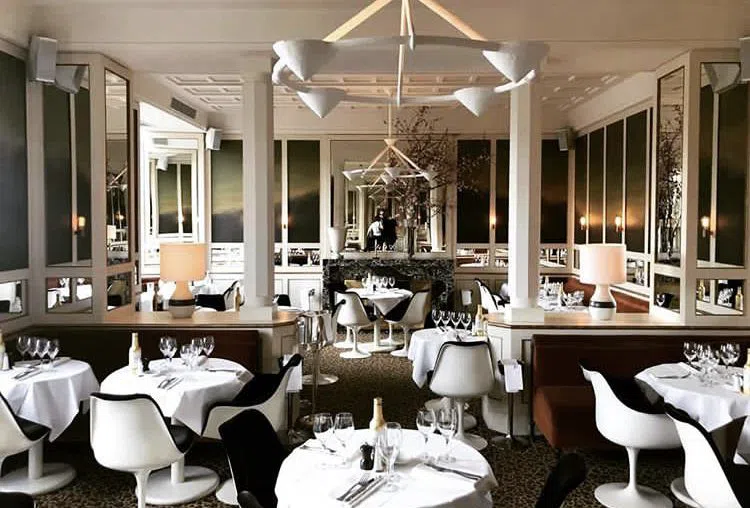
The expensive option sits a few hundred metres up the same garden. Loulou (1st, beside the Musée des Arts Décoratifs) serves Italian food on a terrace with the best view in the Tuileries. Lunch runs Tuesday to Sunday 12:00 to 14:30, dinner Tuesday to Saturday 19:00 to 23:00, €60 to €90 a head with wine. Reservations are essential for the terrace and large tables need booking well ahead. Nobody walks into this room, and turning up at 13:15 in August hoping for outside seating is how people end up eating at Concorde. Forty metres away there is a chair that costs nothing, and the two are in plain sight of each other.
The quiet ending five minutes away
Jardin du Palais-Royal (1st, behind the Comédie-Française) is the third of the central chair gardens and the one people forget. State-run by the Centre des monuments nationaux, free, open roughly 08:00 to 22:30 in September. It is walled on all four sides, and the effect is physical: the traffic of rue de Rivoli stops dead at the arcade and does not follow you in. Small groups are fine and the arcade benches take the overflow when the chairs by the central fountain are all claimed.
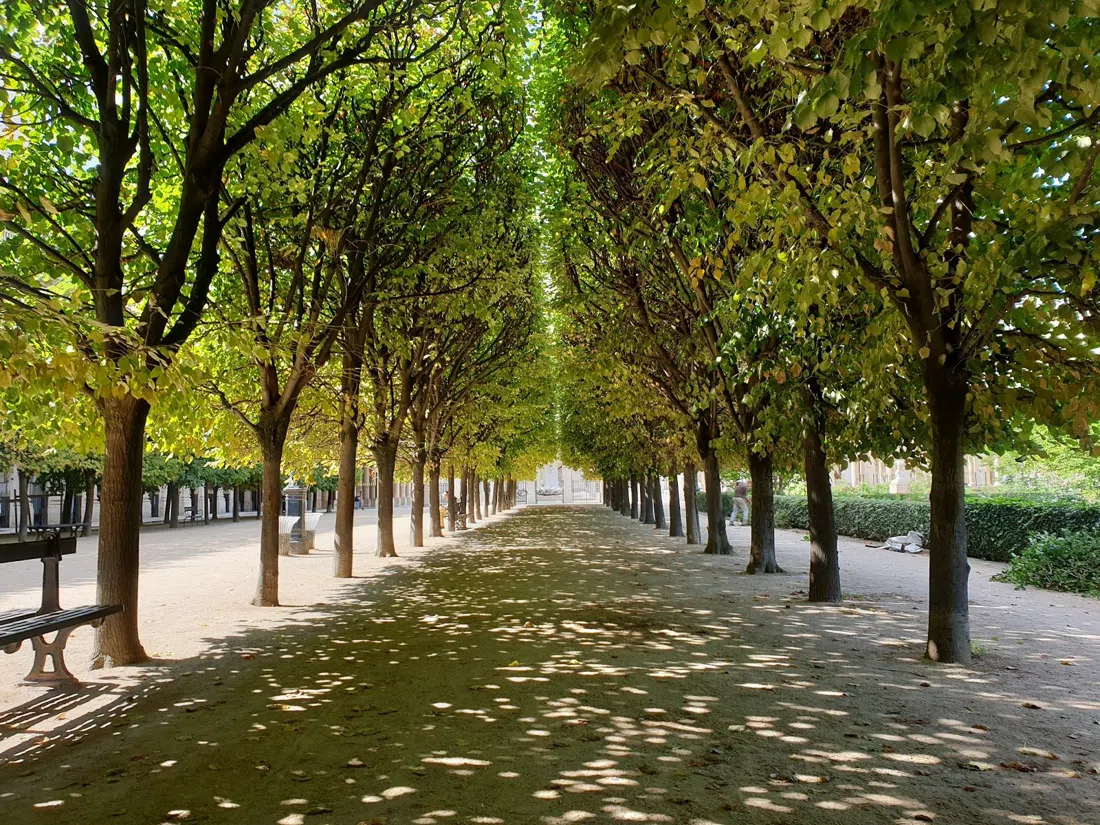
If you want the afternoon to end rather than escalate, end it here: a chair under the limes at seven, the light going off the stone, nothing else on. For an evening instead, get on the metro.
Crossing to the 19th, where the rules stop
Line 5 to Laumière or 7bis to Buttes Chaumont puts you at Parc des Buttes-Chaumont (19th, above Belleville) in about twenty-five minutes from the centre. The park is free, open daily around 07:00 to 21:00 in September, and here the lawns are yours: picnics, groups and lying flat on the grass are all permitted, which is the exact opposite of the Luxembourg. The slopes face west, so the whole hillside turns into an amphitheatre after six.
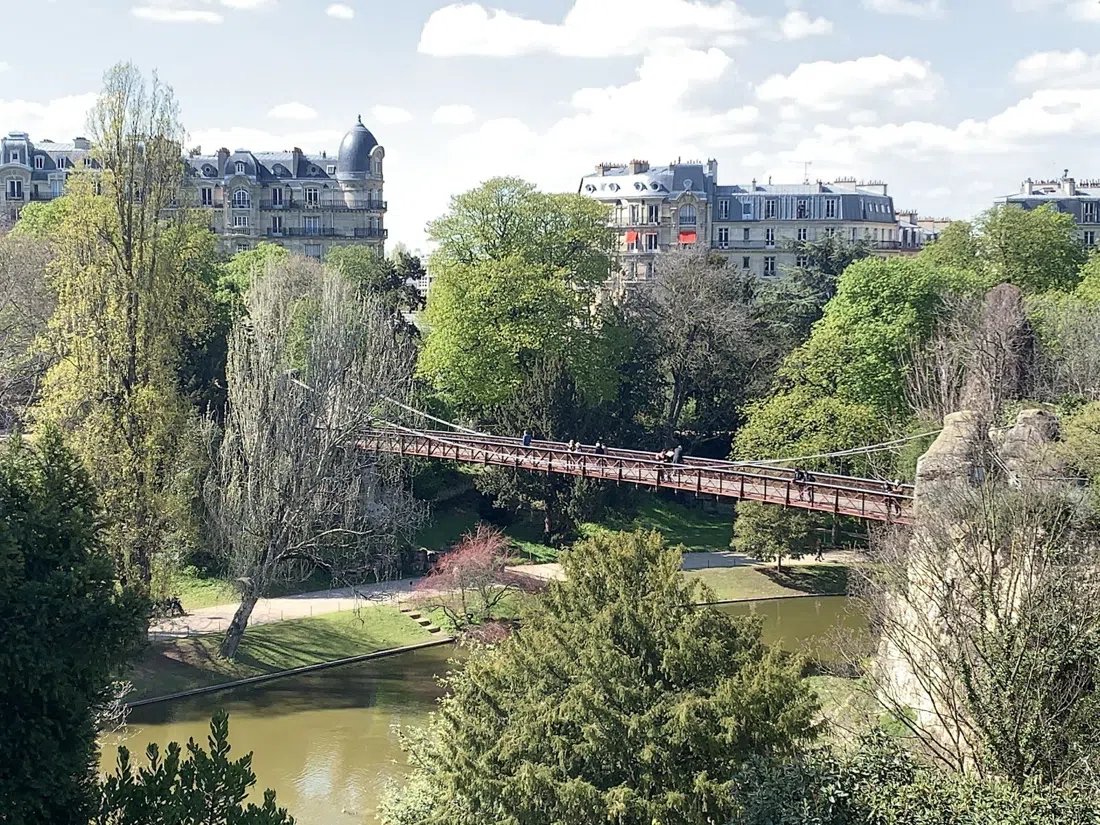
Part of it is fenced off. The park was built over worked-out quarry ground, and stabilisation work has closed the island, the Temple de la Sibylle on top of it, both cascades and part of the lakeside path. Studies run through 2026, with the works themselves starting in late 2027. You see the temple from the far bank, and anyone arriving on the promise of standing under its columns will be disappointed. Plan the visit around the lawns and the western slope instead.
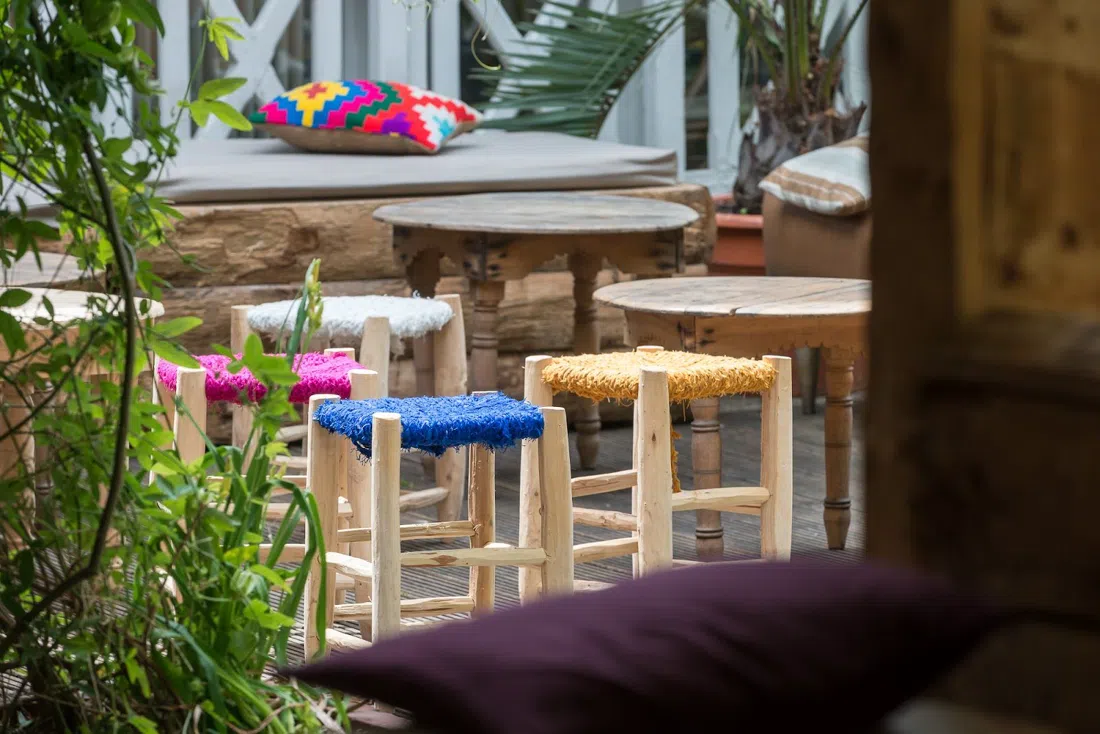
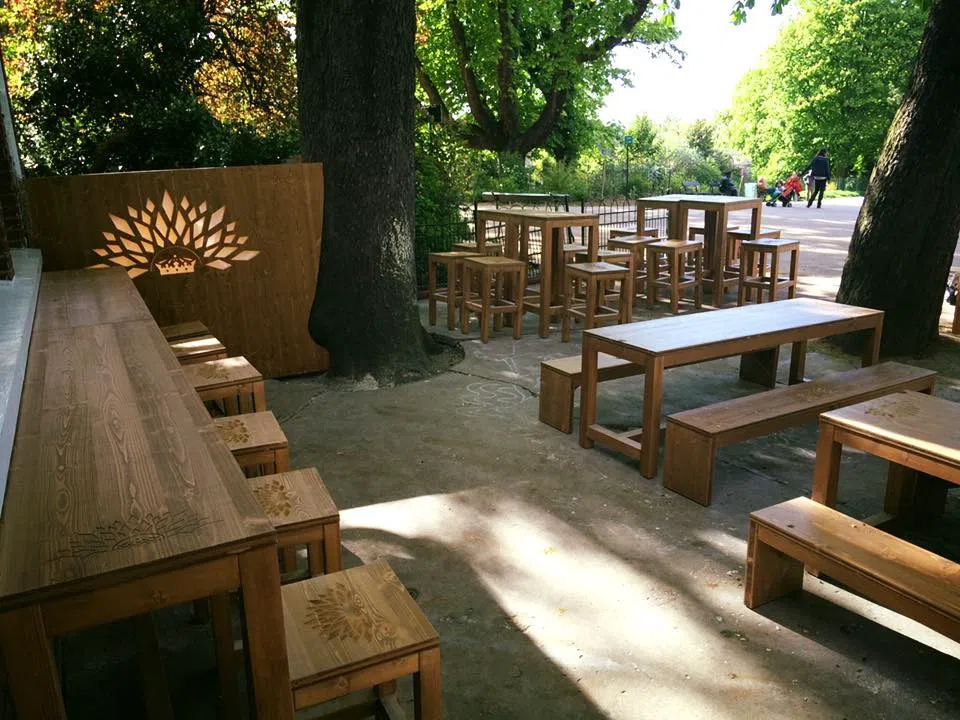
Two separate operators run the evening and they are not interchangeable. Rosa Bonheur Buttes Chaumont (19th, inside the park) has been going since summer 2008 and is the cheap one: pichets, pizzas and planches, open Wednesday to Sunday from noon to midnight, summer and winter. It takes no reservations at all, ever. You queue. Big groups need to arrive early, and people come unstuck turning up at 19:00 on a Saturday expecting a table; private hire runs through a separate company, Why Not Privatisation. Le Pavillon Puebla (19th, on a different hillside in the same park) is the Perchoir group's version: cocktails, pizzas and planches at a step up in price, Wednesday to Friday 16:00 to midnight, Saturday 14:00 to midnight, Sunday 14:00 to 21:00. Its reservation calendar opens three weeks ahead and the whole pavilion can be privatised day or night, year-round. One you queue for, one you book. Both belong in the same evening.
Sunset fifteen minutes downhill
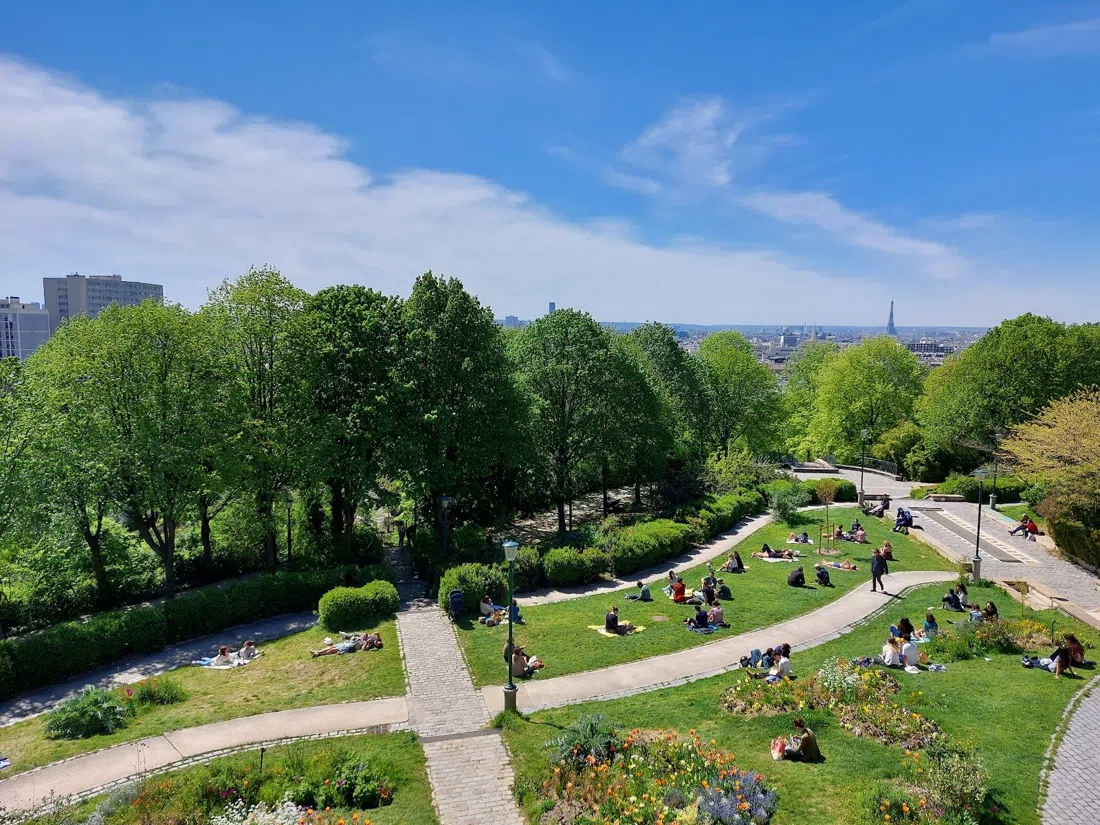
Parc de Belleville (20th, above rue des Couronnes) is a quarter of an hour's walk from the Buttes-Chaumont gates and holds the best free panorama in eastern Paris from its belvedere terrace. The terrace takes groups, though it fills fast on a warm evening and the crowd is standing and sitting on steps rather than settling into chairs. The catch is the gate: opening is 08:00, 09:00 at weekends, and closing is around 19:30, which is earlier than the view deserves in high summer. Time it deliberately or you will watch the sunset through railings.
The parks Parisians keep for themselves
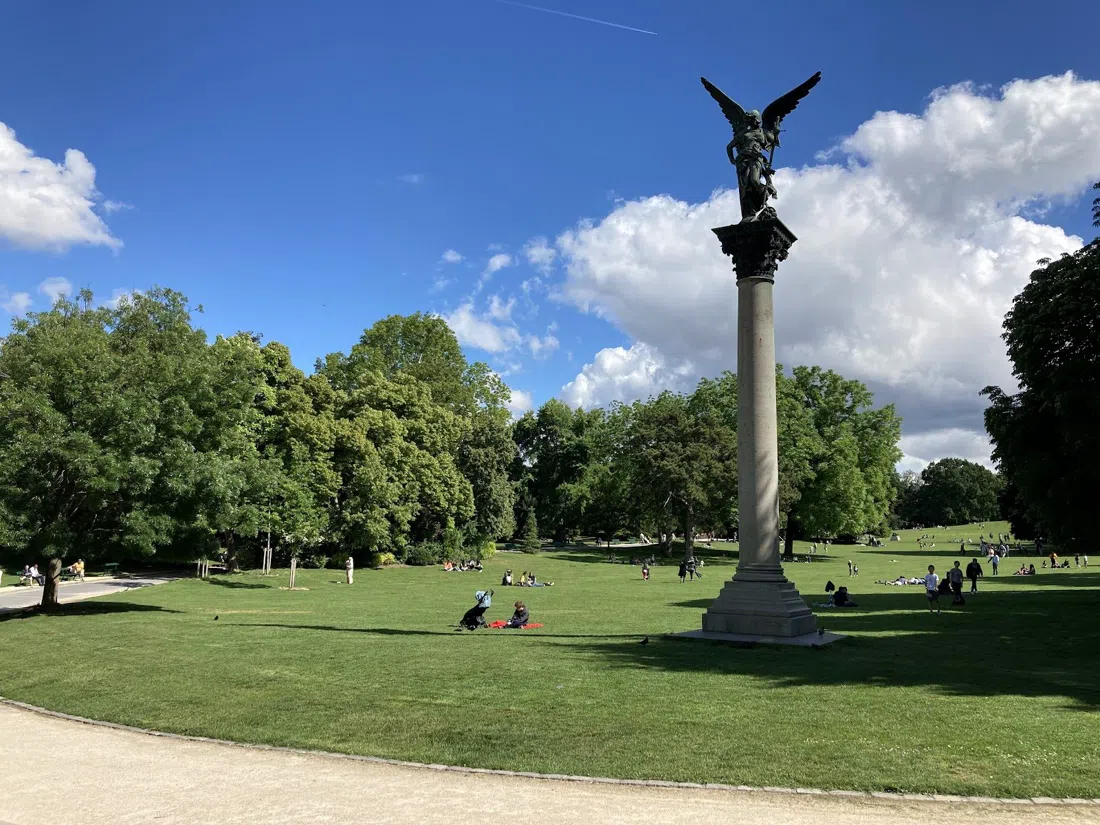
The sitting habit runs across the whole city rather than being a Luxembourg attraction, and two parks show it. Parc Monceau (8th, off boulevard de Courcelles) is the bourgeois version: nannies, joggers and readers rather than visitors, broad gravel loops, permitted lawns, open daily 07:00 to about 21:00 in September. It is the standard meeting park of the 8th and it absorbs a group without anyone noticing one arrived.
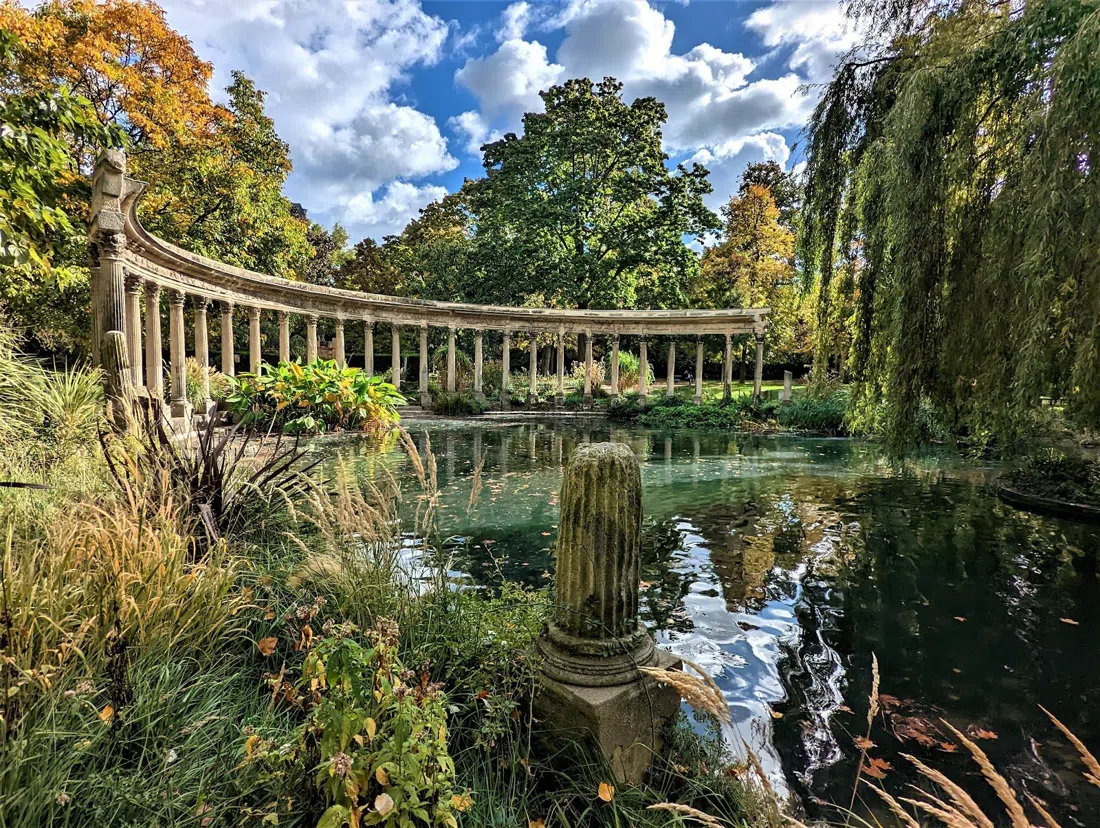
Parc Montsouris (14th, by the RER B station of the same name) is Alphand's 1878 southern twin to Buttes-Chaumont and far less visited. Open 07:00 to around 20:30 in September, with nearly 1,400 trees and lawns open enough that ten or more people can spread out with no booking and no negotiation. If the fenced island in the 19th sours the northern park for you, this is the substitute: same designer, same century, fewer people, and nothing closed.
Two places worth the detour with nothing to drag
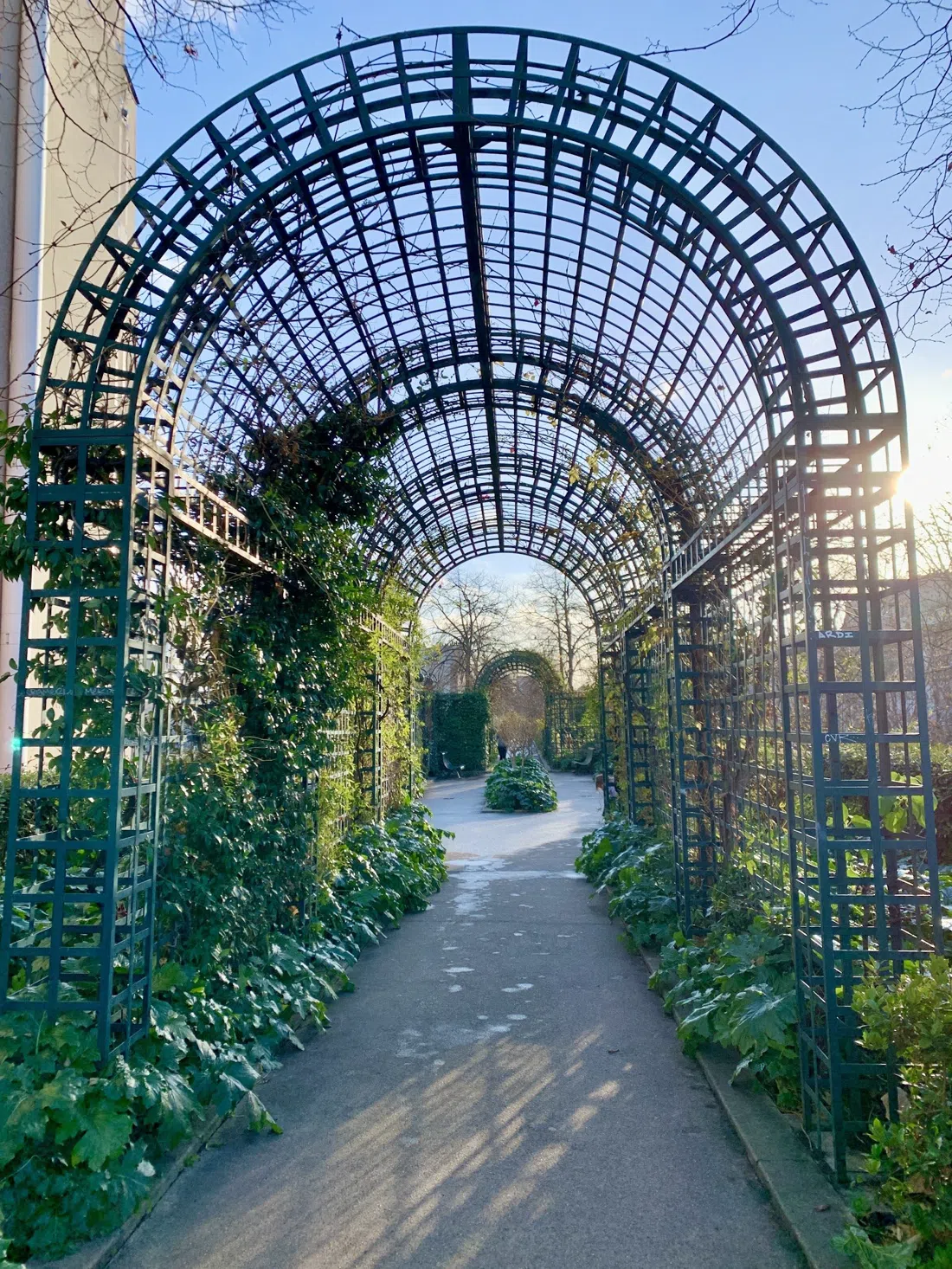
Coulée verte René-Dumont (12th, running east from Bastille), the Promenade Plantée, opened in 1993 and was the original elevated park walk that later imitations abroad copied. Its three sections open at 08:00, 09:00 at weekends, with staggered closing times. It is a walk rather than a sitting garden: fixed benches only, no movable chairs, and a linear route that moves a group in single file instead of letting it gather. Use it to get from one garden to the next, not as somewhere to spend an idle hour.
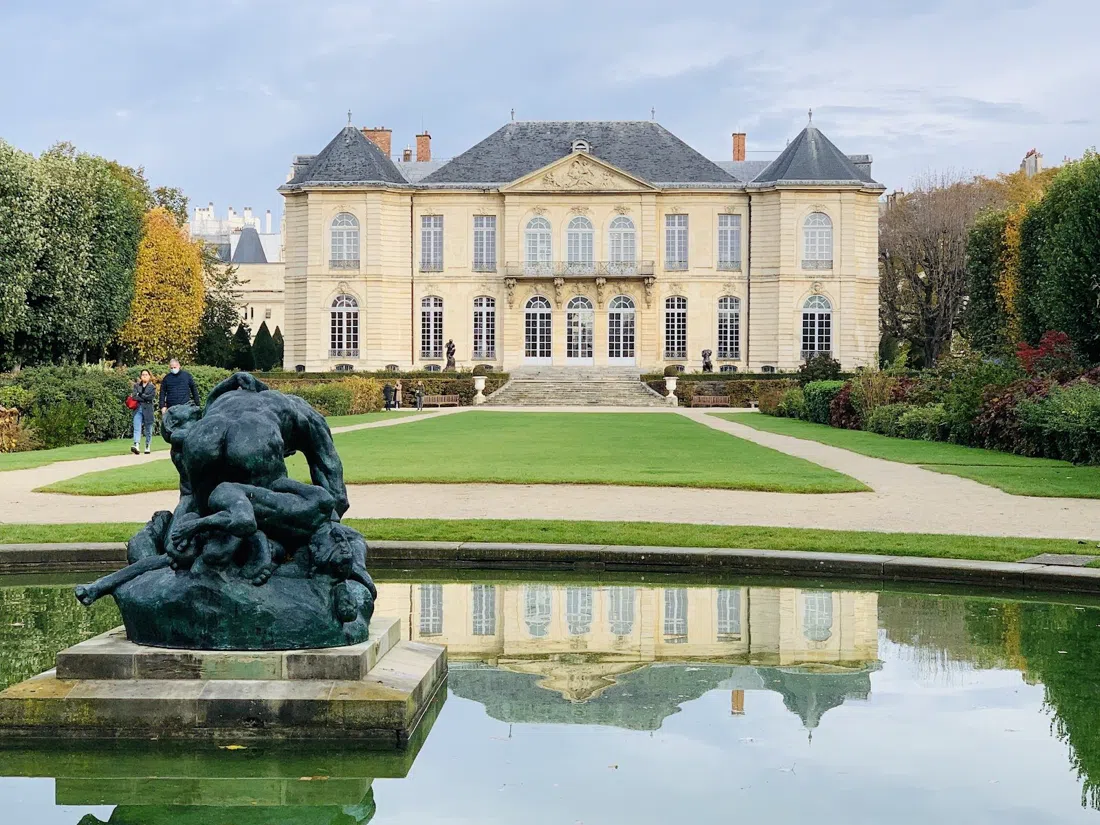
Musée Rodin — sculpture garden (7th, near Les Invalides) is the same instinct, curated and charged for. A garden-only ticket is €5, the full museum €14, open Tuesday to Sunday 10:00 to 18:30 and closed Mondays, with L'Augustine café serving in the grounds and group visits handled by the museum. Five euros for an afternoon among the bronzes is the best-value hour in the 7th, but the seating is shaded fixed benches. You sit where Rodin's layout puts you, which after a day of hauling your own chair around feels oddly like being told what to do. Go on the same day and you feel the difference.
Getting around, paying, and timing the light
Every garden in this piece is free except the Orangerie and the Rodin garden, so a full day here can cost nothing at all. A realistic middle budget: lunch at La Terrasse de Madame at €25, the Orangerie at €13, the Rodin garden at €5, and a Rosa Bonheur evening at €15 to €20 comes to about €60 a head. Loulou alone doubles it.
Transport is simple and mostly on foot. RER B stops at Luxembourg; line 1 serves Tuileries and Concorde; Palais-Royal is one stop or a ten-minute walk from the Tuileries; line 5 or 7bis reaches Buttes-Chaumont; line 2 puts you at Couronnes for the Belleville belvedere. Buy a contactless-capable travel pass or tap a bank card at the gates rather than queuing for paper tickets. Carry €20 or so in coins and small notes anyway, because the sailing-boat hut and the busier guinguette queues are faster with cash, and every park itself needs none.
On timing: gates close between roughly 19:30 and 22:30 depending on the garden and the month, and guards start whistling and sweeping the paths about twenty minutes before. Put the chairs roughly back where you found them when you go. Nobody will fine you, which is exactly why people do it. For where to base yourself between the 6th and the 19th, start with the Paris hotel search, and for the rest of the city read the wider Paris guide.