The Paris issue
The Paris That Doesn't Pose
A calm, walkable route through the northeast city — canals, hilltop guinguettes, market wine and shared tables — where Parisians actually spend their evenings.

By Sasha LindholmThe unhurried side of Paris
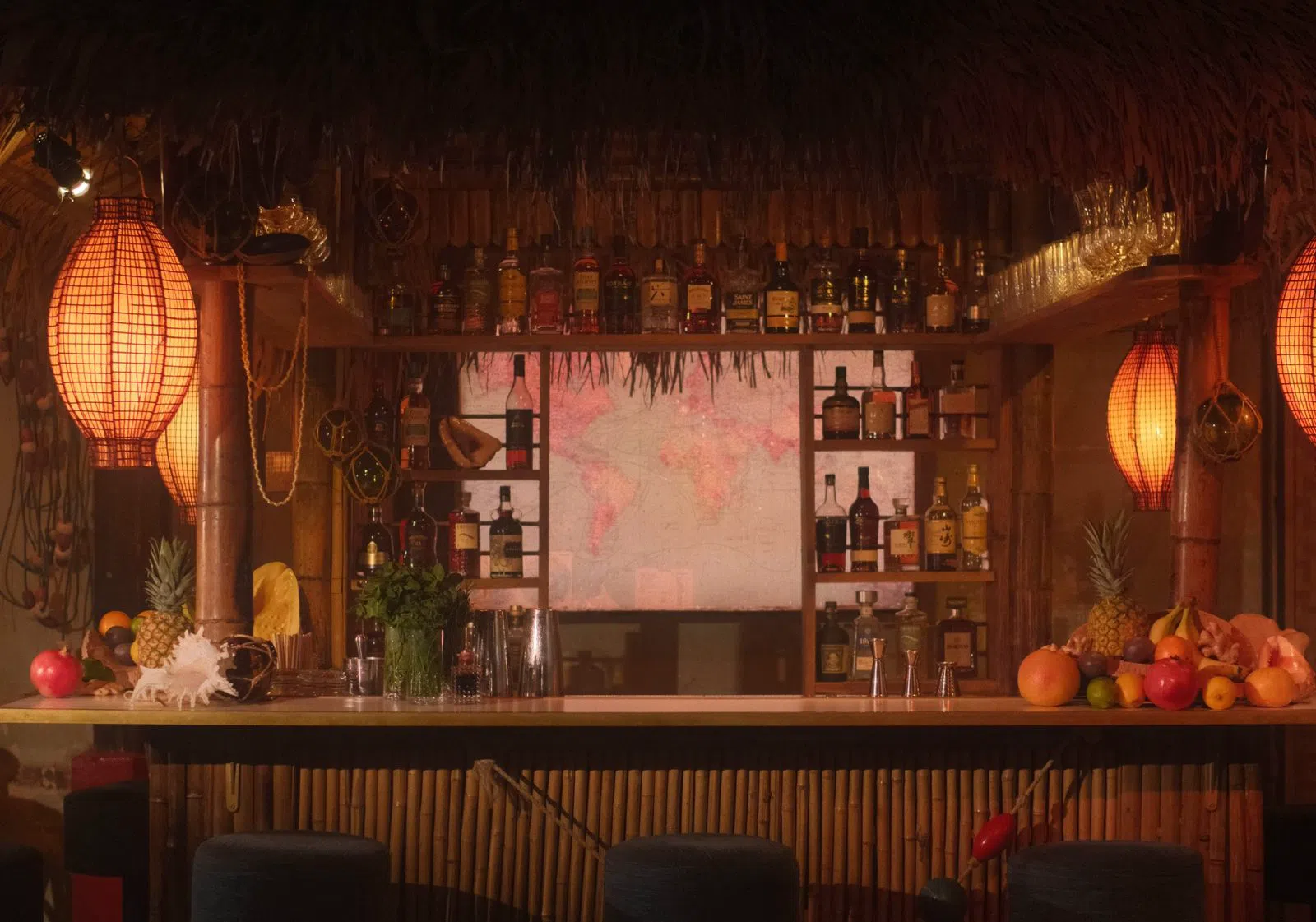
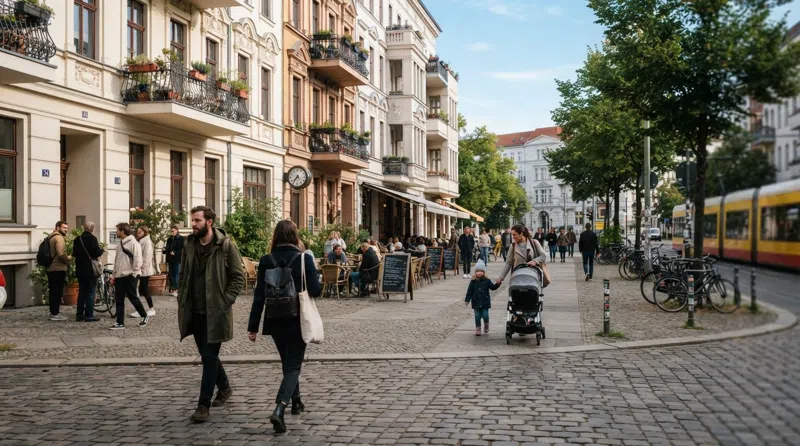
The Paris that sells itself does it from a wide terrace on a boulevard: a cold coupe, the Tour Eiffel photobombing from three arrondissements away, a waiter who has seen it all. The Paris that doesn't pose is quieter about the whole thing — a barrel of wine tipped onto the pavement outside a covered market, a railway platform handed over to an urban farm, a hilltop where the dancing is free and nobody is checking whether you can. This is a route through that second city. It runs mostly northeast, mostly on foot, and it is built around the way Paris actually spends a weekday evening and a slow Sunday.
Along the water
People picture the Seine when they picture Parisian water, but the northeast keeps to narrower channels — the Canal Saint-Martin and, above it, the wide Bassin de la Villette. Locals treat both as linear parks: somewhere to sit on the stone edge with a bottle and let an evening go long.
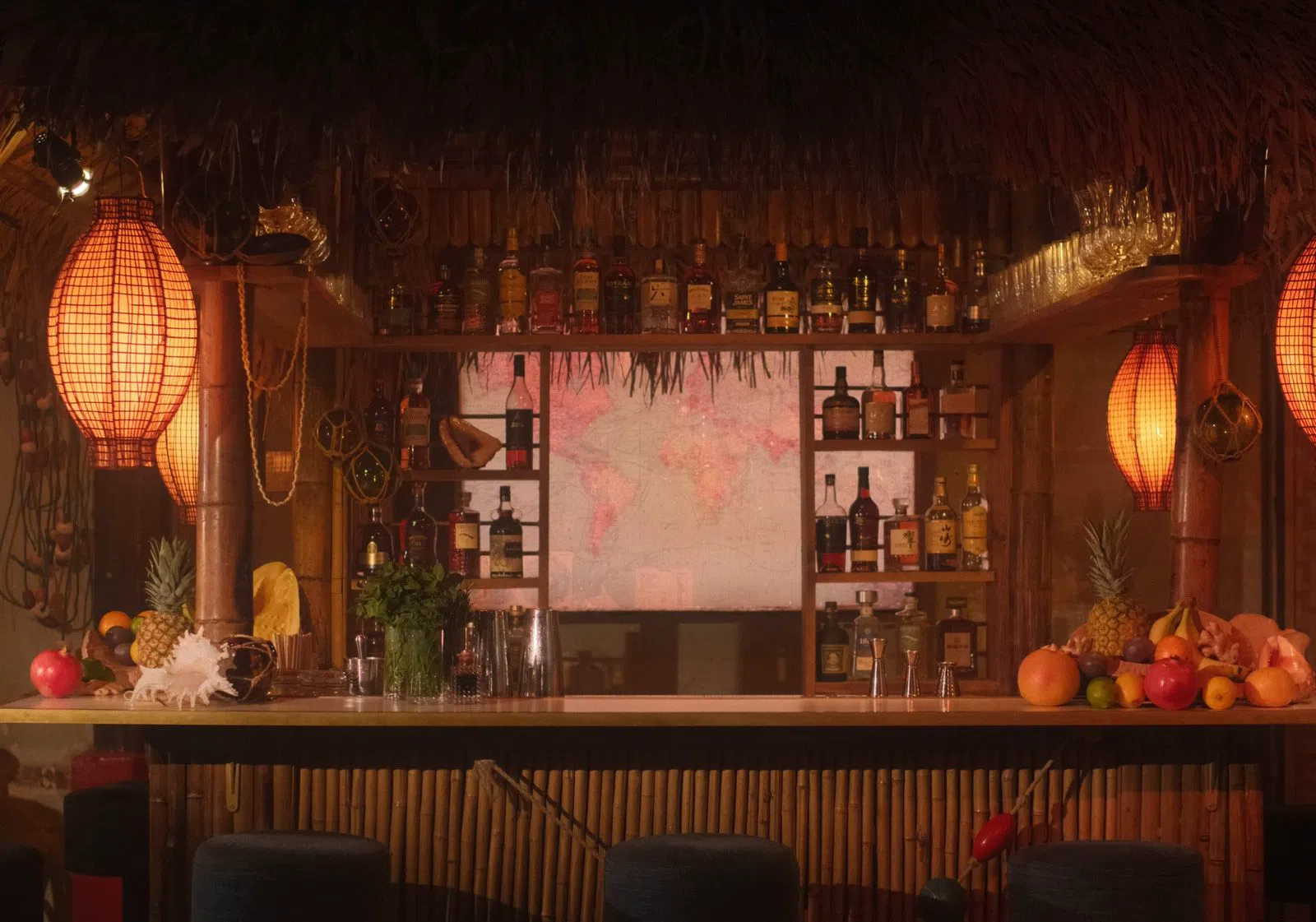
Begin behind a painted mural on the canal at Le Comptoir Général (Canal Saint-Martin, 10th). It calls itself a ghetto museum, which undersells the strangeness of the place — a rambling, plant-choked Franco-African hall of salvaged furniture, film screenings and a long bar, open daily from 11am until 2am. It was built for crowds, so a group can simply walk in; there is no bottle-service door policy and no velvet-rope theatre, entry is free, and cocktails run about €9–12. If you are a larger party wanting a guaranteed corner, private hire is possible, but the honest advice is to arrive early evening on a weeknight and let the room fill around you. It is one of the few genuinely convivial big rooms in the city that never feels staged.
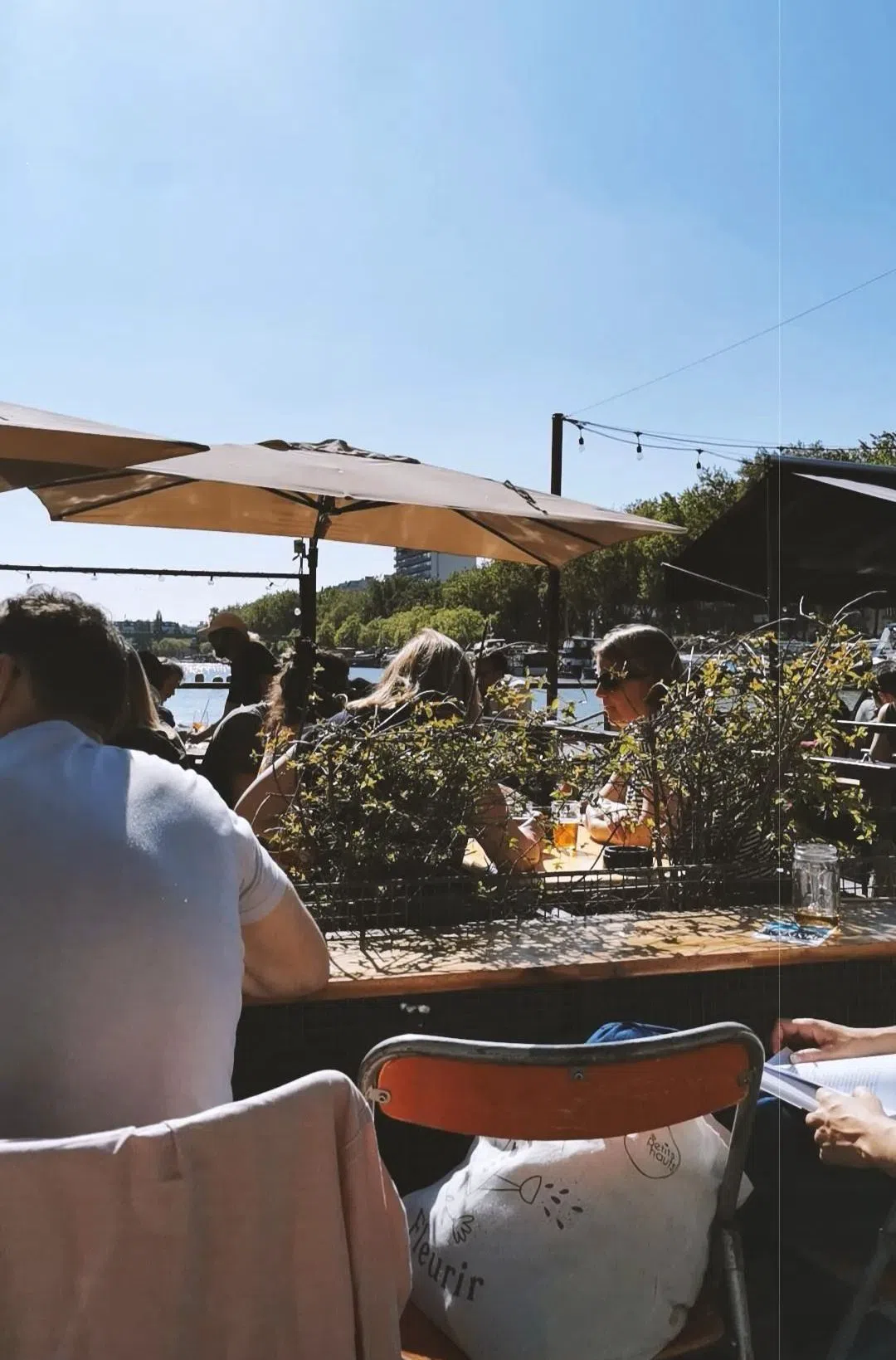
Walk the canal north, past the locks, to where it opens into the Bassin de la Villette and Paname Brewing Company (Bassin de la Villette, 19th) sits over the water with an on-site brewery and, better still, a barge moored as a floating terrace. This is a warm-weather ritual for northern Paris: craft pints in hand, feet more or less over the basin, street-food plates passed around, prices friendly (this is a € room). It opens daily 11am to 2am, takes walk-ins, and handles groups without fuss — private hire is available if you want the barge to yourself. In summer the terrace fills fast in the golden hour, so come before the after-work wave or be content to stand.
Plan your Paris trip
Live prices from our booking partners.
Free cancellation on many rooms. We may earn a commission when you book.
The hilltop north: parks and old stations
Climb away from the water and the northeast rises into the 19th and 18th, where two of the city's best third places have grown inside repurposed bones — a park pavilion and a dead railway station.
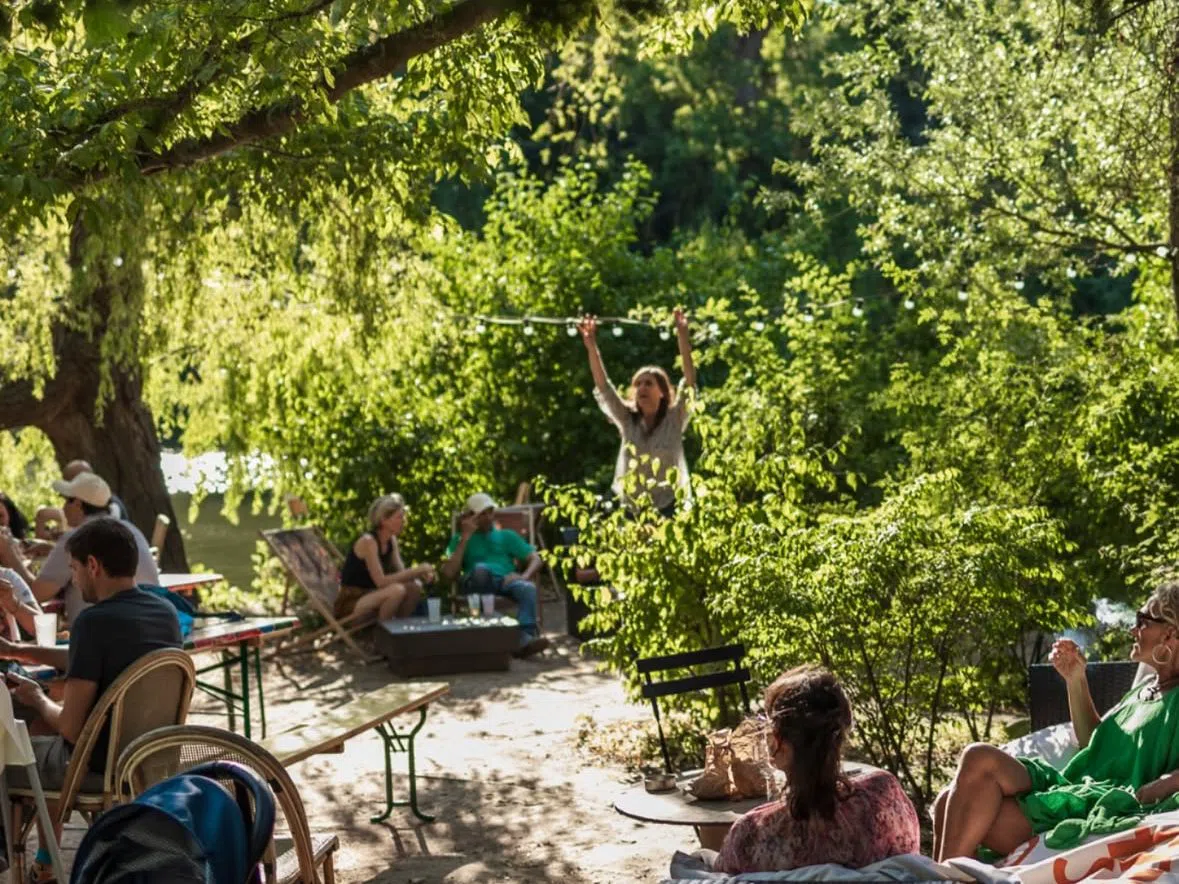
Inside the steep, romantic Parc des Buttes-Chaumont, Rosa Bonheur des Buttes-Chaumont (Parc des Buttes-Chaumont, 19th) is a guinguette — an open-air dance bar — of the old inclusive kind. Big shared tables, families and friends folded into the same crowd, cheap beers and tapas, and free dancing on Sundays and Thursdays when the room lets go entirely. It runs Wednesday to Sunday, noon to midnight, year-round, and it is designed for groups rather than tolerating them. This is where locals spend a weekend afternoon that turns, without anyone deciding it should, into a weekend night. It suits almost everyone, which is the point of a guinguette.
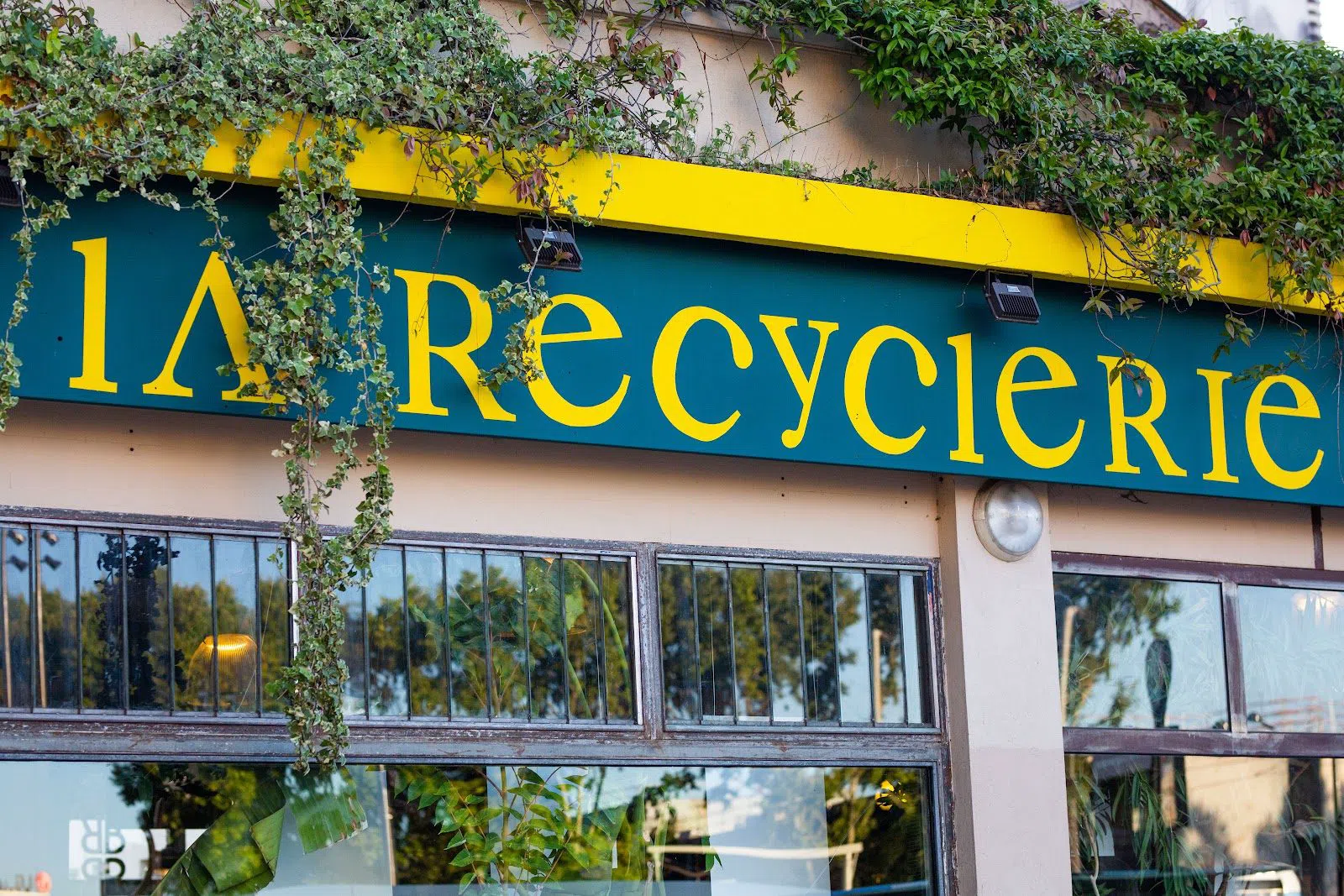
A longer walk or a short métro hop northwest, on the abandoned ring railway at Porte de Clignancourt, La REcyclerie (Porte de Clignancourt, 18th) occupies a former station and its platform, now an urban farm and canteen. It is roomy and unhurried, groups are welcome, and the programming tells you who comes here: workshops, repair cafés, parties, the occasional round of drag bingo. Canteen dishes, coffee and beer keep it firmly in € territory. The crowd is northern-Paris local rather than visiting, and the mood is offbeat and sustainable without lecturing you about it. Come for a slow lunch on the tracks and stay because leaving feels like effort.
Belleville and Ménilmontant after dark
East of the canals, the ground rises again through Belleville and Ménilmontant — long-immigrant, art-scuffed, steep — and this is where the northeast does its evenings properly. Three very different rooms sit within walking distance of one another, and they suit different parties, so choose honestly.
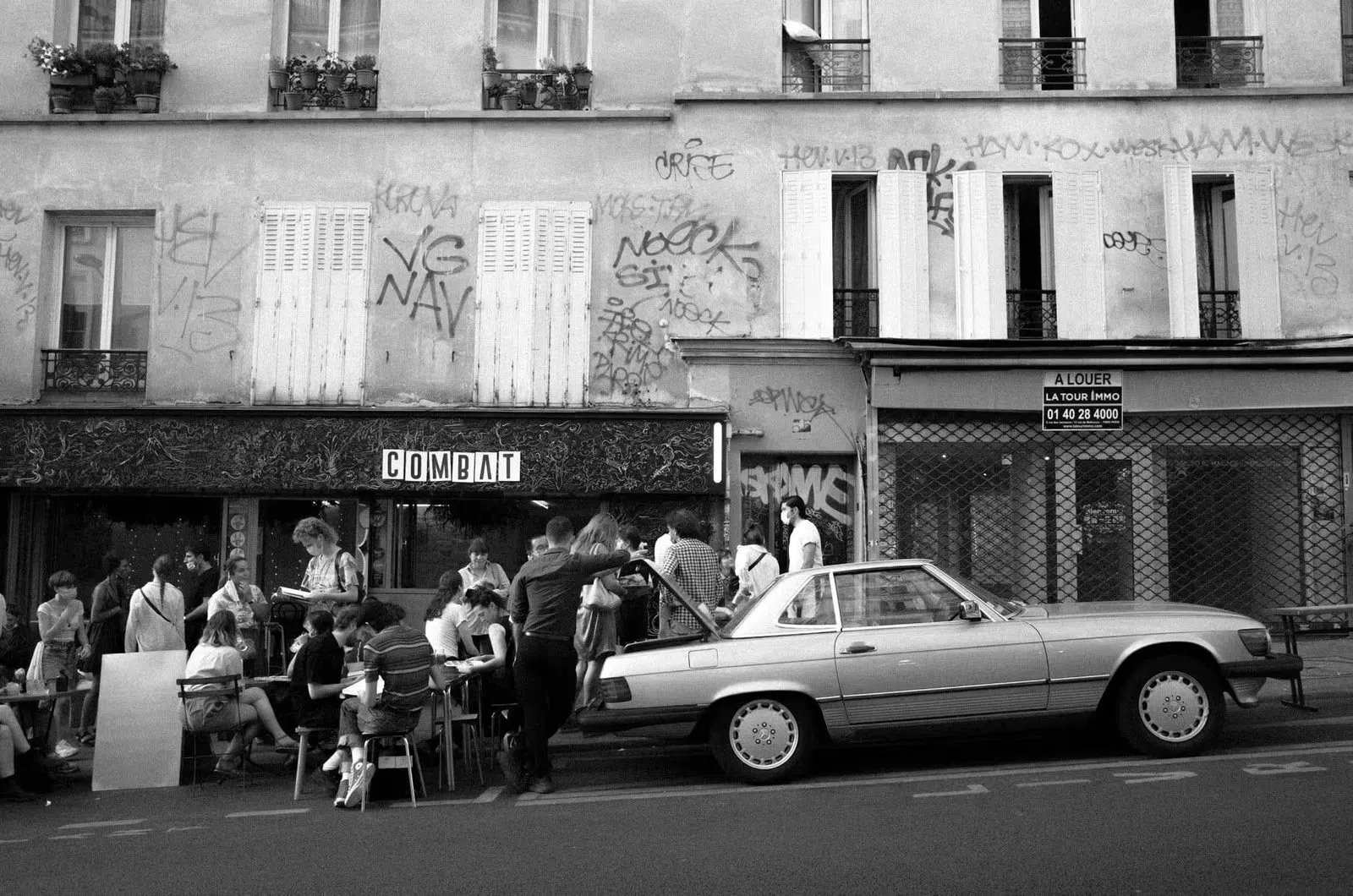
Combat (Belleville) is the small one, and it knows it. Women-founded by an alumna of the Experimental Cocktail Club, it electrified the neighbourhood by taking cocktails seriously in a room with no pretension — and no big-group tables. It takes no reservations, opens Wednesday to Monday from 6pm to 2am, and pours drinks around €13–15, with genuinely considered alcohol-free options for anyone not drinking. This is a bar for a pair or a threesome who want to actually talk; bring six people and you will be standing awkwardly on the pavement. Go on that understanding and it is one of the best small rooms in the city.
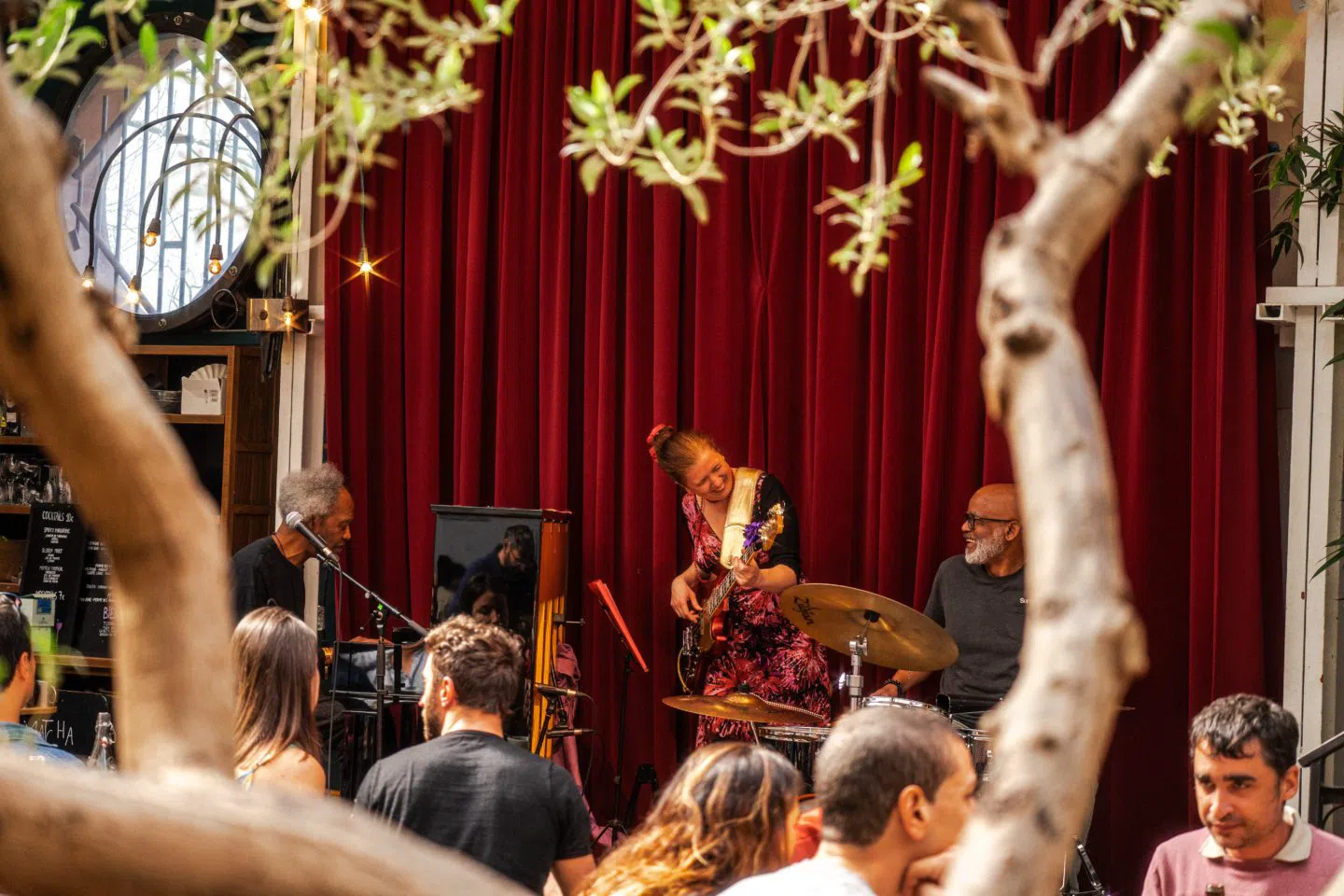
A few streets on, La Bellevilloise (Belleville) is the opposite proposition — a landmark independent cultural venue spread across café-restaurant, concert hall, club and gallery, built to absorb a crowd. Its signature is the Sunday jazz brunch, a buffet served under indoor olive trees while a live band plays, a ritual that fills with locals and reservations. There are concerts and club nights the rest of the week. Expect €€: brunch and concert tickets plus drinks. This is the place to bring the larger, mixed group the cocktail bars can't seat — book the brunch ahead, because word has long since travelled.
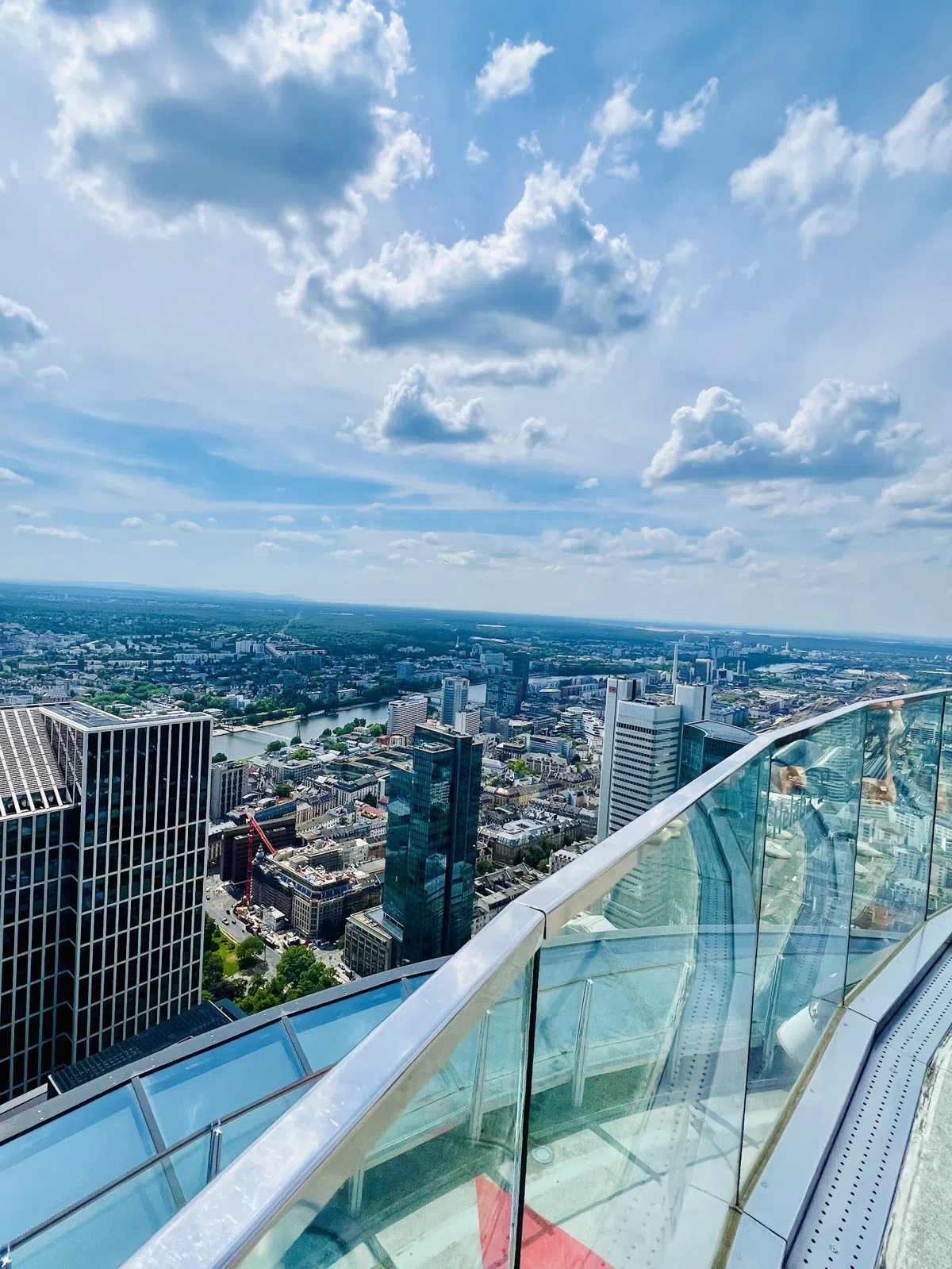
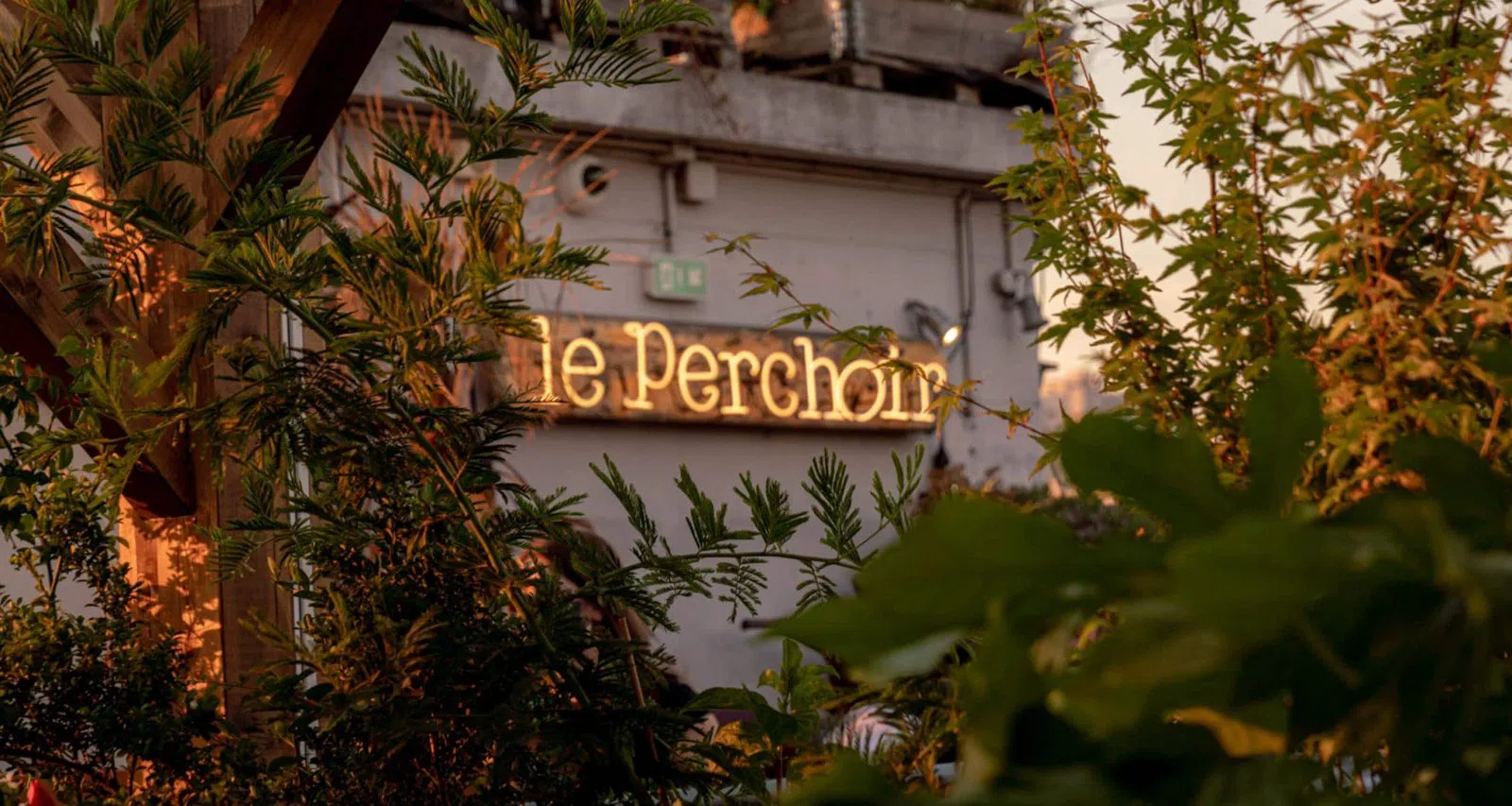
Then climb to Le Perchoir Ménilmontant (Ménilmontant, 11th), the rooftop that started the Parisian rooftop habit. It is bohemian-chic rather than glossy, with a wide, unfussy skyline view and, crucially for this city's weather, heaters and a retractable roof that keep it going year-round; there is an Italian-American restaurant on the floor below. The rooftop bar is walk-in, though in summer you should expect to queue for the lift, and cocktails land around €14–16 (€€). Groups and private bookings are possible if you plan. Time it for the last of the light — the view is the point, and the point is best just before dusk.
Tables built to share
Some of the most Parisian meals in the northeast are the least formal — a stall and a shared bench, a canteen with 300 seats, a rail depot full of kitchens. None of these require you to perform, which is why locals keep them.
Ground Control (12th) fills a repurposed rail depot near Gare de Lyon with a dozen global kitchens under one roof. It is explicitly group- and family-friendly: open-plan, communal seating, no reservation needed, and a range that means the fussy eater and the adventurous one can both be fed. Plates are street-food priced with pints alongside (€–€€). For a mixed group that can't agree, or an early evening with no plan, it is the lowest-commitment good decision in the east.
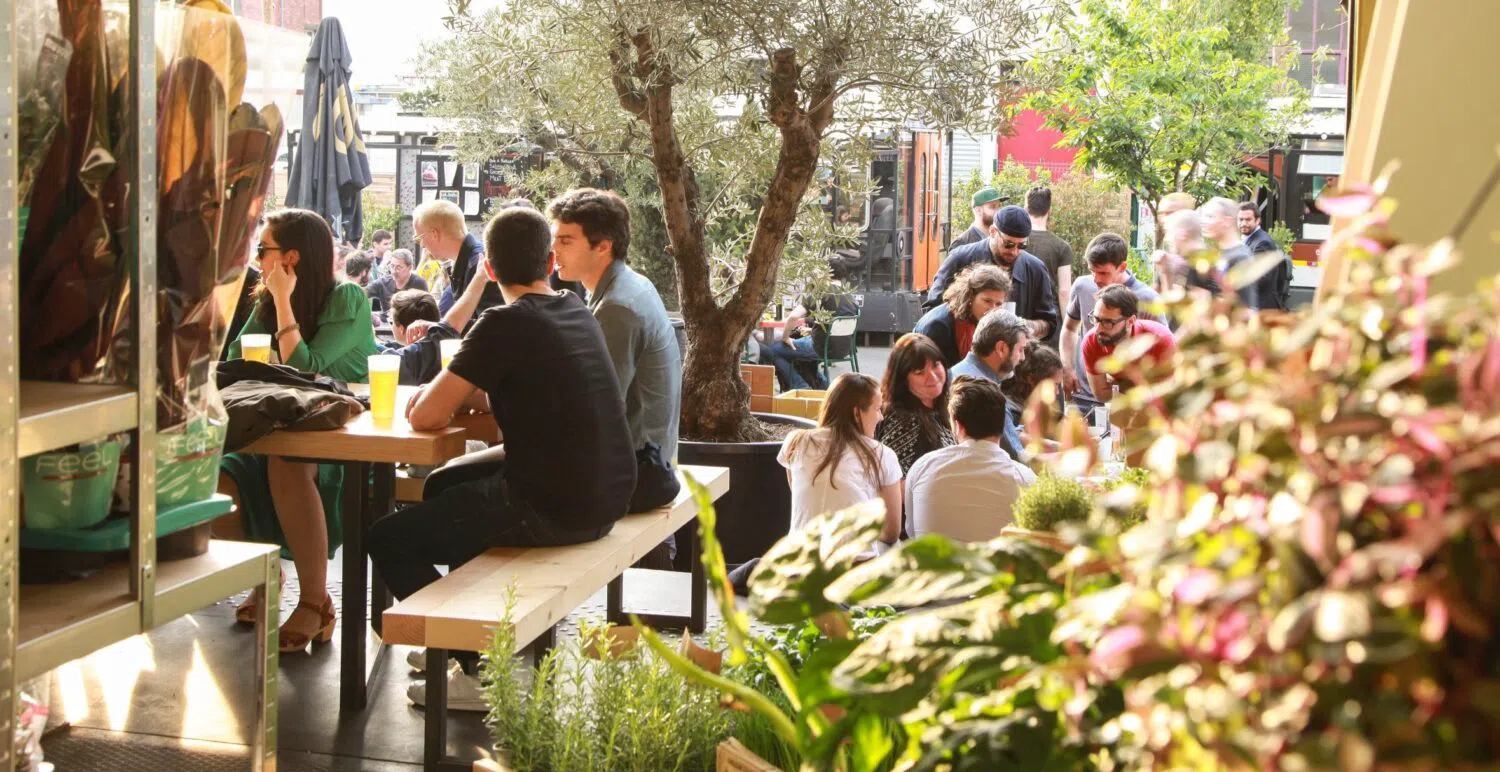
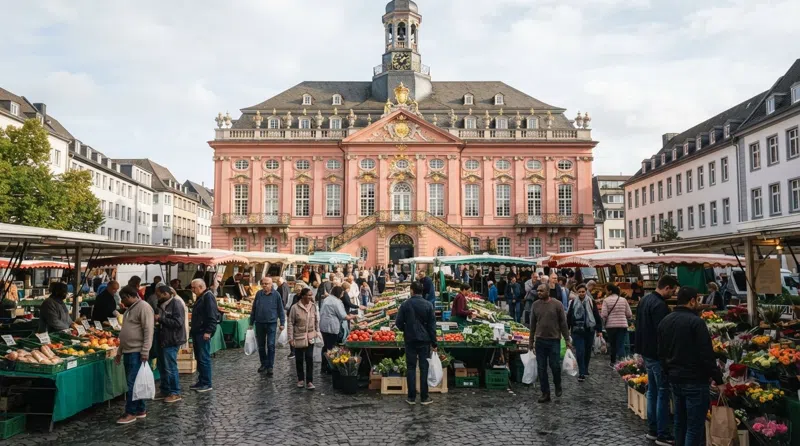
In the Marais, Marché des Enfants Rouges (Marais, 3rd) is the oldest covered market in the city — saved from demolition, now a lunchtime canteen of global stalls where you grab a plate and share a bench with strangers. Plates run roughly €10–15, there are no reservations, and it packs tight at lunch, which is exactly when a group should go and accept the crush as part of it. Open Tuesday to Sunday, it is a genuine everyday-Marais scene rather than a staged one — come hungry and flexible about where you'll sit.
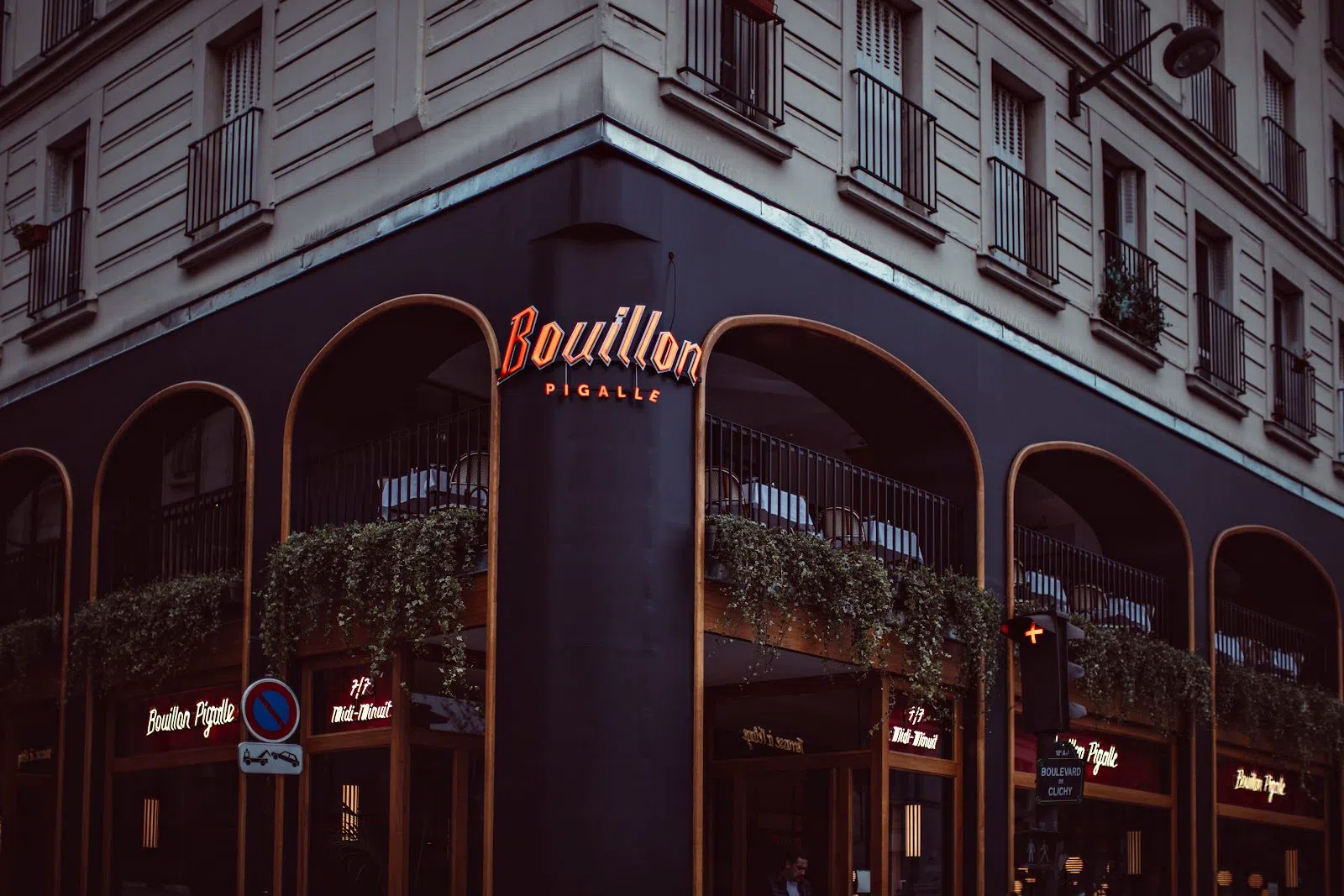
Uphill toward Pigalle, Bouillon Pigalle (Pigalle, 9th) revives the 19th-century bouillon, the workers' canteen that once fed the city cheaply. It still does: French classics — leeks vinaigrette, blanquette, île flottante — for around €20 a full meal, served fast across some 300 seats with big communal tables. It now takes bookings, which is worth using; otherwise expect a queue down the pavement. It is loud, communal, and beloved by Parisians who are watching their money, which is most of them. For a large, hungry group this is the friendliest maths in Paris.
Wine on the pavement, spirits behind a poster
End where the northeast is most itself: a drink standing up. Two rooms, both unshowy, both about the liquid and the crowd rather than the décor.
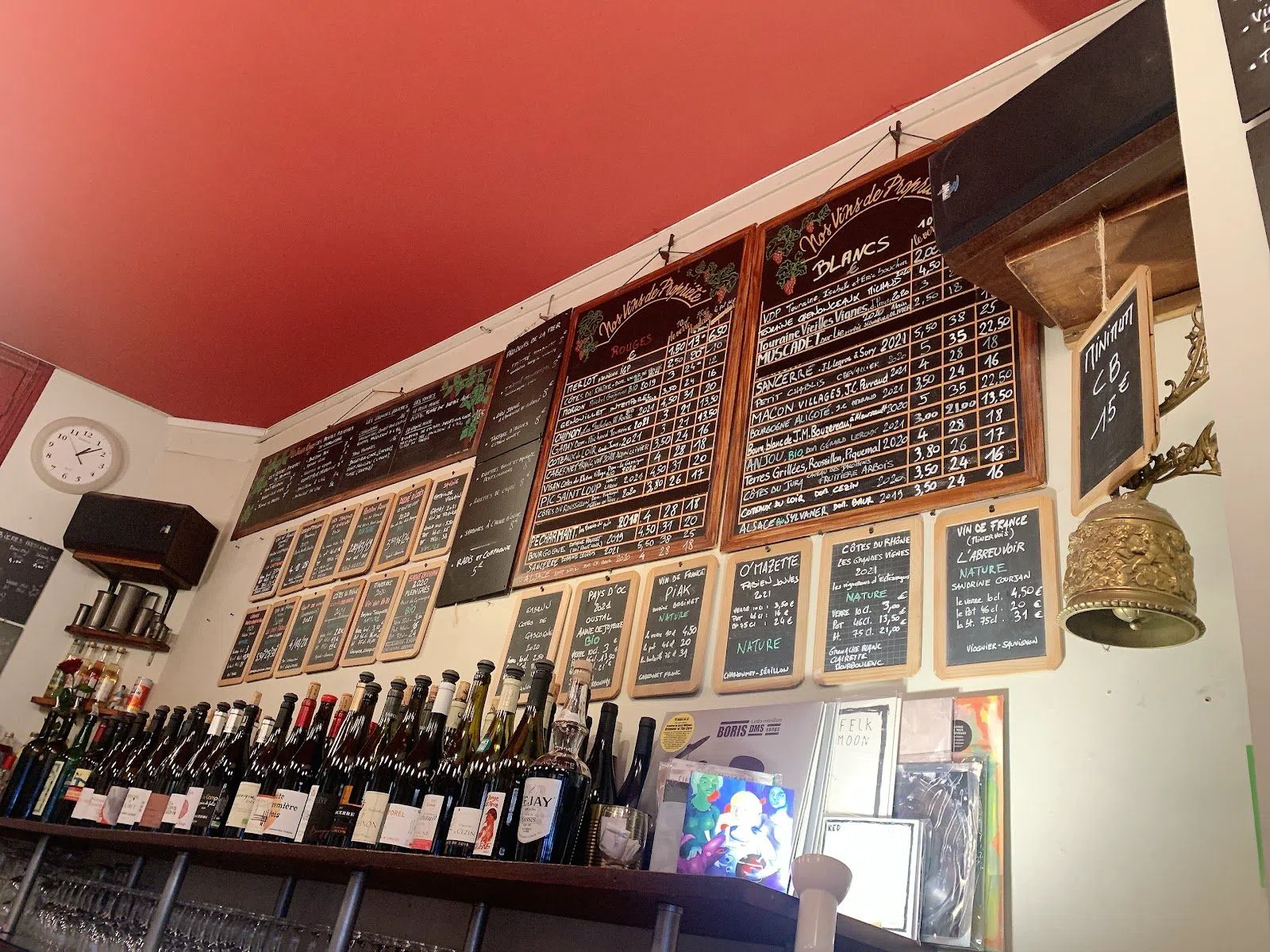
By the Aligre market, Le Baron Rouge (Bastille, 12th) is a wine bar in the plainest, best sense — wine poured by the glass from the barrel for a couple of euros, an informal standing crowd that spills onto the street, and no seating or booking to speak of. Because everyone drinks on the pavement, a group simply dissolves into the scene rather than needing a table. From September to April there are oysters shucked outside at the weekend, eaten off wine-barrel tops beside the market. This is old-Paris everyday life still running on its own quiet schedule.
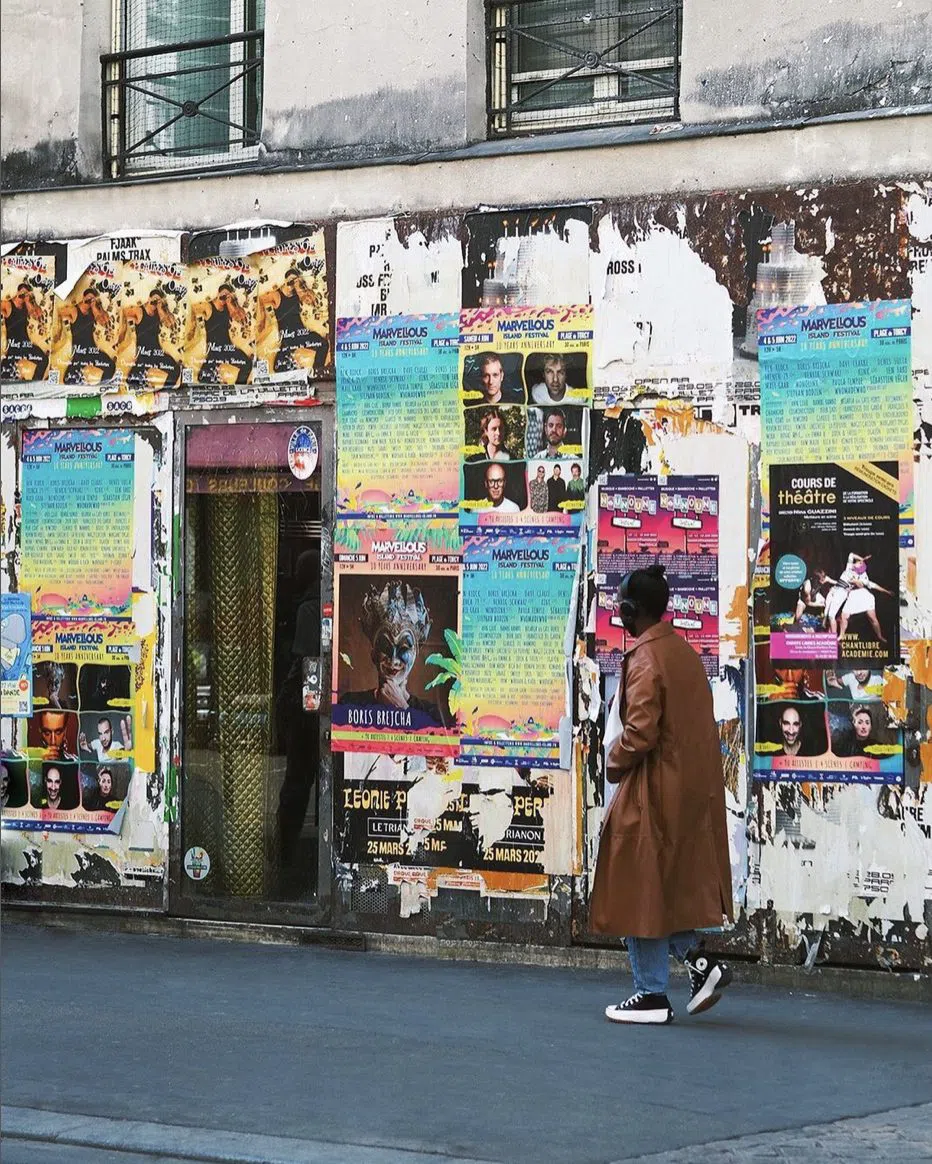
A short way west, on the busy, food-crammed rue du Faubourg Saint-Denis, Le Syndicat (Faubourg Saint-Denis, 10th) hides behind a front pasted over with posters — you walk past it until you know. Inside, the Defence Organisation for French Spirits pours cocktails built entirely from French bottles: cognac, Bonal, Byrrh, the near-forgotten aperitifs. It is compact, best for a small group, walk-in only, with cocktails from about €13–17 (€€). It is a fitting last stop — a bar that argues, quietly and well, that France doesn't need to borrow anyone's ingredients to make a great drink.
Practical notes
Getting around. This is a walking route by design — the canal stretch, Belleville and Ménilmontant, and Bastille to the Marais each link on foot in 15–25 minutes, which is where you'll see the neighbourhoods change. Where you'd rather ride, the métro covers all of it: lines 2 and 11 for Belleville and Ménilmontant, line 5 along the canal spine, line 8 for Bastille and Ledru-Rollin (Aligre). A single ticket is a flat fare regardless of distance; the Navigo Easy card or the day pass makes an evening of hops painless. The last métro runs around 12.45am on weeknights and roughly 1.45am on Friday and Saturday — after that it's night buses or a taxi, so check the clock at your final stop.
Cash and cards. Cards work almost everywhere, but the two most characterful stops lean old-school: keep some euro coins and small notes for barrel wine at Le Baron Rouge and for grabbing plates across market stalls, where a card reader isn't guaranteed.
Timing. Guinguettes and markets are afternoon-into-evening creatures — Rosa Bonheur and the Enfants Rouges are best in daylight; the cocktail rooms and the rooftop hit their stride from 7pm. Sundays reward you here: the jazz brunch, the free dancing, the market oysters in season all fall on the same lazy day. Reserve where you can — Bouillon Pigalle, La Bellevilloise's brunch — and walk in everywhere else, accepting a summer queue for the rooftop and the canal terraces as the cost of a warm night.
Budget. An honest evening here is not expensive: a full bouillon meal around €20, market plates €10–15, barrel wine from a couple of euros, craft pints and guinguette tapas cheap, cocktails €13–17 at the pricier rooms. Two people can eat and drink well across a night on €40–70 each; a group can do better by leaning on the shared tables. For beds, the northeast keeps you close to all of it — start a Paris hotel search around the 10th, 11th or 19th, and read the wider Paris guide if you want the rest of the city to match this half of it.
Before you go
Which of these Paris spots are best for a big group?
Ground Control, Bouillon Pigalle (up to ~300 seats), Rosa Bonheur, La Bellevilloise and Le Comptoir Général are all built for groups. Combat and Le Syndicat are small rooms best kept to pairs or a few people.
Do I need to book, or can I just walk in?
Most are walk-in: the canal bars, guinguettes, markets, wine and cocktail bars take no reservations. Book ahead for Bouillon Pigalle (or queue) and for La Bellevilloise's Sunday jazz brunch. Expect a summer queue for Le Perchoir's rooftop.
Is northeast Paris good in winter, or only summer?
Both. Rosa Bonheur runs year-round, Le Perchoir has heaters and a retractable roof, and the bouillon, cultural venues and wine bars are indoor. Le Baron Rouge even shucks oysters on the pavement from September to April. Only the open canal terraces are truly summer-first.
How much should I budget for a night out here?
It's affordable Paris: a full bouillon meal is around €20, market plates €10–15, barrel wine from a couple of euros, and cocktails €13–17 at the pricier bars. Two people can eat and drink well for roughly €40–70 each.
Where should I stay to walk this route?
Base yourself in the 10th, 11th or 19th — around Canal Saint-Martin, Belleville/Ménilmontant or the Bassin de la Villette. From there most stops link on foot in 15–25 minutes, with métro lines 2, 5 and 11 covering the rest.